Marine Licensing Decisions Deliver Safer Communities, Stronger Infrastructure and Healthier Seas
From Harbour Bridges to Oyster Reefs: Marine Licensing Enables Vital Coastal Projects.
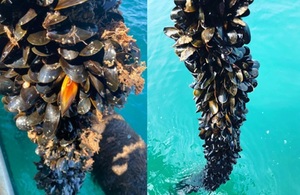
Mussel farm relocation approved to boost sustainable seafood industry in Devon
Plans to relocate an offshore mussel farm into deeper waters in Babbacombe Bay, Devon, have been approved, supporting the growth of sustainable aquaculture in the region.
Offshore Shellfish Ltd. will install 140 screw anchors on the seabed to support 68 mussel-growing longlines across four sections in Torbay Harbour. The move shifts the operation into a new offshore environment designed to improve long-term resilience and productivity.
The project required a marine licence due to seabed works and underwent environmental assessment to ensure protected habitats in Lyme Bay and Torbay were not harmed. The MMO Marine Licensing team worked closely with regulators and the fishing industry to address concerns around site location and impacts.
The relocated farm is expected to strengthen mussel production, safeguard local jobs, and support the regional economy, while contributing to more sustainable seafood practices that can enhance biodiversity and water quality.
Fast-tracked harbour bridge approved ahead of Porthleven Food Festival
A temporary pedestrian bridge over Porthleven Harbour was approved just days before the town’s popular food festival, ensuring safe movement for large crowds.
The scaffold footbridge was designed to improve crowd flow around the busy harbour during the event. The application was submitted on 27 March 2025, with construction scheduled for 30 April.
As the structure would sit below Mean High Water Springs, it required a marine licence application from the organisers. With limited time and the bridge considered vital for public safety, the MMO Marine Licensing team fast-tracked the decision and issued approval on 28 April.
The bridge allowed organisers to manage visitor numbers more effectively, helping reduce congestion and ensuring a safer experience for festival goers and residents.
Storm-damaged sandbanks jetty to be rebuilt in major upgrade project
Plans to rebuild and improve the Sandbanks ferry terminal in Poole have been approved, paving the way for a major long-term upgrade to a key gateway for visitors to Brownsea Island.
The National Trust will replace the ageing jetty at Sandbanks, located next to the chain ferry slipway, with a new pier and upgraded infrastructure. The project includes new vessel berths, a replacement quay wall, a vehicle ramp, and improved loading facilities. Work is set to run from May 2025 through to October 2029.
The need for the project became urgent after severe storm damage caused part of the seabed beneath the pier to wash away, leaving the structure unstable. Emergency works were carried out shortly after, with the damaged jetty removed.
Due to the site’s environmental sensitivity, the application required a detailed habitat assessment covering multiple protected areas, with Natural England supporting the final approach.
The MMO Marine Licensing team worked closely with the National Trust to address concerns raised during consultation, helping move the project forward.
Once complete, the upgraded terminal will improve access to Brownsea Island, one of the region’s most popular attractions, supporting tourism and ensuring a reliable link for visitors, staff, and essential supplies.
Maintenance dredging approved to keep Burnham Marina accessible
A marine licence has been granted for annual maintenance dredging at Burnham Yacht Harbour, ensuring safe access for vessels using the marina.
The project will involve removing up to 17,500 cubic metres of sediment each year from the marina basin, with dredging taking place between December and May. The material will be dispersed into the River Crouch.
The application prompted discussions between the MMO, Natural England and the applicant over environmental safeguards, including a condition relating to freezing weather. Following consultation, a final agreement was reached and the licence was approved.
The dredging is essential to maintain navigational depth at the harbour, allowing boats to continue operating safely and supporting ongoing use of the marina by the local boating community.
Native oyster reef pilot project launched to boost marine life in Tyne and Wear
A pioneering project to restore native oyster populations in Tyne and Wear has been approved, marking a significant step in efforts to improve marine biodiversity and water quality.
Led by the Zoological Society of London in partnership with Groundwork Northeast & Cumbria, the Wild Oysters Project will create an artificial reef using specially designed structures and oyster “cultch” placed on the seabed.
The initiative required a marine licence for the reef construction, with the MMO Marine Licensing team working closely with the project team to refine plans and ensure regulatory requirements were met.
Native oysters play a vital role in marine ecosystems, helping to create habitats for other species and naturally filtering water. The restored reef could support local fisheries, improve water quality, and strengthen the wider marine environment.
As a pilot scheme, the project is also expected to inform future oyster restoration efforts across the UK, helping tackle long-term declines in native oyster populations.