As we remember the victims of El Fasher, the parties need to protect civilians, allow humanitarian assistance to reach those who need it, and choose diplomacy over continued war: UK statement at the UN Security Council
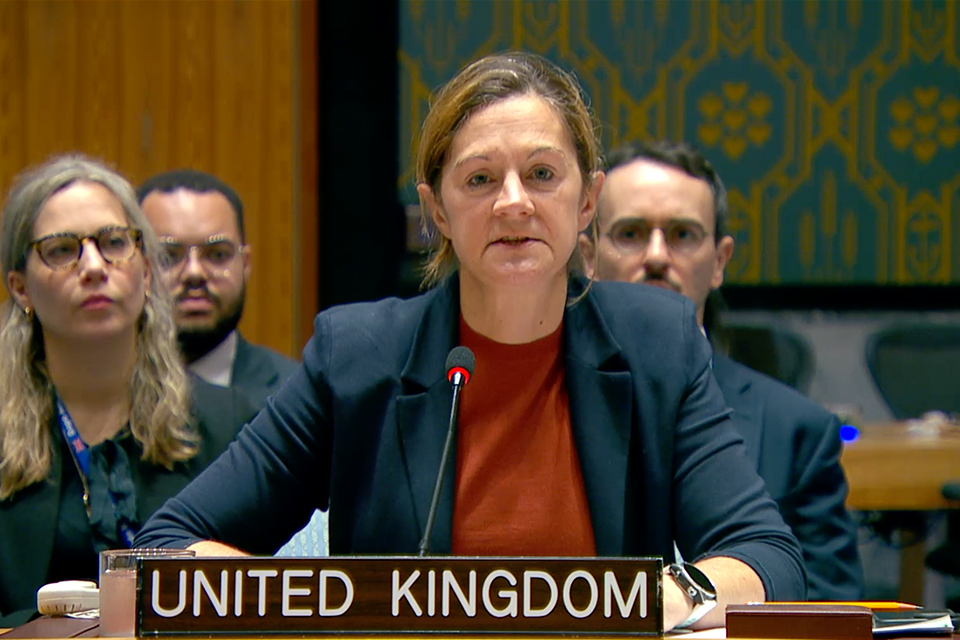
Statement by Ambassador Kate Foster, UK Deputy Permanent Representative to the UN, at the UN Security Council meeting on Sudan.
This month marks the one-year anniversary of El Fasher’s fall to the Rapid Support Forces and the horrific atrocities that followed.
The United Nations Fact-Finding Mission has documented systematic starvation, torture, killings, rape, and deliberate ethnic targeting.
Civilians slaughtered as they fled the sieged city, patients and staff killed in their hospitals. Women and girls disproportionately impacted.
Accountability and supporting survivors are critical. And we must continue to learn the lessons from El Fasher.
First, protecting civilians must be our priority.
Recent drone strikes and other aerial attacks, including in the Kordofans, are a stark reminder of the growing reach and lethality of this conflict.
Civilians are being killed and injured.
Markets, agricultural production, and other infrastructure on which they depend are being destroyed.
And as the humanitarian consequences are worsening, the IPC has warned this week of an increasing famine risk in Darfur and the Kordofans. More than 33 million people need humanitarian assistance.
As Foreign Secretary Milliband said during High-Level Week, we must be united in pressing the parties to protect civilians, comply with international humanitarian law, and facilitate safe and unhindered humanitarian access.
Parties must implement the commitments they made in Jeddah, including by distinguishing between civilians and military targets and taking all feasible precautions to protect civilians.
Second, the external support sustaining this conflict needs to end.
The advancing drone capabilities we are witnessing are procured, financed, transferred, and sustained through networks outside of Sudan.
All states must ensure that they are not fuelling this conflict through support to the parties.
Those supplying, financing, and enabling this conflict must face greater pressure.
And the Security Council’s Sudan sanctions regime needs to evolve to reflect how this war is being fought today.
The United Kingdom supports efforts to strengthen the sanctions regime, increasing pressure on those supplying, financing, and enabling this war and supporting the protection of civilians.
And we encourage the swift transmission to the Council and the publication of the 1591 panel of experts’ final report.
Third, we urgently need a diplomatic solution.
The United Kingdom calls on the parties to agree to a humanitarian truce, a permanent ceasefire, and an inclusive, civilian-led political process to secure a sustainable peace.
We welcome the Quad and Quintet’s efforts to this end, as well as the work of the Secretary-General’s Personal Envoy on confidence-building measures.
We also welcome steps to improve coordination between the Quad and the Quintet, helping to ensure diplomatic efforts support both Sudan’s longer-term future as well as efforts towards a ceasefire.
And we look forward to further progress at next week’s consultations in Geneva.
We also note proposals for a national dialogue. Any credible process must be genuinely inclusive and Sudanese-led, giving Sudanese civilians a meaningful voice.
An end to this conflict is urgent.
Today, we see the devastation in Sudan also driving instability in the region.
Crises across the Horn are becoming increasingly interconnected and mutually reinforcing.
President, as we remember the victims of El Fasher, the imperative is clear.
The parties need to protect civilians, allow humanitarian assistance to reach those who need it, and choose diplomacy over continued war.
And those supplying, funding, and fuelling the war need to stop.