Foreign Secretary Ed Miliband's speech at the Seizing the Green Industrial Opportunity event at COP31
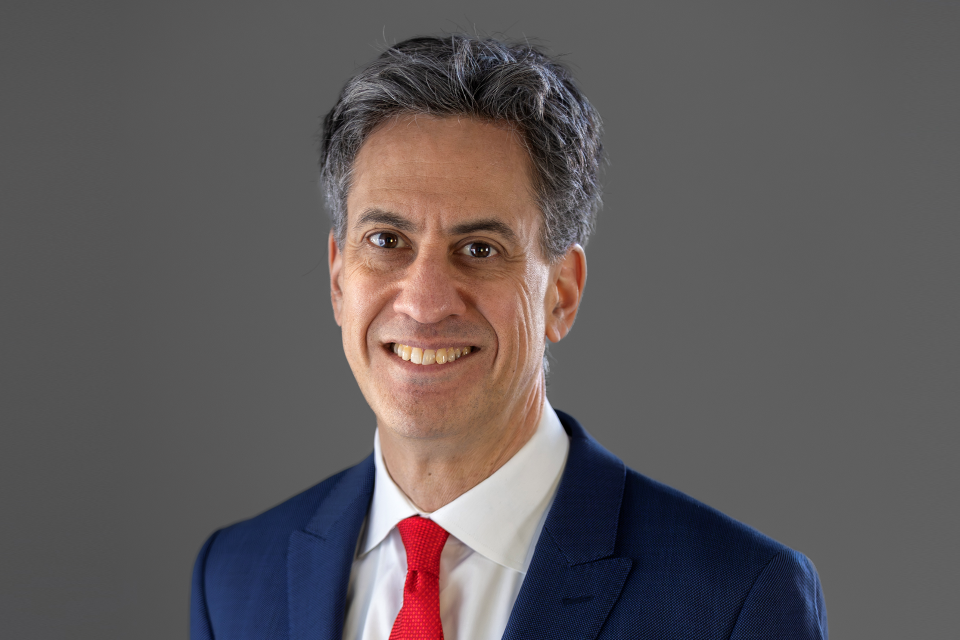
The Foreign Secretary delivered a speech at the 'Seizing the Green Industrial Opportunity: Investment, Jobs, and Growth for Every Economy' event at COP31 in Antalya on 11 November 2026.
I want to make four brief points.
First of all, we face not one but two crises across our world.
We face an economic crisis, where so many of our populations don’t have the good jobs at good wages that they would like to see. And at the same time, we face the climate crisis that is the subject of this COP.
And the truth is that what this green industrialisation agenda represents is an answer to both crises: an answer which can provide good jobs for our populations and do what is necessary to start to tackle, and do more to tackle, the climate crisis that we all face.
Green industrialisation is one of the great economic opportunities of our time, with nearly 10 million jobs globally forecast by 2030.
In the UK, from offshore wind to building power networks, from carbon capture to small modular reactors, we are seeing the green economy emerge.
It is an economy growing three times faster than the economy as a whole, now supporting over one million workers.
I would make the point that we haven’t got everything right, but I would make the point that this has only happened because of the stable framework that we have offered to the private sector in terms of our climate change commitments.
My second point, though, is that this is not just an opportunity for developed countries. It is an opportunity for emerging markets and developing countries as well.
There are enough good green jobs to go round, given the scale of need and demand that we face.
Electrification is absolutely central to this, and that’s why I congratulate the COP31 Presidency for putting it so front and centre of this COP.
But let’s be honest about this: there are opportunities for all, but too many good plans are still waiting for finance and are not being invested in.
And one of the priorities of our G20 Presidency next year is to ensure more capital flows to the developing world and emerging market economies.
We need governments, industry and finance working together to turn national plans into investable projects which are actually invested in.
We’ve started to do this through the Global Clean Power Alliance Finance Mission, with a partnership with Brazil, where we’ve supported eight industrial decarbonisation and hydrogen projects towards final investment decisions.
And through the Industrial Transition Investment Platform, we’re working with Indonesia to develop a pipeline of clean industrial projects.
I say today we are committed to doing more.
And we’re announcing today the launch of the Green Industrial Demand Accelerator, backed with £90 million to help create the green industrial market of the future in developing countries, and a further £45 million to pilot innovative new technologies to help keep 1.5 degrees within reach.
My third point is: we must ensure this is a transformation that works for workers.
Now, this is partly about the just transition from fossil fuels, which is very, very important for workers in fossil-fuel industries, and a fair deal for them.
It is also, though, about the quality of the jobs in new clean-energy sectors and the role of trade unions and high standards in the workplace, which I think is very, very important, particularly as we shift from a fossil-fuel economy.
My fourth and final point is this.
Some people talk about climate action as doing the right thing for future generations. And of course we are about doing the right thing for future generations.
But it is also about better lives for today’s generations.
I often say this: we are in the better lives business today, partly because it is true and partly because it is the only way we will win the argument.
And I think in every country there are workers, young and old, who can help build the green future.
I talk to some of them in Britain. They talk about the pride they have in the work they are doing, changing the country for the better, supporting themselves and their families, from the nuclear industry to the offshore wind industry to the solar industry.
Workers in every country deserve this opportunity.
Workers in every country deserve this sense of hope.
I believe we can all make it happen, and I look forward to working together multilaterally to do so.
Thank you so much.