Community Life Survey 2024/25: Neighbourhood and community
Updated 31 July 2026
Applies to England

© Crown copyright 2026
This publication is licensed under the terms of the Open Government Licence v3.0 except where otherwise stated. To view this licence, visit nationalarchives.gov.uk/doc/open-government-licence/version/3 or write to the Information Policy Team, The National Archives, Kew, London TW9 4DU, or email: psi@nationalarchives.gov.uk.
Where we have identified any third party copyright information you will need to obtain permission from the copyright holders concerned.
This publication is available at https://www.gov.uk/government/statistics/community-life-survey-202425-annual-publication/community-life-survey-202425-neighbourhood-and-community
Correction to sexual orientation and socio-economic classification data: A correction has been made to the 2024/25 estimates for sexual orientation and socioeconomic classification. The corrected 2024/25 figures are available in the 2025/26 Annual Community and Engagement Survey release, which show a small difference compared to the estimates presented here. Users are advised to use the updated figures in the CES release.
This section covers attitudes towards the respondent’s neighbourhood and local community, including sense of belonging, interactions with neighbours, community cohesion and trust, perceived attractiveness of the local area, pride in the local area, satisfaction with the local area and with green and natural spaces, and views on whether their area is improving or getting worse.
1. Sense of belonging to the neighbourhood
1.1 Headline findings
In 2024/25:
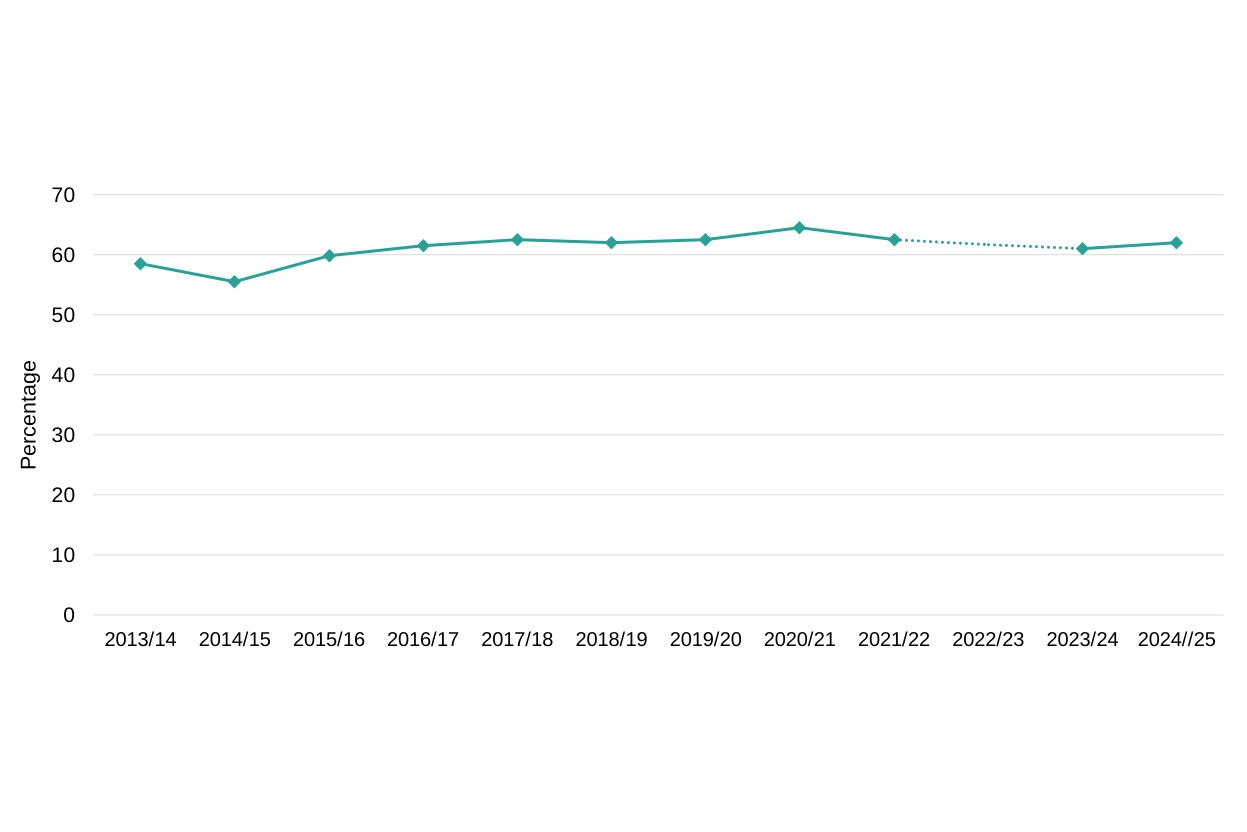
62% of adults felt they belonged ‘very strongly’ or ‘fairly strongly’ to their immediate neighbourhood, a 1 percentage point increase from 2023/24 (61%).
As shown in Figure 1.1, levels of belonging to the immediate neighbourhood in 2024/25 were higher than those reported in 2023/24 (61%) and between 2013/14 to 2015/16 (58-60%), though lower than levels reported in 2020/21 (65%).
Figure 1.1: Percentage of adults (aged 16+) who feel very or fairly strongly that they belong to their immediate neighbourhood, England: 2013/14 – 2024/25 (Base: All adults)
1.2 Demographics: Who felt a sense of belonging to their neighbourhood?[footnote 1]
Age
Compared with the average for adults in England (62%), adults aged 50 to 64 (65%), aged 65 to 74 (71%), and aged 75 and over (73%) were more likely to feel a sense of belonging to their immediate neighbourhood. Adults aged 25 to 34 (52%), aged 16 to 24 (56%), and aged 35 to 49 (60%) were less likely to feel a sense of belonging to their immediate neighbourhood compared with the average for adults in England (62%).
Disability status
Non-disabled (64%) adults were more likely to feel a sense of belonging to their immediate neighbourhood than disabled adults (59%).
Sex [footnote 2]
Female adults (63%) were more likely to feel a sense of belonging to their immediate neighbourhood than male adults (61%).
Gender identity [footnote 3]
Adults whose gender identity was the same as their sex registered at birth (62%) were more likely to feel a sense of belonging to their immediate neighbourhood than adults whose gender identity was different from their sex registered at birth (51%).
Sexual Orientation [footnote 4]
Heterosexual or straight adults (62%) were more likely to feel a sense of belonging to their immediate neighbourhood than gay or lesbian adults (51%), bisexual adults (48%) or adults from the “other sexual orientation” classification (48%).
Ethnicity
Adults from the Pakistani (72%), Indian (67%), and White British [footnote 5] (64%) ethnic groups were more likely to feel a sense of belonging to their immediate neighbourhood, compared with the average for adults in England (62%). Adults from the Chinese (46%), Any other White background (49%), mixed White and Asian (53%), mixed White and Black African (53%), Any other Asian background (54%), mixed White and Black Caribbean (57%), and Black African (57%) ethnic groups were less likely to feel a sense of belonging to their immediate neighbourhood compared with the average for adults in England (62%).
Religion
Compared with the average for adults in England (62%), Jewish (69%), Sikh (69%), Muslim (67%), Christian (67%), and Hindu (67%) adults were more likely to feel a sense of belonging to their immediate neighbourhood. Buddhist adults (51%), adults from the Any other religion classification (53%), and adults from the No religion classification (57%) were less likely to feel a sense of belonging to their immediate neighbourhood compared with the average for adults in England (62%).
Socio-economic classification [footnote 6]
Adults from the intermediate occupations classification (64%) were more likely to feel that they belong to their immediate neighbourhood than adults from higher managerial, administrative and professional occupations (62%), never worked and long-term unemployed (62%), and routine and manual occupations (60%) classifications. Additionally, adults from the higher managerial, administrative and professional occupations classification (62%) were more likely to feel that they belong to their immediate neighbourhood than adults from the routine and manual occupations classification (60%).
Index of multiple deprivation [footnote 7]
Adults living in the least deprived areas (10th decile, 71%) were more likely to feel a sense of belonging to their immediate neighbourhood than adults living in the most deprived areas (1st decile, 55%).
Population density
Adults living in rural areas (70%) were more likely to feel a sense of belonging to their immediate neighbourhood than adults living in urban areas (61%).
1.3 Geographical findings
Regional differences
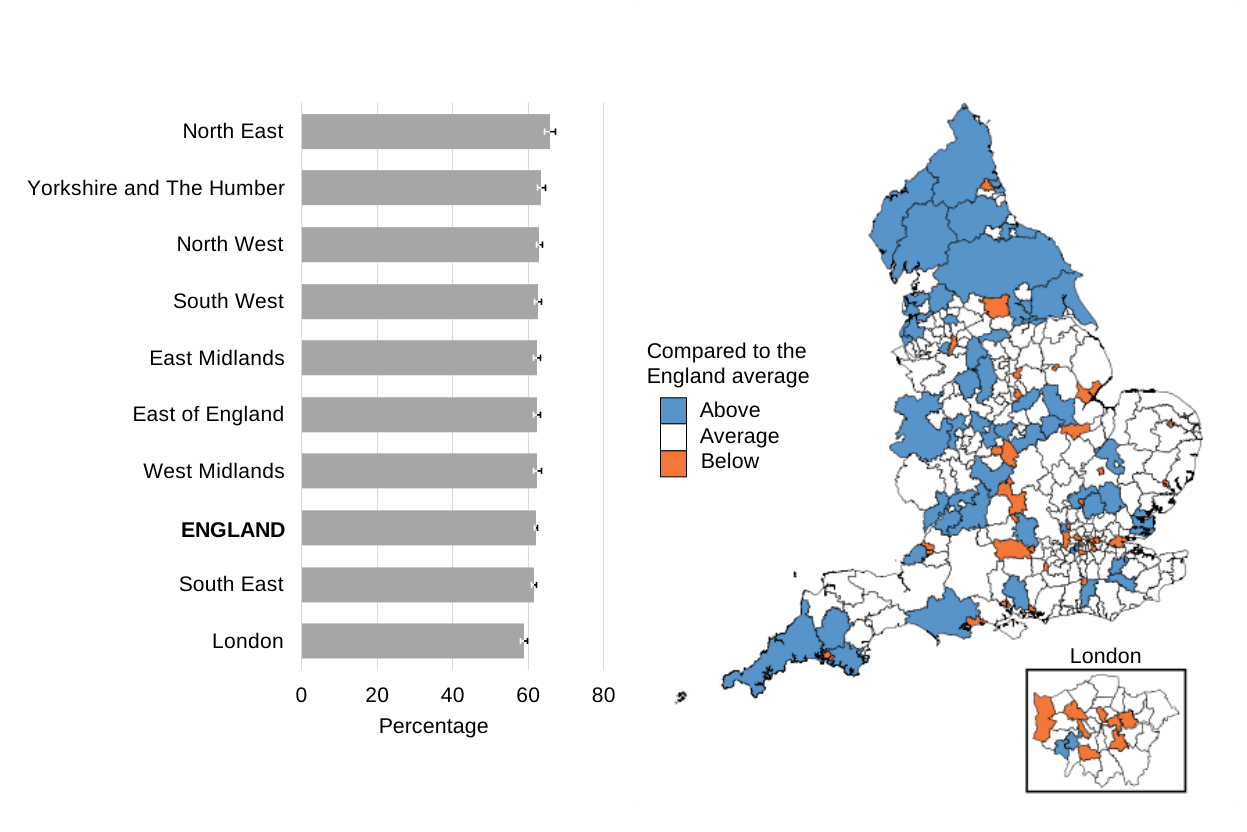
Compared with the average for adults in England (62%), the proportion of adults who felt a sense of belonging to their immediate neighbourhood was higher in the North East ITL1 area (66%), and lower than the average for adults in England in the London ITL1 area (59%).
Local Authority differences [footnote 8]
By local authority, there was a 41 percentage point difference in the proportion of adults who felt a sense of belonging to their immediate neighbourhood, from 89% in Isles of Scilly to 48% in Reading. Note that if Isles of Scilly is excluded, the range is reduced to 29 percentage points (from 77% in Richmond to 48% in Reading).
The proportion of adults who felt a sense of belonging to their immediate neighbourhood was in line with the average for adults in England in 206 (70%) local authorities, higher in 55 (19%) local authorities, and lower in 35 (12%) local authorities.
In general, patterns of feelings of belonging to the immediate neighbourhood at the ITL1 level are also observed at the local authority (LA) level. However, there are a small number of exceptions. The following notes the exceptions where levels in ITL1 areas are above or below the England average, but where levels in local authority areas show the reverse:
-
Feelings of belonging to their immediate neighbourhood were higher than the England average for adults living in the North East ITL1 area (66%), but lower than the England average for adults living in the North East local authority of Newcastle upon Tyne (56%).
-
Feelings of belonging to their immediate neighbourhood were lower than the England average for adults living in the London ITL1 area (59%), but higher than the England average for adults living in the London local authority of Richmond upon Thames (77%).
Figure 1.2: Percentage of adults (aged 16+) who feel very or fairly strongly that they belong to their immediate neighbourhood by ITL1 area and local authority, England: 2024/25 (Base: All adults)
2. Neighbourly interactions
Adults were asked about the regularity with which they chat to neighbours (more than just to say hello). The findings in this section are based on all adults who chat to neighbours at least once a month.[footnote 9]
It should be noted that an analysis of the impact of seasonality identified a significant difference between the proportion of adults reporting that they regularly chat (at least once a month) with neighbours across the different quarters of the survey year. The proportion reporting that they regularly chatted with their neighbours was generally higher in the first (April to June) and second (July to September) quarters of the survey year than in the third (October to December) and fourth (January to March) quarters. As the 2024/25 CLS fieldwork was condensed into the third and fourth quarters of 2024/25 (October - March) it covers quarters where the frequency of neighbourly interactions has been historically lower. This should be borne in mind when comparing results across years.
2.1 Headline findings
In 2024/25:
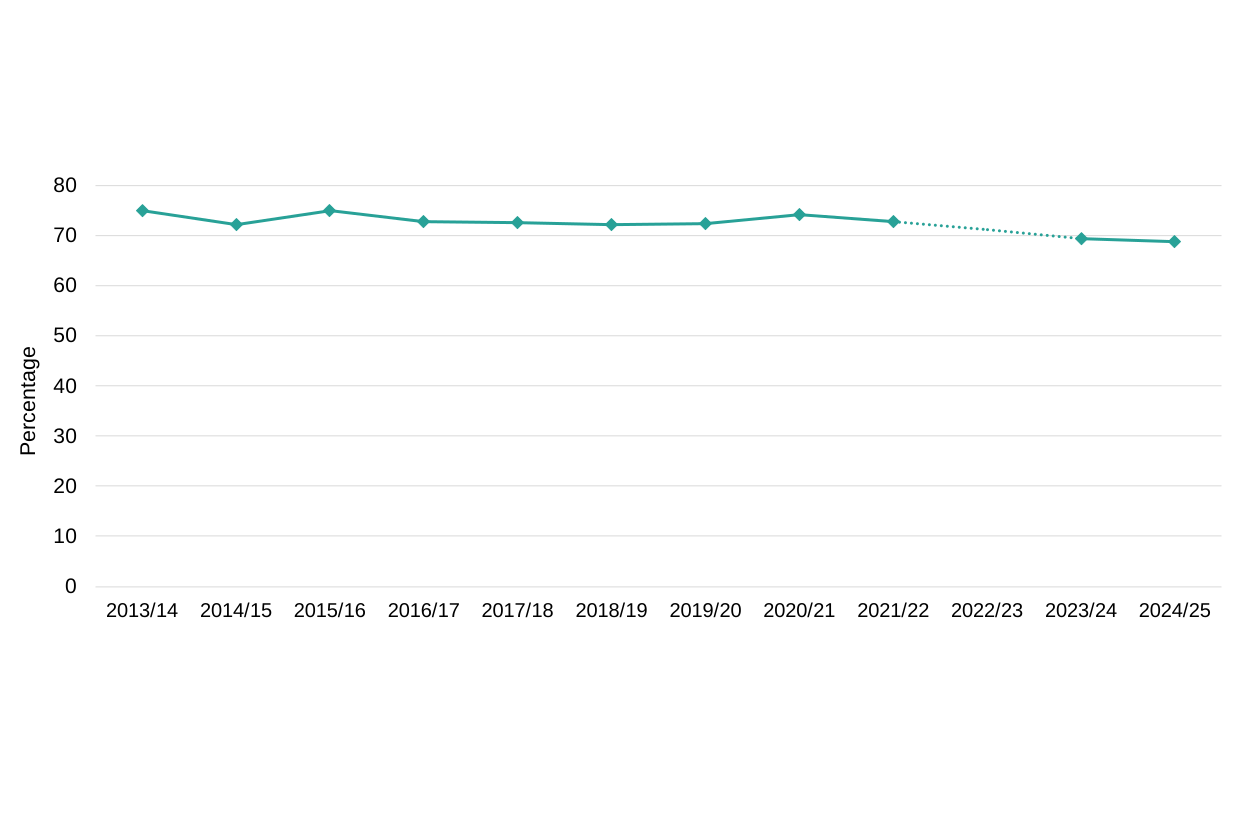
69% of adults reported that they chatted to their neighbours, more than just to say hello, at least once a month, no significant change from 2023/24 (69%).
Levels in 2023/24 and 2024/25 represent the lowest since push-to-web data collection began in 2013/14. However, as noted in the above seasonality analysis, fieldwork for the 2023/24 and 2024/25 surveys was conducted over quarters where levels of this measure have been historically lower. Analysis conducted in 2023/24 and 2024/25 shows that the decrease between levels recorded in 2021/22 and the levels recorded in 2023/24 and 2024/25, still stands when comparing against the equivalent quarters in 2021/22.
Figure 2.1: Percentage of adults (aged 16+) who chat to their neighbours at least once a month, England: 2013/14 – 2024/25 (Base: All adults)
2.2 Demographics: Who regularly chats to their neighbours? [footnote 1]
Age
Compared with the average for adults in England (69%), adults aged 35 to 49 (70%), aged 50 to 64 (77%), aged 65 to 74 (82%), and aged 75 and over (83%) were more likely to chat to their neighbours at least once a month. Adults aged 16 to 24 (45%) and aged 25 to 34 (56%) were less likely to chat to their neighbours at least once a month when compared with the average for adults in England (69%).
Disability status
No significant differences were observed between the proportion of disabled and non-disabled adults who chat to their neighbours at least once a month.
Sex [footnote 2]
No significant differences were observed between the proportion of male and female adults who chat to their neighbours at least once a month.
Gender identity [footnote 3]
Adults whose gender identity was the same as their sex registered at birth (69%) were more likely to chat to neighbours at least once a month than adults whose gender identity was different from their sex registered at birth (45%).
Sexual Orientation [footnote 4]
Heterosexual or straight adults (69%) were more likely to chat to their neighbours at least once a month than gay or lesbian adults (55%), bisexual adults (47%) or adults from the “other sexual orientation” classification (45%). Additionally, gay or lesbian adults (55%) were more likely to chat to their neighbours at least once a month than bisexual adults (47%) and adults from the “other sexual orientation” classification (45%).
Ethnicity
Compared with the average for adults in England (69%), adults from the White British[footnote 5] ethnic group (72%) were more likely to chat to their neighbours at least once a month. Adults from the Chinese (50%), Black African (55%), mixed White and Asian (55%), Any other mixed or multiple background (55%), Any other Asian background (56%), Any other ethnic group (56%), Arab (59%), mixed White and Black African (59%), White Gypsy or Irish Traveller (59%), Black Caribbean (61%), mixed White and Black Caribbean (62%), and Indian (66%) ethnic groups were less likely to chat to their neighbours at least once a month compared with the average for adults in England (69%).
Religion
Compared with the average for adults in England (69%), Christian adults (75%) were more likely to chat to their neighbours at least once a month. Adults from the Buddhist (62%), No religion classification (64%), Hindu adults (65%) and Muslim adults (65%) were less likely to chat to neighbours at least once a month compared with the average for adults in England (69%).
Socio-economic classification [footnote 6]
The proportions of adults regularly chatting with their neighbours were significantly different between adults from each socio-economic classification. Adults from the intermediate occupations classification (73%) were more likely to chat to their neighbours at least once a month. This was followed by adults from higher managerial, administrative and professional occupations classification (70%), then by adults from the routine and manual occupations classification (68%), and finally by adults from the never worked and long-term unemployed classification (65%).
Index of multiple deprivation [footnote 7]
Adults living in the least deprived areas (10th decile, 75%) were more likely to chat to their neighbours at least once a month than adults living in the most deprived areas (1st decile, 64%).
Population density
Adults living in rural areas (77%) were more likely to chat to their neighbours at least once a month than adults living in urban areas (67%).
2.3 Geographical findings
Regional differences
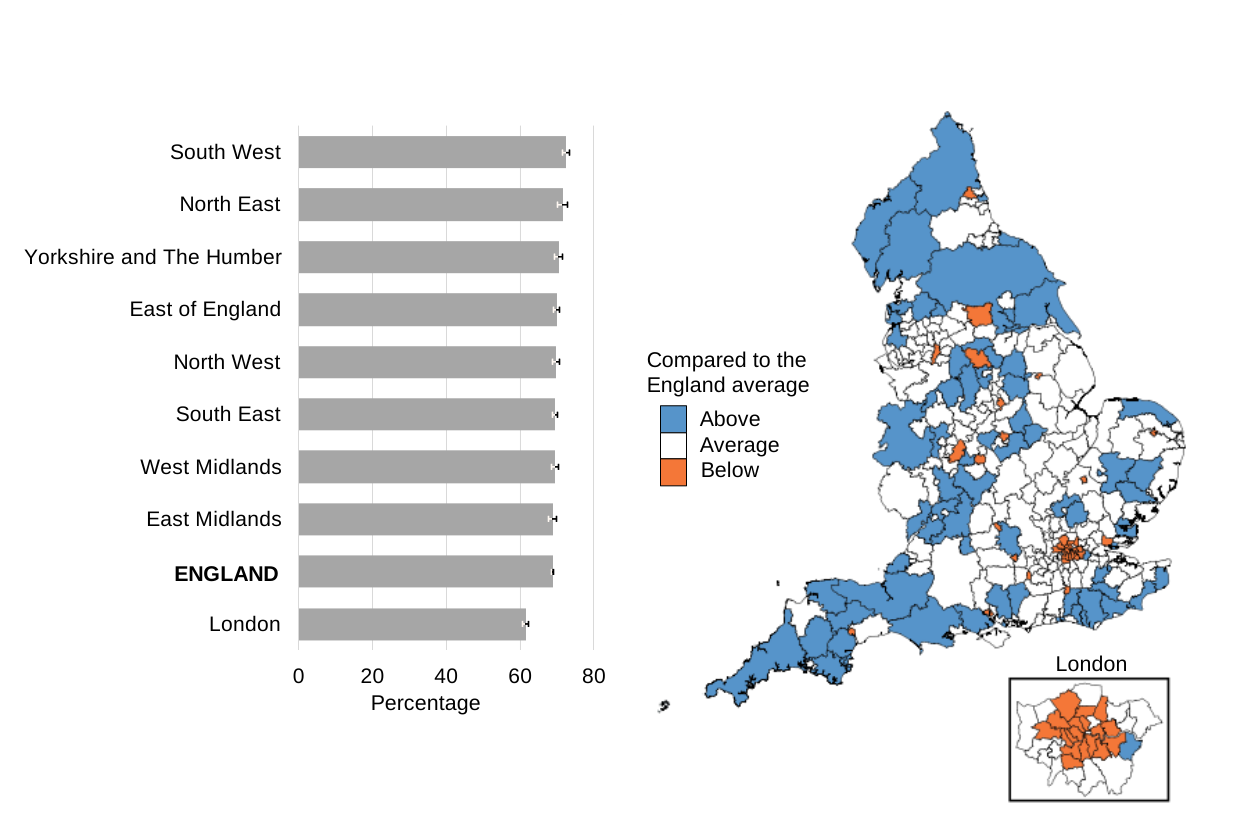
Compared with the average for adults in England (69%), the likelihood of chatting to neighbours at least once a month was higher among adults living in the South West (72%), North East (72%), Yorkshire and The Humber (70%) and East of England (70%) ITL1 areas, and lower in the London ITL1 area (62%).
Local Authority differences [footnote 8]
By local authority, there was a 41 percentage point difference in the proportion of adults who chat to their neighbours at least once a month, from 89% in Isles of Scilly to 48% in Tower Hamlets.
The proportion of adults who chat to their neighbours at least once a month was in line with the England average in 191 (65%) local authorities, higher than the England average in 69 (23%) local authorities, and lower than the England average in 36 (12%) local authorities.
In general, the patterns in the proportion of adults who chat to their neighbours at least once a month at the ITL1 level are also observed at the local authority (LA) level. However, there are a number of exceptions. The following notes the exceptions where levels in ITL1 areas are above or below the England average, but where levels in local authority areas show the reverse:
-
The proportion of adults who chat to their neighbours at least once a month was lower than the England average for adults living in the London ITL1 area (62%), but higher than the England average for adults living in the London local authority of Bexley (75%).
-
The proportion of adults who chat to their neighbours at least once a month was higher than the England average for adults living in the North East ITL1 area (72%), but lower than the England average for adults living in the North East local authority of Newcastle upon Tyne (60%).
-
The proportion of adults who chat to their neighbours at least once a month was higher than the England average for adults living in the Yorkshire and the Humber ITL1 area (70%), but lower than the England average for adults living in the Yorkshire and the Humber local authorities of Sheffield (64%) and Leeds (65%).
-
The proportion of adults who chat to their neighbours at least once a month was higher than the England average for adults living in the East of England ITL1 area (70%), but lower than the England average for adults living in the East of England local authorities of Norwich (57%), Cambridge (58%) and Basildon (62%).
-
The proportion of adults who chat to their neighbours at least once a month was higher than the England average for adults living in the South West ITL1 area (72%), but lower than the England average for adults living in the South West local authority of Exeter (60%).
Figure 2.2: Percentage of adults (aged 16+) who chat to neighbours at least once a month by ITL1 area and local authority, England: 2024/25 (Base: All adults)
3. Neighbourhood collaboration
3.1 Headline findings
In 2024/25:
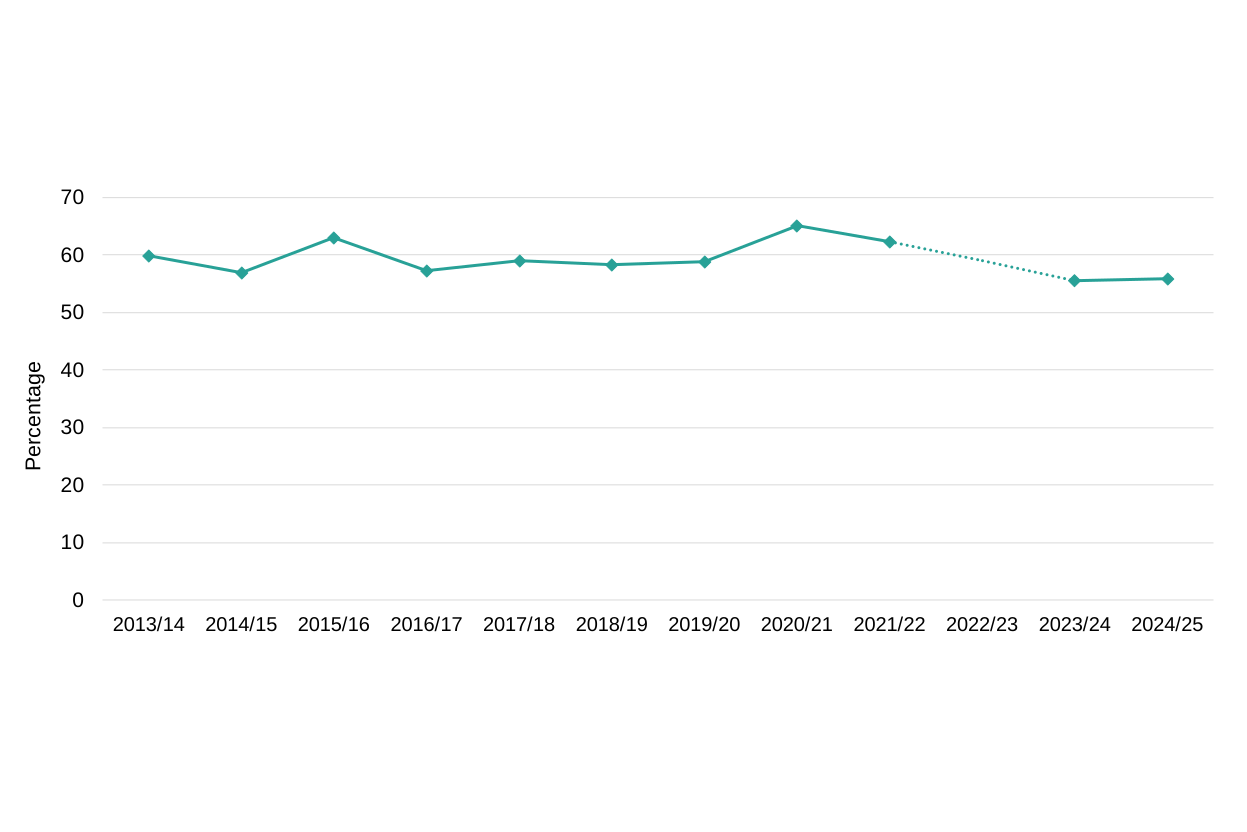
56% of adults definitely or tend to agree that people in their neighbourhood pull together to improve the neighbourhood, no significant change from 2023/24 (56%).
As shown below in Figure 3.1, levels in 2023/24 and 2024/25 are the lowest recorded for this measure since the push-to-web format commenced.[footnote 10] The highest recorded levels on this measure were in 2020/21 (65%) and rates have fluctuated between 56% and 65% since 2013/14 when push-to-web data collection commenced.
Figure 3.1: Percentage of adults (aged 16+) who agreed that people in the neighbourhood pull together to improve the local area, England: 2013/14 – 2024/25 (Base: All adults)
3.2 Demographics: Who felt a sense of collaboration in their local neighbourhood? [footnote 1]
Age
Compared with the average for adults in England (56%), adults aged 35 to 49 (57%), aged 50 to 64 (58%), aged 65 to 74 (62%) and aged 75 and over (66%) were more likely to agree that people in the neighbourhood pull together to improve their neighbourhood, while adults aged 16 to 24 (45%) and aged 25 to 34 (49%) were less likely to agree that people in the neighbourhood pull together to improve their neighbourhood.
Disability status
Non-disabled adults (58%) were more likely to agree that people in their neighbourhood pull together to improve the neighbourhood than disabled adults (52%).
Sex [footnote 2]
Female adults (57%) were more likely than male adults (56%) to agree that people in their neighbourhood pull together to improve the local neighbourhood, although this difference is small.
Gender identity [footnote 3]
Adults whose gender identity was the same as their sex registered at birth (56%) were more likely to agree that people in their neighbourhood pull together to improve the neighbourhood than adults whose gender identity was different from their sex registered at birth (43%).
Sexual Orientation [footnote 4]
Heterosexual or straight adults (56%) were more likely to agree that people in their neighbourhood pull together to improve the neighbourhood than gay or lesbian adults (47%), bisexual adults (44%) and adults from the “other sexual orientation” classification (43%).
Ethnicity
Compared with the average for adults in England (56%), adults from the Chinese (65%), Indian (60%), Pakistani (60%), Any other Asian background (59%), and White British[footnote 5] (57%) ethnic groups were more likely to agree that people in their neighbourhood pull together to improve the neighbourhood. Adults from the White Gypsy or Irish Traveller (35%), Black Caribbean (47%), mixed White and Black African (48%), mixed White and Asian (49%), mixed White and Black Caribbean (50%), Any other mixed or multiple background (51%) and Black African (52%) ethnic groups were less likely to agree that people in their neighbourhood pull together to improve the neighbourhood than the average for adults in England (56%).
Religion
Compared with the average for adults in England (56%), Jewish (64%), Hindu (61%), Christian (60%), and Muslim (58%) adults were more likely to agree that people in their neighbourhood pull together to improve the neighbourhood. Adults from the Any other religion classification (46%) and adults from the No religion classification (52%) were less likely to agree that people in their neighbourhood pull together to improve the neighbourhood, compared with the average for adults in England (56%).
Socio-economic classification [footnote 6]
Adults from the higher managerial, administrative and professional occupations (58%) and intermediate occupations (58%) classifications were more likely to agree that people in their neighbourhood pull together to improve the neighbourhood than adults from the never worked and long-term unemployed (52%) and routine and manual occupations (50%) classifications.
Index of multiple deprivation [footnote 7]
Adults from the least deprived areas (10th decile, 69%) were more likely to agree that people living in their neighbourhood pull together to improve the neighbourhood than adults from the most deprived areas (1st decile, 43%) .
Population density
Adults living in rural areas (72%) were more likely to agree that people in their neighbourhood pull together to improve the neighbourhood than adults living in urban areas (52%).
3.3 Geographical findings
Regional differences
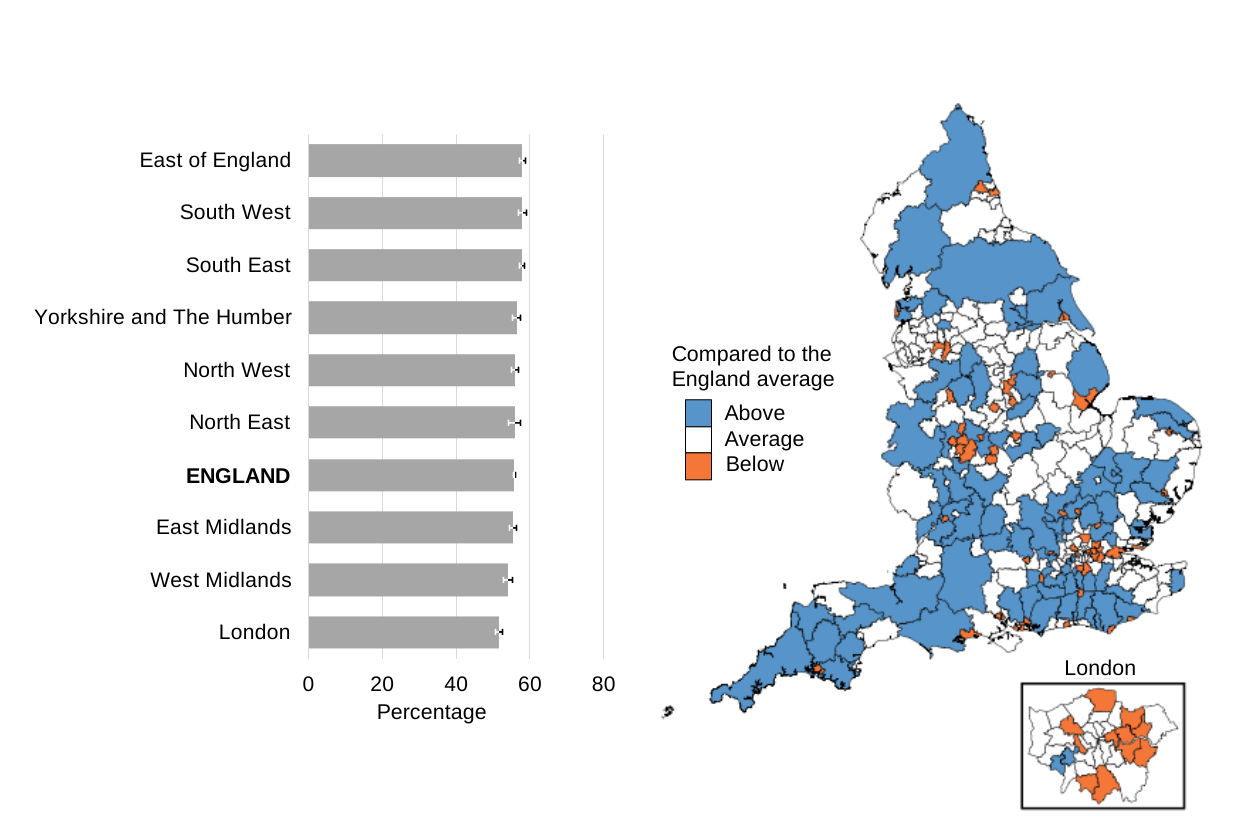
Compared with the average for adults in England (56%), agreement that people in their neighbourhood pull together to improve the neighbourhood was higher among adults living in the South West (58%), South East (58%), and East of England (58%) ITL1 areas, and lower in the West Midlands (54%) and London (52%) ITL1 areas.
Local Authority differences [footnote 8]
By local authority, there was a 49 percentage point difference in the rates of agreement that people in their neighbourhood pull together to improve the neighbourhood, from 88% in Isles of Scilly to 39% in Southampton. Note that if Isles of Scilly is excluded, the range is reduced to 38 percentage points (from 77% in West Devon to 39% in Southampton).
Levels of agreement that people in the neighbourhood pull together to improve the neighbourhood was in line with the England average in 157 (53%) local authorities, higher than the England average in 85 (29%) local authorities, and lower than the England average in 54 (18%) local authorities.
In general, patterns of agreement amongst adults that people in their neighbourhood pull together to improve the neighbourhood at the ITL1 level are also observed at the local authority (LA) level. However, there are a number of exceptions. The following notes the exceptions where levels in ITL1 areas are above or below the England average, but where levels in local authority areas show the reverse:
-
Levels of agreement that people in their neighbourhood pull together to improve the neighbourhood were higher than the England average for adults living in the South West ITL1 area (58%), but lower than the England average for adults living in the South West local authorities of Gloucester (48%), Bournemouth, Christchurch and Poole (47%), and Plymouth (42%).
-
Levels of agreement that people in their neighbourhood pull together to improve the neighbourhood were higher than the England average for adults living in the South East ITL1 area (58%), but lower than the England average for adults living in the South East local authorities of Eastbourne (50%), Hastings (50%), Gosport (48%), Worthing (46%), Crawley (46%), Havant (46%), Portsmouth (46%), Reading (46%), Rushmoor (45%), Slough (45%), and Southampton (39%).
-
Levels of agreement that people in their neighbourhood pull together to improve the neighbourhood were higher than the England average for adults living in the East of England ITL1 area (58%), but lower than the England average for adults living in the East of England local authorities of Luton (50%), Harlow (49%), Thurrock (48%), Stevenage (46%), Southend-on-Sea (46%), Ipswich (44%), and Norwich (43%).
-
Levels of agreement that people in their neighbourhood pull together to improve the neighbourhood was lower than the England average for adults living in the West Midlands ITL1 area (54%), but higher than the England average for adults living in 9 local authorities within this ITL1 area; Stratford-on-Avon (74%), Wychavon (71%), South Staffordshire (71%), Shropshire (70%), Staffordshire Moorlands (67%), Bromsgrove (65%), Malvern Hills (64%), Lichfield (63%) and North Warwickshire (63%).
Figure 3.2: Percentage of adults (aged 16+) who agreed that people in their neighbourhood pull together to improve the neighbourhood, by ITL1 area and local authority, England: 2024/25 (Base: All adults)
4. Neighbourhood trust
4.1 Headline findings
In 2024/25:
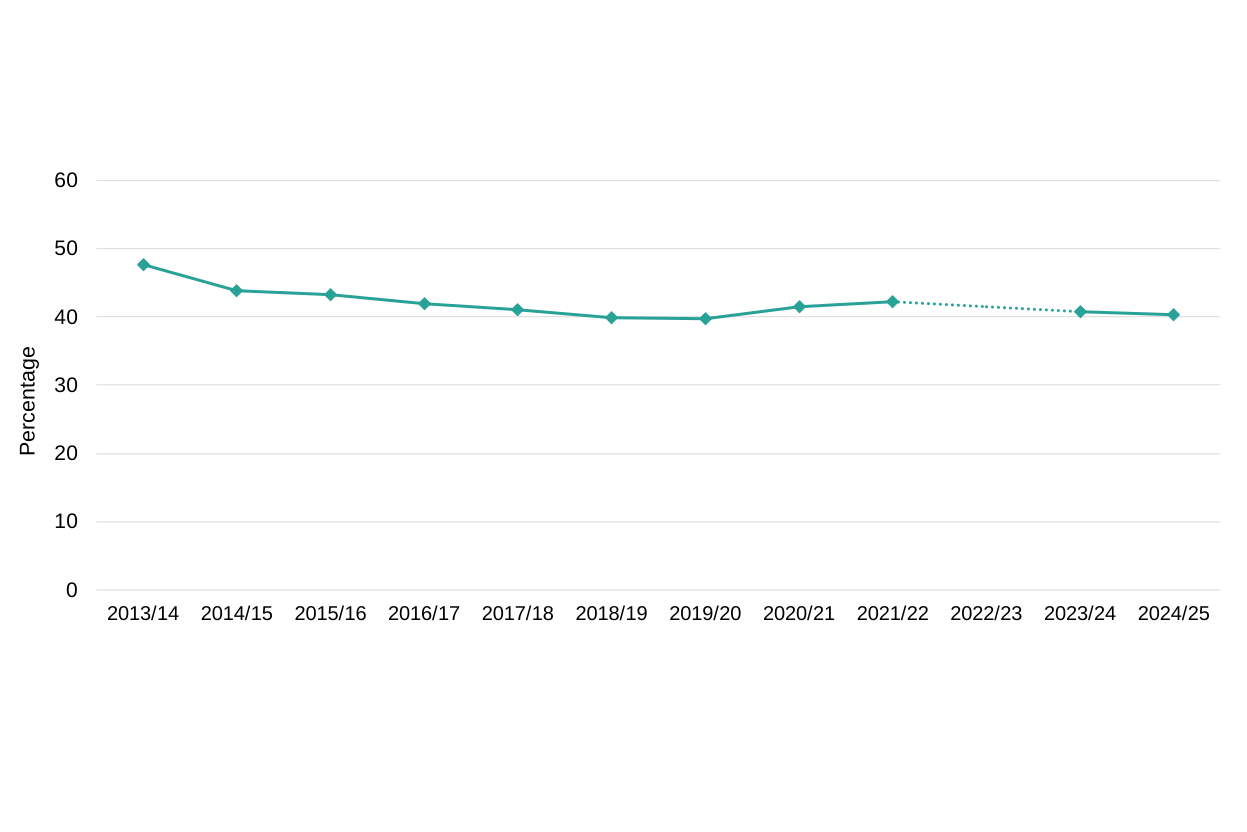
40% of adults reported that many of the people in their neighbourhood can be trusted, no significant change from 2023/24 (41%).
As shown below in Figure 4.1, levels of trust of people in their neighbourhood have remained broadly consistent since 2016/17 (40% to 42%) but have decreased from the highest recorded rates in 2013/14 (48%) when push-to-web data collection commenced.[footnote 11]
Figure 4.1: Percentage of adults (aged 16+) who feel that many people in their neighbourhood can be trusted, England: 2013/14 – 2024/25 (Base: All adults)
4.2 Demographics: Who feels that many people in their neighbourhood can be trusted? [footnote 1]
Age
Compared with the average for adults in England (40%), adults aged 50 to 64 (45%) aged 65 to 74 (54%) and aged 75 and over (59%) were more likely to report that many people in their neighbourhood can be trusted. Adults aged 16 to 24 (26%), aged 25 to 34 (28%) and aged 35 to 49 (37%) were less likely to report that many people in their neighbourhood can be trusted compared with the average for adults in England (40%).
Disability status
Non-disabled adults (43%) were more likely than disabled adults (37%) to report that many people in their neighbourhood can be trusted.
Sex [footnote 2]
Female adults (41%) were more likely than male adults (40%) to report that many people in their neighbourhood can be trusted.
Gender identity [footnote 3]
Adults whose gender identity was the same as their sex registered at birth (41%) were more likely to report that many people in their neighbourhood can be trusted than adults whose gender identity was different from their sex registered at birth (34%).
Sexual Orientation [footnote 4]
Heterosexual or straight adults (40%) were more likely to report that many people in their neighbourhood can be trusted than gay or lesbian adults (31%), bisexual adults (30%) or adults from the “other sexual orientation” classification (30%).
Ethnicity
Compared with the average for adults in England (40%), adults from the White British[footnote 5] (44%) ethnic group were more likely to report that many people in their neighbourhood can be trusted. Adults from the White Gypsy or Irish Traveler (14%), Any other Black or African or Caribbean background (17%), Black Caribbean (18%), Arab (20%), mixed White and Black African (23%), mixed White and Black Caribbean (24%), Black African (25%), Bangladeshi (25%), Any other Asian background (26%), Pakistani (27%), Chinese (29%), Indian (31%), mixed White and Asian (31%), Any other White background (31%) and Any other (33%) ethnic groups were less likely to report that many people in their neighbourhood can be trusted compared with the average for adults in England (40%).
Religion
Compared with the average for adults in England (40%), Jewish (52%) and Christian (45%) adults were more likely to report that many people in their neighbourhood can be trusted. Adults from the No religion classification (39%), adults from the Any other religion classification (34%), and Buddhist (33%), Hindu (31%), Muslim (25%), and Sikh (24%) adults were less likely to report that many of the people in their neighbourhood can be trusted compared with the average for adults in England (40%).
Socio-economic classification [footnote 6]
Levels of trust in other people in the neighbourhood were significantly different between adults from each socio-economic classification. Adults from the higher managerial, administrative and professional occupations classification (46%) were more likely to report that many of the people in their neighbourhood can be trusted. This was followed by adults from the intermediate occupations classification (43%), then by adults from the routine and manual occupations classification (30%), and adults from the never worked and long-term unemployed classification (27%).
Index of multiple deprivation [footnote 7]
Adults living in the least deprived areas (10th decile, 63%) were more likely to report that many people in their neighbourhood can be trusted than adults living in the most deprived areas (1st decile, 18%).
Population density
Adults living in rural areas (57%) were more likely to report that many people in their neighbourhood can be trusted than with adults living in urban areas (37%).
4.3 Geographical findings
Regional differences
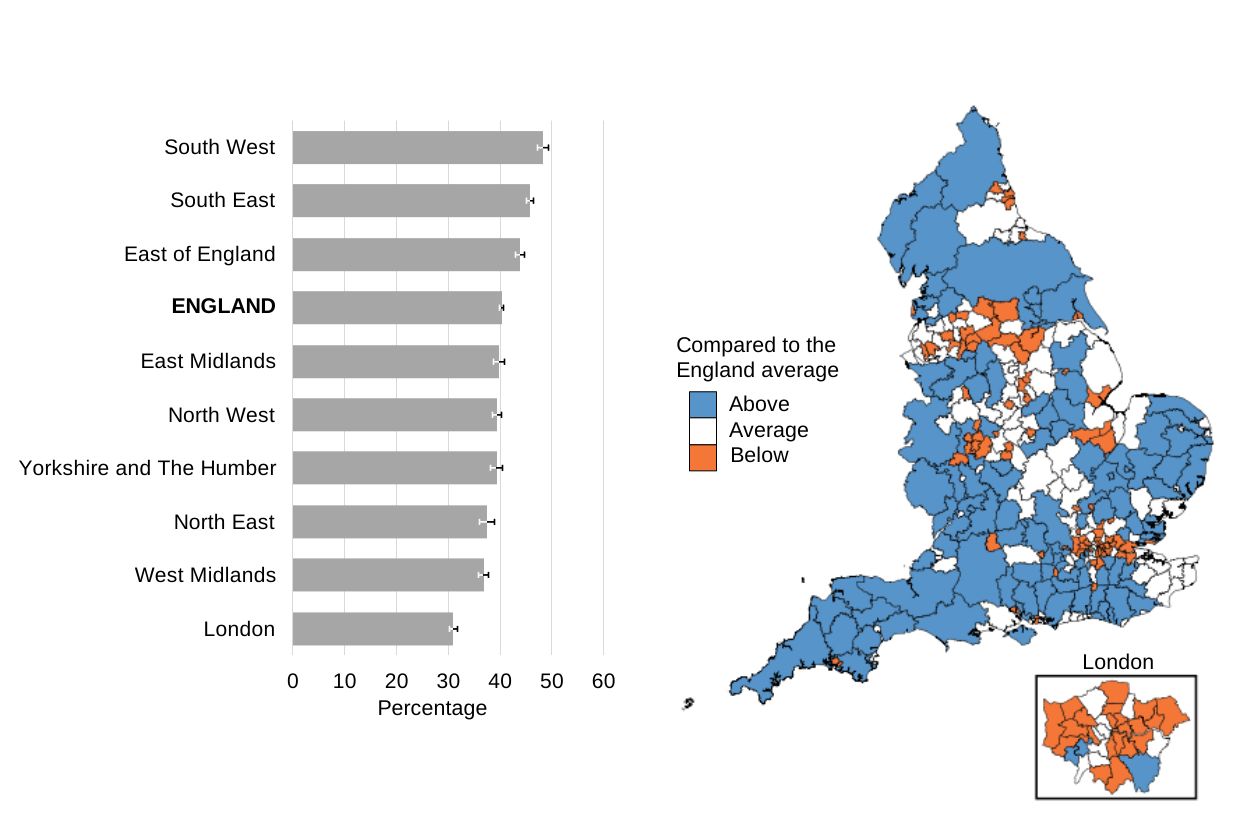
Compared to the average for adults in England (40%), the proportion of adults reporting that many people in their neighbourhood can be trusted was higher for those living in the South West (48%), South East (46%), and East of England (44%) ITL1 areas, and lower for those living in the ITL1 areas of London (31%), West Midlands (37%) and North East (37%).
Local Authority differences [footnote 8]
By local authority, there was a 72 percentage point difference in the proportion of adults who agreed that many people in their neighbourhood can be trusted, from 87% in Isles of Scilly to 15% in Newham. Note that if Isles of Scilly is excluded, the range is reduced to 53 percentage points (from 69% in South Hams to 15% in Newham).
The proportion of adults who reported that many people in their neighbourhood can be trusted was in line with the England average in 107 (36%) local authorities, higher than the England average in 108 (36%) local authorities, and lower than the England average in 81 (27%) local authorities.
In general, the patterns in levels of trust in those in the neighbourhood at the ITL1 level are also observed at the local authority (LA) level. However, there are a number of exceptions. The following notes the exceptions where levels in ITL1 areas are above or below the England average, but where levels in local authority areas show the reverse:
-
The proportion of adults reporting that many people in their neighbourhood can be trusted was higher than the England average for adults living in the South West ITL1 area (48%), but lower than the average for adults living in the South West local authorities of Plymouth (35%) and Swindon (34%).
-
The proportion of adults reporting that many people in their neighbourhood can be trusted was higher than the England average for adults living in the South East ITL1 area (46%), but lower than the England average for adults living in the South East local authorities of Reading (32%), Rushmoor (32%), Gravesham (32%), Dartford (31%), Portsmouth (31%), Crawley (29%), Southampton (24%), and Slough (18%).
-
The proportion of adults reporting that many people in their neighbourhood can be trusted was higher than the England average for adults living in the East of England ITL1 area (44%), but lower than the England average for adults living in the East of England local authorities of Broxbourne (33%), Fenland (33%), Southend-on-Sea (32%), Stevenage (32%), Peterborough (30%), Watford (29%), Harlow (28%), Thurrock (26%), and Luton (23%).
-
The proportion of adults reporting that many people in their neighbourhood can be trusted was lower than the England average for adults living in the London ITL1 area (31%) but higher than the England average for adults living in the London local authorities of Bromley (47%) and Richmond upon Thames (61%).
-
The proportion of adults reporting that many people in their neighbourhood can be trusted was lower than the England average for adults living in the North EastITL1 area (37%), but higher than the England average for adults living in the North East local authority of Northumberland (48%).
-
The proportion of adults reporting that many people in their neighbourhood can be trusted was lower that the England average for adults living in the West Midlands ITL1 area (37%), but higher than the England average for adults living in the West Midlands local authorities of Malvern Hills (65%), Stratford-upon-Avon (57%), Bromsgrove (55%), Shropshire (54%), Warwick (53%), Staffordshire Moorlands (52%), County of Herefordshire (51%), South Staffordshire (51%), Wychavon (50%), and Lichfield (48%).
Figure 4.2: Percentage of adults (aged 16+) who reported that many people in their neighbourhood can be trusted by ITL1 area and local authority, England: 2024/25 (Base: All adults)
5. Agreement that the local area is a place where people from different backgrounds get along well together
5.1 Headline findings
In 2024/25:
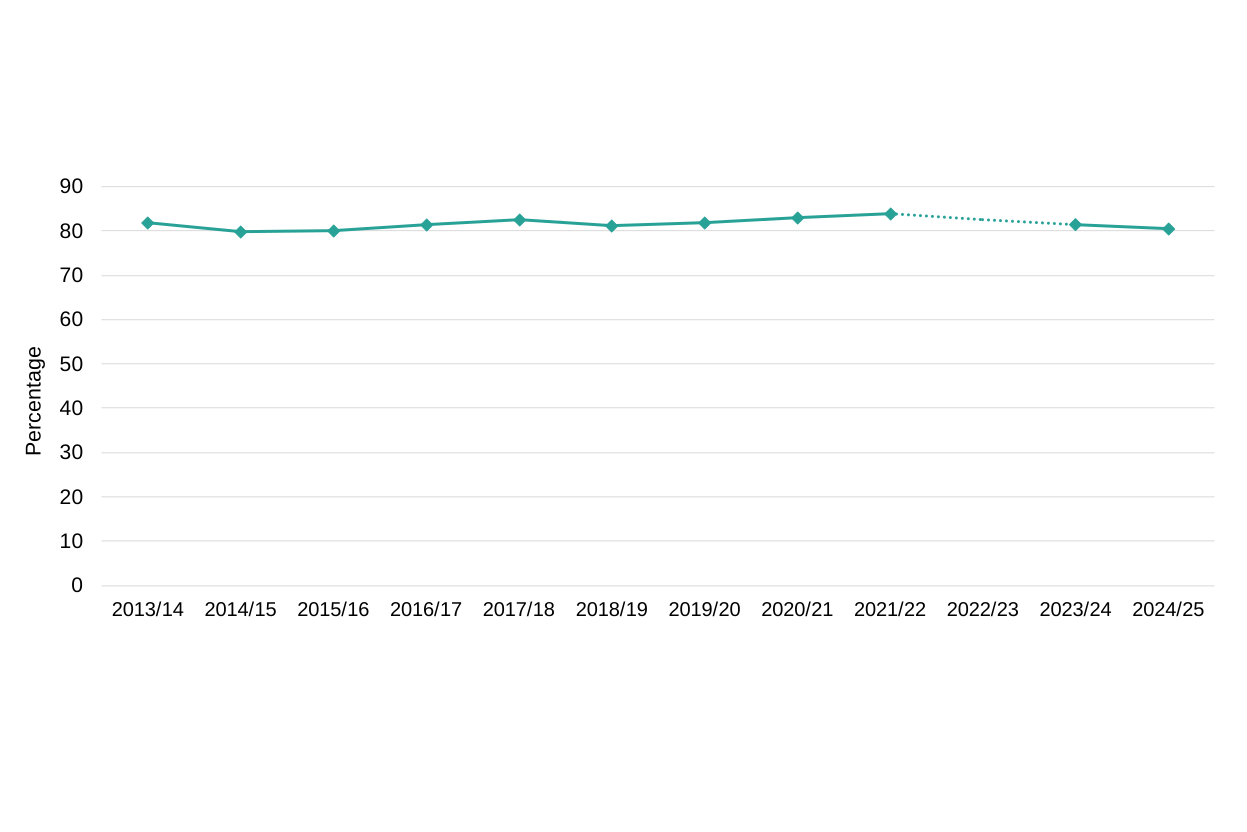
81% of adults definitely or tended to agree that their local area is a place where people from different backgrounds get along well together, a small, but significant, decrease from 2023/24 (from 81.4% in 2023/24 to 80.6% in 2024/25).
As shown in Figure 5.1, levels on this measure have ranged from a high of 84% in 2021/22 to a low of 80% in 2016/17. Levels in 2024/25 were lower than in the years 2020/21 to 2023/4 (81-84%), 2017/18 (82%) and 2013/14 (83%), although some of these differences were small.
Figure 5.1: Percentage of adults (aged 16+) who agree that their local area is a place where people from different backgrounds get along well together, England: 2013/14 – 2024/25 (Base: All adults)
5.2 Demographics: Who felt that their local area was a place where people from different backgrounds get along well together? [footnote 1]
Age
Compared with the average for adults in England (81%), adults aged 50 to 64 (81%), aged 65 to 74 (85%) and aged 75 and over (88%) were more likely to agree that their local area is a place where people from different backgrounds get along well together. Adults aged 16 to 24 (77%) and aged 25 to 34 (77%) were less likely to agree that their local area is a place where people from different backgrounds get along well together, compared with the average for adults in England (81%).
Disability status
Non-disabled adults (83%) were more likely to agree that their local area is a place where people from different backgrounds get along well together, than disabled adults (77%).
Sex [footnote 2]
Female adults (82%) were more likely to agree that their local area is a place where people from different backgrounds get along well together than male adults (80%).
Gender identity [footnote 3]
No significant differences were observed between adults whose gender identity was different from their sex registered at birth and adults whose gender identity was the same as their sex registered at birth in terms of the likelihood to agree that their local area is a place where people from different backgrounds get along well together.
Sexual Orientation [footnote 4]
Heterosexual or straight adults (81%) were more likely to agree that their local area is a place where people from different backgrounds get along well together than bisexual adults (77%), gay or lesbian adults (76%), or adults from the “other sexual orientation” classification (74%).
Ethnicity
Compared with the average for adults in England (81%), adults from the Chinese (85%), Indian (84%), and Any other Asian background (84%) ethnic groups were more likely to agree that their local area is a place where people from different backgrounds get along well together. Adults from the mixed White and Asian (76%), mixed White and Black African (74%), mixed White and Black Caribbean (74%) and White Gypsy or Irish Traveller (56%) ethnic groups were less likely to agree that their local area is a place where people from different backgrounds get along well together, compared with the average for adults in England (81%).
Religion
Compared with the average for adults in England (81%), Christian (83%) and Muslim (83%) adults were more likely to agree that their local area is a place where people from different backgrounds get along well together. Adults from the No religion classification (79%) and adults from the Any other religion classification (75%) were less likely to agree that their local area is a place where people from different backgrounds get along well together, compared with the average for adults in England (81%).
Socio-economic classification [footnote 6]
The proportion of adults who agree that their local area is a place where people from different backgrounds get along well together was significantly different between adults from each socio-economic classification. Adults from the higher managerial, administrative and professional occupations classification (83%) were more likely to agree that their local area is a place where people from different backgrounds get along well together. This was followed by adults from the intermediate occupations classification (82%), then by adults from the routine and manual occupations classification (77%), and by adults from the never worked and long term unemployed classifications (75%).
Index of multiple deprivation [footnote 7]
Adults living in the least deprived areas (10th decile, 90%) were more likely to agree that their local area is a place where people from different backgrounds get along well together than adults living in the most deprived areas (1st decile, 68%)
Population density
Adults living in rural areas (86%) were more likely to agree that their local area is a place where people from different backgrounds get along well together than adults living in urban areas (80%).
5.3 Geographical findings
Regional differences
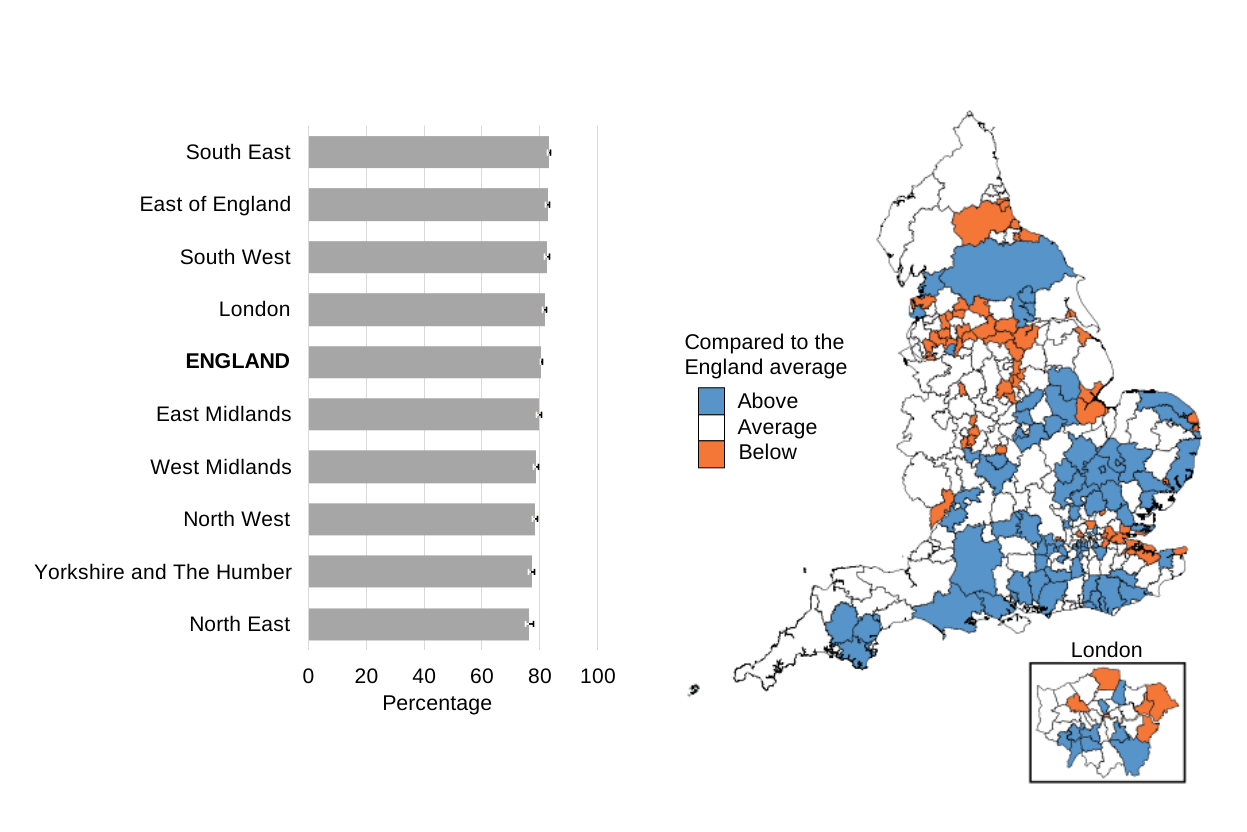
Compared with the average for England (81%), the proportion of adults who agree that their local area is a place where people from different backgrounds get along well together was higher among adults living in the South East (83%), East of England (83%), South West (82%), and London (82%) ITL1 areas and lower than the England average among adults living in the West Midlands (79%), North West (78%), Yorkshire and The Humber (77%), and North East (76%) ITL1 areas.
Local Authority differences [footnote 8]
By local authority, there was a 40 percentage point difference in the proportion of adults who agree that their local area is a place where people from different backgrounds get along well together, from 95% in Isles of Scilly to 55% in Boston.
The proportion of adults who agree that their local area is a place where people from different backgrounds get along well together was in line with the England average in 165 (56%) local authorities, higher than the England average in 75 (25%) local authorities, and lower than the England average in 56 (19%) local authorities.
In general, patterns of agreement among adults that their local area is a place where people from different backgrounds get along well together at the ITL1 level are also observed at the local authority (LA) level. However, there are a number of exceptions. The following notes the exceptions where levels in ITL1 areas are above or below the England average, but where levels in local authority areas show the reverse:
-
The proportion of adults who agree that their local area is a place where people from different backgrounds get along well together was higher than the England average for adults living in the South East ITL1 area (83%), but lower for adults living in the South East local authorities of Medway (76%), Thanet (75%), Slough (73%) and Swale (73%).
-
The proportion of adults who agree that their local area is a place where people from different backgrounds get along well together was higher than the England average for adults living in the East of England ITL1 area (83%), but lower for adults living in the East of England local authorities of Basildon (73%), Harlow (73%), Southend-on-Sea (73%), Great Yarmouth (71%), Thurrock (71%) and Ipswich (69%).
-
The proportion of adults who agree that their local area is a place where people from different backgrounds get along well together was higher than the England average for adults living in the South West ITL1 area (82%), but lower than the England average for adults living in the South West local authority of Forest of Dean (76%).
-
The proportion of adults who agree that their local area is a place where people from different backgrounds get along well together was higher than the England average for adults living in the London ITL1 area (82%), but lower than the England average for adults living in the London local authorities of Bexley (76%), City of London (75%), Barking and Dagenham (75%), Enfield (75%), Brent (74%) and Havering (73%).
-
The proportion of adults who agree that their local area is a place where people from different backgrounds get along well together was lower than the England average for adults living in the West Midlands ITL1 area (79%), but higher than the England average for adults living in the West Midlands local authorities of Warwick (89%), Bromsgrove (87%) and Stratford-on-Avon (87%).
-
The proportion of adults who agree that their local area is a place where people from different backgrounds get along well together was lower than the England average for adults living in the North WestITL1 area (78%), but higher than the England average for adults living in the North West local authorities of Trafford (89%), Lancaster (87%), and Fylde (86%).
-
The proportion of adults who agree that their local area is a place where people from different backgrounds get along well together was lower than the England average for adults living in the Yorkshire and The Humber ITL1 area (77%), but higher than the England average for adults living in the Yorkshire and the Humber local authorities of York (88%) and North Yorkshire (85%).
Figure 5.2: Percentage of adults (aged 16+) who agree that their local area is a place where people from different backgrounds get along well together, by ITL1 area and local authority, England: 2024/25 (Base: All adults)
6. Perceived attractiveness of local area
Respondents were asked how attractive or unattractive they found their local area. This question was added in 2023/24.
6.1 Headline findings
In 2024/25:
58% of adults considered their local area to be either very or fairly attractive, no significant change from 2023/24 (57%).
6.2 Demographics: Who considered their local area to be attractive? [footnote 1]
Age
Compared with the average for adults in England (58%), adults aged 35 to 49 (59%), aged 50 to 64 (59%), aged 65 to 74 (62%), and aged 75 and over (64%) were more likely to feel that their local area is attractive. In contrast, adults aged 16 to 24 (49%) and aged 25 to 34 (55%) were less likely to feel that their local area is attractive compared with the average for adults in England (58%).
Disability status
Non-disabled adults (62%) were more likely to feel that their local area is attractive than disabled adults (53%).
Sex [footnote 2]
No significant differences were observed between female adults and male adults in terms of likelihood to feel that their local area is attractive.
Gender identity [footnote 3]
Adults whose gender identity was the same as their sex registered at birth (58%) were more likely to feel that their local area is attractive than adults whose gender identity was different from their sex registered at birth (50%).
Sexual Orientation [footnote 4]
Heterosexual or straight adults (59%) were more likely to feel that their local area is attractive than bisexual adults (55%), gay or lesbian adults (54%), or adults from the “other sexual orientation” classification (46%). Additionally, bisexual adults (55%) and gay or lesbian adults (54%) were more likely to feel that their local area is attractive than adults from the “other sexual orientation” classification (46%).
Ethnicity
Compared with the average for adults in England (58%), adults from the Any other ethnic group (65%), Any other White background (60%) and White British[footnote 5] (59%) ethnic group were more likely to feel that their local area is attractive. In contrast, adults from the Arab (50%), mixed White and Black African (48%), Pakistani (47%), Bangladeshi (47%), Black Caribbean (43%), and White Gypsy or Irish Traveller (31%) ethnic groups were less likely to feel that their local area is attractive compared with the average for adults in England (58%).
Religion
Compared with the average for adults in England (58%), Christian adults (62%) were more likely to feel that their local area is attractive. Adults from the No religion classification (57%), and Muslim (48%) and Sikh (48%) adults were less likely to feel that their local area is attractive compared with the average for adults in England (58%).
Socio-economic classification [footnote 6]
The proportion of adults who agree that their local area is attractive were significantly different between adults from each socio-economic classification. Adults from the higher managerial, administrative and professional occupations classification (65%) were more likely to feel that their local area is attractive. This was followed by adults from the intermediate occupations classification (60%), then by adults from the routine and manual occupations classification (50%), and adults from the never worked and long-term unemployed classification (45%).
Index of multiple deprivation [footnote 7]
Adults living in the least deprived areas (10th decile, 82%).were more likely to feel that their local area is attractive than adults living in the most deprived areas (1st decile, 29%).
Population density
Adults living in rural areas (79%) were more likely to feel that their local area is attractive than adults living in urban areas (53%).
6.3 Geographical findings
Regional differences
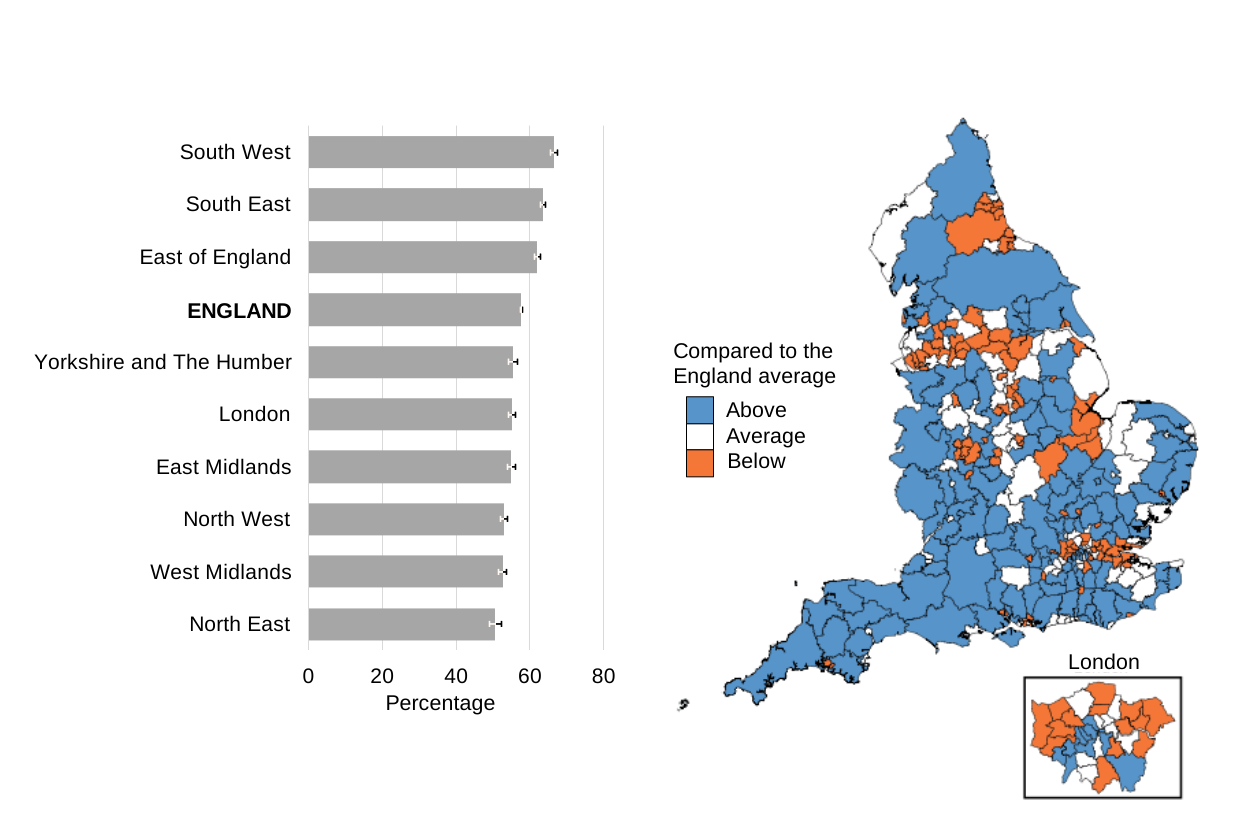
Compared with the average for adults in England (58%), the proportion of adults who felt that their local area is attractive was higher among adults living in the South West (67%), South East (64%), and East of England (62%) ITL1 areas, and lower among adults living in the East Midlands (55%), London (55%), Yorkshire and the Humber (55%), North West (53%), West Midlands (53%) and North East (51%) ITL1 areas.
Local Authority differences [footnote 8]
By local authority, there was a 64 percentage point difference in the proportion of adults who felt that their local area is attractive, from 91% in South Hams to 27% in Slough.
The proportion of adults who felt that their local area is attractive was in line with the England average in 77 (26%) local authorities, higher than the England average in 128 (43%) local authorities, and lower than the England average in 91 (31%) local authorities.
In general, the patterns in the proportion of adults who agree that their local area is attractive at the ITL1 level are also observed at the local authority (LA) level. However, there are a number of exceptions. The following notes the exceptions where levels in ITL1 areas are above or below the England average, but where levels in local authority areas show the reverse:
-
The proportion of adults who feel that their local area is attractive was higher than the England average for adults living in the South West ITL1 area (67%), but lower than the England average for adults living in the South West local authority of Plymouth (48%).
-
The proportion of adults who feel that their local area is attractive was higher for adults living in the South East ITL1 area (64%), but lower than the England average for adults living in the South East local authorities of Hastings (47%), Reading (46%), Medway (45%), Dartford (44%), Havant (42%), Portsmouth (42%), Crawley (40%), Gravesham (40%), Southampton (36%), Rushmoor (29%), and Slough (27%).
-
The proportion of adults who feel that their local area is attractive was higher for adults living in the East of England ITL1 area (62%), but lower than the England average for adults living in the East of England local authorities of Peterborough (51%), Fenland (51%), Southend-on-Sea (49%), Castle Point (48%), Stevenage (45%), Harlow (41%), Basildon (40%), Thurrock (37%), Luton (36%), and Ipswich (34%).
-
The proportion of adults who feel that their local area is attractive was lower than the England average for adults living in the London ITL1 area (55%) , but higher than the England average for adults living in the London local authorities of Richmond upon Thames (89%), Kensington and Chelsea (84%), Westminster (72%), Bromley (71%), Camden (71%), Kingston upon Thames (69%), Hammersmith and Fulham (67%), Wandsworth (67%), City of London (64%), and Southwark (63%).
-
The proportion of adults who feel that their local area is attractive was lower than the England average for adults living in the Yorkshire and The Humber ITL1 area (55%), but higher than the England average for adults living in the Yorkshire and the Humber local authorities of North Yorkshire (81%), East Riding of Yorkshire (74%), and York (72%).
-
The proportion of adults who feel that their local area is attractive was lower than the England average for adults living in the East Midlands ITL1 area (55%), but higher than the England average for adults living in the East Midlands local authorities of Derbyshire Dales (86%), Rutland (85%), Rushcliffe (83%), High Peak (81%), Harborough (78%), North Kesteven (72%), South Kesteven (70%), Melton (67%), Newark and Sherwood (66%), West Lindsey (65%), and South Derbyshire (64%).
-
The proportion of adults who feel that their local area is attractive was lower than the England average for adults living in the West Midlands ITL1 area (53%), but higher than the England average for adults living in the West Midlands local authorities of Malvern Hills (85%), Stratford-on-Avon (85%), Warwick (81%), Shropshire (80%), Staffordshire Moorlands (76%), Wychavon (76%), South Staffordshire (75%), Bromsgrove (73%), Lichfield (73%), County of Herefordshire (70%), North Warwickshire (70%), Solihull (67%), and Telford and Wrekin (64%).
-
The proportion of adults who feel that their local area is attractive was lower than the England average for adults living in the North West ITL1 area (53%), but higher than the England average for adults living in the North West local authorities of Ribble Valley (90%), Fylde (76%), Westmorland and Furness (76%), Cheshire East (70%), Chorley (70%), Wyre (70%), Lancaster (69%), Rossendale (69%), Cheshire West and Chester (63%).
-
The proportion of adults who feel that their local area is attractive was lower than the England average for adults living in the North East ITL1 area (51%), but higher than the England average for adults living in the North East local authority of Northumberland (66%).
Figure 6.1: Percentage of adults (aged 16+) who feel that their local area is ‘very attractive’ or ‘somewhat attractive’, by ITL1 area and local authority, England: 2024/25 (Base: All adults)
7. Feelings of attachment towards the local area
Respondents were asked a series of questions measuring their feelings of attachment towards their local area. This included answering the extent to which they agreed or disagreed with the following statements:
-
I am proud to live in my local area
-
In five years’ time I would like to still be living in my local area
-
I would recommend my local area to others as a good place to live
These questions were added in 2023/24.
7.1 Headline findings
In 2024/25:
60% of adults agreed that they were proud to live in their local area, no significant change from 2023/24 (59%).
61% of adults agreed that they would still like to be living in their local area in five years’ time, no significant change from 2023/24 (61%).
66% of adults agreed that they would recommend their local area to others as a good place to live, no significant change from 2023/24 (66%).
7.2 Demographics: Who felt a sense of attachment to their local area? [footnote 1]
Age
-
Compared to the average for adults in England (60%), adults aged 50 to 64 (61%), aged 65 to 74 (66%) and aged 75 and above (71%) were more likely to agree that they feel proud to live in their local area, while adults aged 16 to 24 (48%) and aged 25 to 34 (55%) were less likely to agree that they feel proud to live in their local area.
-
Compared with the average for adults in England (61%), adults aged 50 to 64 (65%), aged 65 to 74 (75%) and aged 75 and over (83%) were more likely to agree that they would still like to be living in their local area in five years’ time. Adults aged 16 to 24 (36%) and aged 25 to 34 (51%) were less likely to agree that they would still like to be living in their local area in five years’ time.
-
Compared to the average for adults in England (66%), adults aged 50 to 64 (68%), aged 65 to 74 (73%) and aged 75 and over (77%) were more likely to recommend their local area as a good place to live, while adults aged 16 to 24 (52%) and aged 25 to 34 (63%) were less likely to recommend their local area as a good place to live.
Disability status
Non-disabled adults were more likely than disabled adults to agree that they feel proud to live in their local area (63% vs 55%), that they would still like to be living in their local area in five years’ time (62% vs 61%), and that they would recommend their local area to others as a good place to live (70% vs 62%).
Sex [footnote 2]
Female adults (61%) were more likely than male adults (59%) to agree that they feel proud to live in their local area. Female adults (62%) were also more likely than male adults (60%) to agree that they would like to still be living in their local area in five years’ time. There were no significant differences between female adults and male adults in recommending their local area as a place to live.
Gender identity [footnote 3]
Adults whose gender identity was the same as their sex registered at birth were more likely than adults whose gender identity was different from their sex registered at birth to feel proud to live in their local area (60% vs 50%), to recommend their area as a good place to live (66% vs 57%), and to agree that they would still like to be living in their local area in five years’ time (61% vs 48%).
Sexual Orientation [footnote 4]
-
Heterosexual or straight adults (60%) were more likely to agree that they are proud to live in their local area than gay or lesbian adults (54%), bisexual adults (51%) and adults from the “other sexual orientation” classification (45%). Additionally, gay or lesbian adults (54%) and bisexual adults (51%) were more likely to agree that they are proud to live in their local area than adults from the “other sexual orientation” classification (45%).
-
Heterosexual or straight adults (60%) were more likely to agree that they would still like to be living in their local area in five years’ time than gay or lesbian adults (49%), bisexual adults (45%) and adults from the “other sexual orientation” classification (43%). Additionally, gay or lesbian adults (49%) were more likely to agree that they would still like to be living in their local area in five years’ time than adults from the “other sexual orientation” classification (43%).
-
Heterosexual or straight adults (66%) were more likely to agree that they would recommend their local area as a good place to live than gay or lesbian adults (61%), bisexual adults (60%) and adults from the “other sexual orientation” classification (54%). Additionally, gay or lesbian adults (61%) and bisexual adults (60%) were more likely to agree that they would recommend their local area as a good place to live than adults from the “other sexual orientation” classification (54%).
Ethnicity
-
Compared with the average for adults in England (60%), adults from the Indian (65%), Black African (64%) and White British[footnote 5] (60%) ethnic groups were more likely to agree that they are proud to live in their local area. Adults from the Any other White background (56%), mixed White and Asian (55%), Black Caribbean (53%), mixed White and Black African (53%), mixed White and Black Caribbean (48%), and White Gypsy or Irish Traveller (30%) ethnic groups were less likely to agree that they are proud to live in their local area compared with the average for adults in England (60%).
-
Compared with the average for adults in England (61%), adults from the White British[footnote 5] (63%) ethnic group were more likely to agree that they would still like to be living in their local area in five years’ time. Adults from the Any other White Background (56%), Pakistani (56%), Arab (55%), Black African (52%), Black Caribbean (51%), mixed White and Asian (47%), Any other mixed or multiple background (47%), mixed White and Black Caribbean (46%), mixed White and Black African (39%) and White Gypsy or Irish Traveller (38%) ethnic groups were less likely to agree that in five years’ time they would still like to be living in their local area compared with the average for adults in England (61%).
-
Compared with the average for adults in England (66%), adults from the Any other ethnic group (73%) and White British[footnote 5] (67%) ethnic group were more likely to agree that they would recommend their local area as a good place to live. Adults from the mixed White and Asian (62%), Arab (60%), Pakistani (58%), Bangladeshi (57%), Black Caribbean (57%), mixed White and Black Caribbean (55%), mixed White and Black African (54%), and Gypsy and Irish Traveller (37%) ethnic groups were less likely to agree that they would recommend their local area as a good place to live compared with the average for adults in England (66%).
Religion
-
Compared with the average for adults in England (60%), Christian (65%) and Hindu (65%) adults were more likely to agree that they are proud to live in their local area. Adults from the No religion classification (55%) and adults from the Any other religion classification (54%) were less likely to agree that they are proud to live in their local area compared with the average for adults in England (60%).
-
Compared with the average for adults in England (61%), Christian adults (68%) were more likely to agree that they would still like to be living in their local area in five years’ time. Muslim adults (56%), adults from the No religion classification (56%), adults from the Any other religion classification (55%), and Sikh adults (53%) were less likely to agree that they would still like to be living in their local area in five years’ time compared with the average for adults in England (61%).
-
Compared with the average for adults in England (66%), Jewish (71%) and Christian (70%) adults were more likely to agree that they recommend their local area as a good place to live. Adults from the No religion classification (64%), adults from Any other religion classification (61%), Muslim adults (59%) and Sikh adults (59%) were less likely to agree that they recommend their local area as a good place to live compared with the average for adults in England (66%).
Socio-economic classification [footnote 6]
-
Adults from the higher managerial, administrative and professional occupations classification (64%) were more likely to agree that they are proud to live in their local area compared with adults from the intermediate occupations (60%), routine and manual occupations (53%) and never worked and long-term unemployed (51%) classifications. Additionally, adults from the intermediate occupations classification (60%) were more likely to agree that they are proud to live in their local area compared with adults from the routine and manual occupations (53%) and never worked and long-term unemployed (51%) classifications.
-
Adults from the higher managerial, administrative and professional occupations (63%) and intermediate occupations (62%) classifications were more likely to agree that they would still like to be living in their area in five years’ time than adults in the routine and manual occupations (57%) and the never worked and long-term unemployed (56%) classifications.
-
The proportions of adults who would recommend their local area as a good place to live were significantly different between adults from each socio-economic classification. Adults from the higher managerial, administrative and professional occupations classification (72%), were more likely to agree that they would recommend their local area as a good place to live. This was followed by adults from the intermediate occupations classification (67%), then by adults from the routine and manual occupations classification (59%), and finally by adults from the never worked and long-term unemployed classification (55%).
Index of multiple deprivation [footnote 7]
Adults living in the least deprived areas (10th decile) were more likely to agree that they are proud to live in their local area (79% vs 38%), that they would still like to be living in their area in five years’ time (75% vs 44%), and that they would recommend their local area as a good place to live (85% vs 40%), than adults living in the most deprived areas (1st decile).
Population density
Adults living in rural areas were more likely than adults living in urban areas to agree that they are proud to live in their local area (75% vs 56%), that they would still like to be living in their area in five years’ time (72% vs 59%), and that they would recommend their local area as a good place to live (79% vs 63%).
7.3 Geographical findings
Regional differences
-
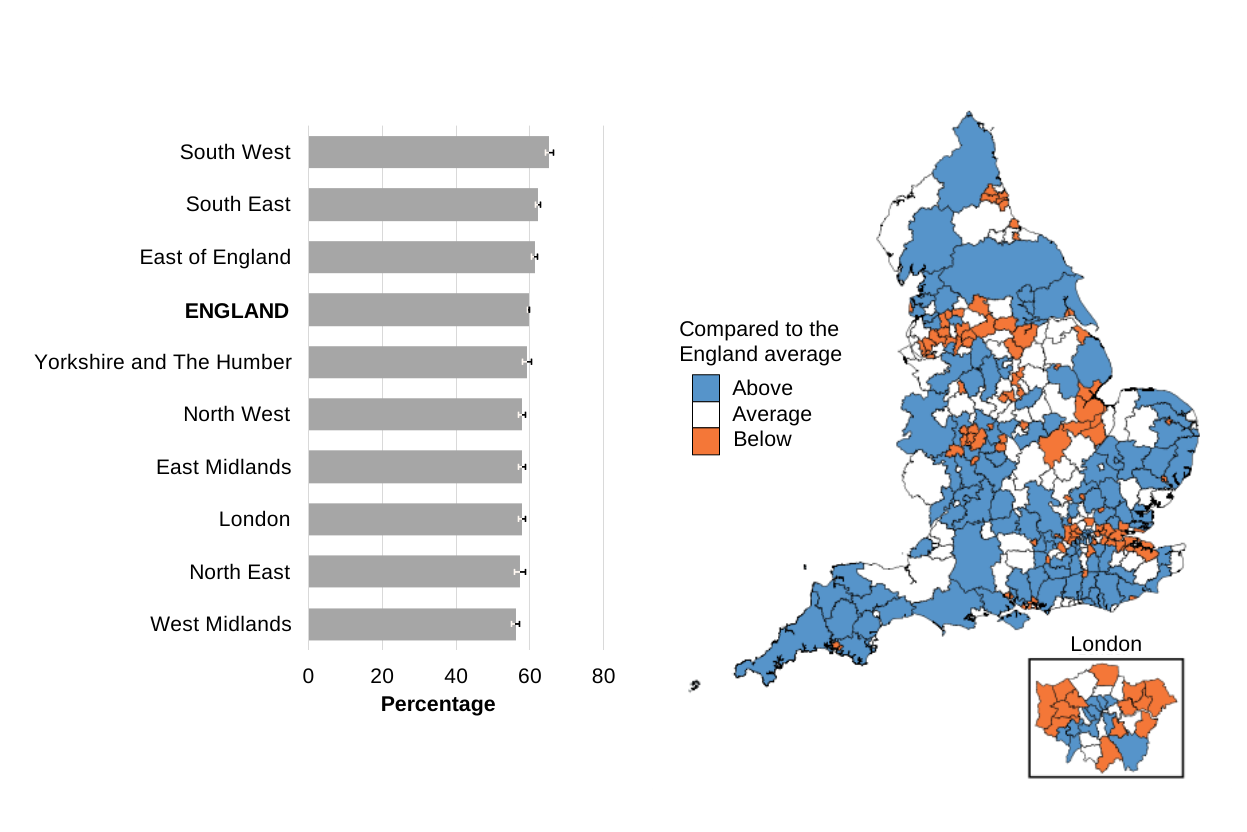
Compared with the average for adults in England (60%), adults living in the South West (65%), South East (62%), and East of England (61%) ITL1 areas were more likely to agree that they are proud to live in their local area, while adults living in the North West (58%), East Midlands (58%), London (58%), North East (57%) and West Midlands (56%) ITL1 areas were less likely to agree that they are proud to live in their local area.
-
Compared with the average for adults in England (61%), adults living in the South West (66%), North East (63%), and South East (63%) ITL1 areas were more likely to agree that they would like to still be living in their local area in five years’ time, while adults living in the West Midlands (58%) and London (55%) ITL1 areas were less likely to agree that they would like to still be living in their local area in five years’ time.
-
Compared with the average for adults in England (66%), adults living in the South West (72%), South East (70%), and East of England (69%) ITL1 areas were more likely to agree that they would recommend their area as a good place to live, while adults living in the North West (64%), North East (63%), London (63%) and West Midlands (61%) ITL1 areas were less likely to agree that they would recommend their local area as a good place to live.
Local Authority differences [footnote 8]
By local authority, there was a 54 percentage point difference in the proportion of adults who agree that they are proud to live in their local area, from 90% in Ribble Valley to 36% in Ashfield.
Levels of pride in the local area were in line with the England average in 98 (33%) local authorities, higher than the England average in 111 (38%) local authorities, and lower than the England average in 87 (29%) local authorities.
In general, patterns in the levels of pride in the local area at the ITL1 level are also observed at the local authority (LA) level. However, there are a number of exceptions. The following notes the exceptions where levels in ITL1 areas are above or below the England average, but where levels in local authority areas show the reverse:
-
Levels of pride in the local area were lower than the England average for adults living in the London ITL1 area (58%), but higher than the England average for adults living in the London local authorities of Richmond upon Thames (86%), Westminster (77%), Kensington and Chelsea (77%), Wandsworth (72%), Camden (71%), Bromley (68%), Islington (67%), Hackney (66%), Kingston upon Thames (66%) and Southwark (66%).
-
Levels of pride in the local area were lower than the England average for adults living in the East Midlands ITL1 area (58%), but higher than the England average for adults living in the East Midlands local authorities of Derbyshire Dales (84%), Rutland (80%), Rushcliffe (77%), High Peak (77%), Harborough (75%), North East Derbyshire (68%), East Lindsey (67%), North Kesteven (67%), and Hinckley and Bosworth (66%).
-
Levels of pride in the local area were lower than the England average for adults living in the North West (58%) ITL1 area (58%), but higher than the England average for adults living in the North West local authorities of Ribble Valley (90%), Fylde (76%), Westmorland and Furness (76%), Wyre (71%), Trafford (70%), Lancaster (69%), South Ribble (69%), Rossendale (69%), Chorley (68%), and Cheshire East (67%).
-
Levels of pride in the local area were lower than the England average for adults living in the North East ITL1 area (57%), but higher than the England average for adults living in the North East local authority of Northumberland (70%).
-
Levels of pride in the local area were lower than the England average for adults living in the West Midlands ITL1 area (56%), but higher than the England average for adults living in the West Midlands local authorities of Stratford-on-Avon (80%), Warwick (78%), Malvern Hills (77%), Staffordshire Moorlands (77%), South Staffordshire (76%), Lichfield (74%), Shropshire (74%), Bromsgrove (73%), Wychavon (72%), North Warwickshire (70%), and Solihull (69%).
-
Levels of pride in the local area were higher than the England average for adults living in the South West ITL1 area (65%), but lower than the England average for adults living in the South West local authority of Plymouth (53%).
-
Levels of pride in the local area were higher than the England average for adults living in the South East ITL1 area (62%), but lower than the England average for adults living in the South East local authorities of Gosport (53%), Runnymede (53%), Hastings (52%), Havant (52%), Swale (51%), Portsmouth ( 51%), Gravesham (47%), Medway (46%), Dartford (45%), Reading (45%), Crawley (42%), Southampton (42%), Slough (37%), and Rushmoor (36%).
-
Levels of pride in the local area were higher than the England average for adults living in the East of England ITL1 area (61%), but lower than the England average for adults living in the East of England local authorities of Watford (53%), Peterborough (51%), Norwich (50%), Southend-on-Sea (49%), Fenland (48%), Basildon (45%), Harlow (45%), Luton (45%), Stevenage (43%), Ipswich (42%), and Thurrock (38%).
By local authority, there was a 46 percentage point difference in levels of agreement that people would still like to be living in their local area in five years’ time, from 87% in Ribble Valley to 40% in Slough.
The proportion of adults that would still like to be living in their local area in five years’ time was in line with the average for adults in England in 123 (42%) local authorities, higher than the England average in 108 (36%) local authorities, and lower than the England average in 65 (22%) local authorities.
In general, patterns in the levels of agreement that people would still like to be living in their local area in five years’ time at the ITL1 level are also observed at the local authority (LA) level. However, there are some exceptions. The following notes the exceptions where levels in ITL1 areas are above or below the England average, but where levels in local authority areas show the reverse:
-
The proportion of adults that would still like to be living in their local area in five years’ time was lower than the England average for adults living in the London ITL1 area (55%), but higher than the England average for adults living in the London local authorities of Richmond upon Thames (79%), Kensington and Chelsea (74%), Westminster (73%), and Camden (69%).
-
The proportion of adults that would still like to be living in their local area in five years’ time was lower than the England average for adults living in the West Midlands ITL1 area (58%), but higher than the England average for adults living in the West Midlands local authorities of Malvern Hills (78%), Stratford-on-Avon (77%), Staffordshire Moorlands (76%), South Staffordshire (76%), Lichfield (74%), Bromsgrove (73%), Wychavon (73%), Shropshire (71%), North Warwickshire (70%), Warwick (69%), Stafford (68%), Solihull (67%) and County of Herefordshire (67%).
-
The proportion of adults that would still like to be living in their local area in five years’ time was higher than the England average for adults living in the South West ITL1 area (66%), but lower than the England average for adults living in the South West local authority of City of Bristol (55%).
-
The proportion of adults that would still like to be living in their local area in five years’ time was higher than the England average for adults living in the South East ITL1 area (63%), but lower than the England average for adults living in the South East local authorities of Gravesham (55%), Medway (54%), Runnymede (53%), Dartford (47%), Portsmouth (47%), Crawley (47%), Southampton (45%), Rushmoor (44%), Reading (43%), and Slough (40%).
-
The proportion of adults that would still like to be living in their local area in five years’ time was lower than the England average in the North East ITL1 area (63%) , but higher than the England average for adults living in the North East local authorities of Sunderland (56%), Newcastle upon Tyne (53%) and Middlesbrough (52%).
By local authority, there was a 53 percentage point difference in the levels of agreement that adults would recommend their local area as a good place to live, from 91% in Richmond upon Thames to 37% in Slough.
The proportion of adults who agreed that they would recommend their local area to others as a good place to live was in line with the England average in 89 (30%) local authorities, higher than the England average in 127 (43%) local authorities, and lower than the England average in 80 (27%) local authorities.
In general, patterns in the proportion of adults that would recommend their local area as a good place to live at the ITL1 level are also observed at the local authority (LA) level. However, there are some exceptions. However, there are a number of exceptions. The following notes the exceptions where levels in ITL1 areas are above or below the England average, but where levels in local authority areas show the reverse: :
-
The proportion of adults that would recommend their local area as a good place to live was lower than the England average for adults living in the North West ITL1 area (64%), but higher than the England average for adults living in the North West local authorities of Ribble Valley (90%), Fylde (80%), Westmorland and Furness (78%), Trafford (77%), South Ribble (77%), Lancaster (76%), Chorley (75%), Wyre (75%), Cheshire East (75%) and Stockport (74%).
-
The proportion of adults that would recommend their local area as a good place to live was lower than the England average for adults living in the London ITL1 area (63%), but higher than the England average for adults living in the London local authorities of Richmond upon Thames (91%), Kensington and Chelsea (81%), Wandsworth (79%), Westminster (79%), Camden (77%), Bromley (76%), Islington (75%), Kingston upon Thames (75%), Hammersmith and Fulham (74%), Southwark (73%) and Lambeth (72%).
-
The proportion of adults that would recommend their local area as a good place to live was lower than the England average for adults living in the West Midlands ITL1 area (61%), but higher than the England average for adults living in the West Midlands local authorities of Malvern Hills (85%), Warwick (83%), Stratford-on-Avon (82%), Bromsgrove (82%), Staffordshire Moorlands (82%), South Staffordshire (81%), Lichfield (79%), Shropshire (77%), Wychavon (76%), North Warwickshire (76%), Solihull (73%), Stafford (72%), County of Herefordshire (72%), and Telford and Wrekin (72%).
-
The proportion of adults that would recommend their local area as a good place to live was higher than the England average for adults living in the East of England ITL1 area (69%), but lower than the England average for adults living in the East of England local authorities of Broxbourne (59%), Stevenage (59%), Peterborough (57%), Southend-on-Sea (56%), Fenland (54%), Ipswich (53%), Basildon (51%), Harlow (51%), Luton (47%), and Thurrock (44%).
-
The proportion of adults that would recommend their local area as a good place to live was higher than the England average for adults living in the South East ITL1 area (70%), but lower than the England average for adults living in the South East local authorities of Gosport (60%), Havant (60%), Swale (54%), Portsmouth (54%), Medway (54%), Dartford (53%), Reading (53%), Gravesham (51%), Crawley (50%), Southampton (50%), Rushmoor (43%) and Slough (37%).
Figure 7.1: Percentage of adults (aged 16+) who agreed that they are proud to live in their local area, by ITL1 area and local authority, England: 2024/25 (Base: All adults)
8. Reasons adults were proud or not proud to live in their local area
8.1 Reasons for being proud to live in the local area
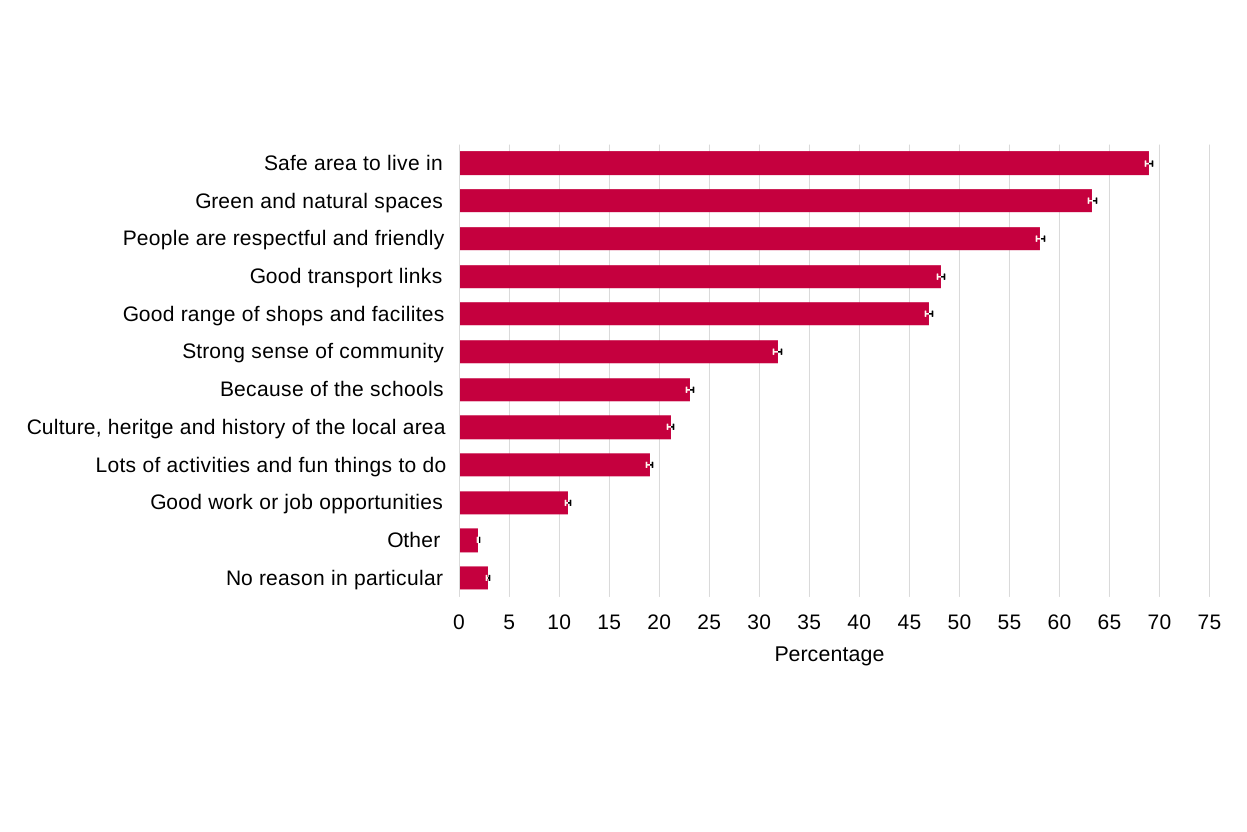
Adults who agreed that they felt proud to live in their local area were asked their reasons for giving this response (see Figure 8.1). In line with 2023/24, the most common reasons given in 2024/25 for feeling pride in the local area was that the area felt safe (69%), the presence of green and natural spaces (63%) and that people were respectful and friendly (58%). Other factors mentioned by at least three in ten adults included good transport links (48%), a good range of shops and facilities (47%), and a strong sense of community (32%).
Figure 8.1: Reasons for being proud to live in the local area, England: 2024/25 (Base: Adults proud to live in local area)
8.2 Reasons for not being proud to live in the local area
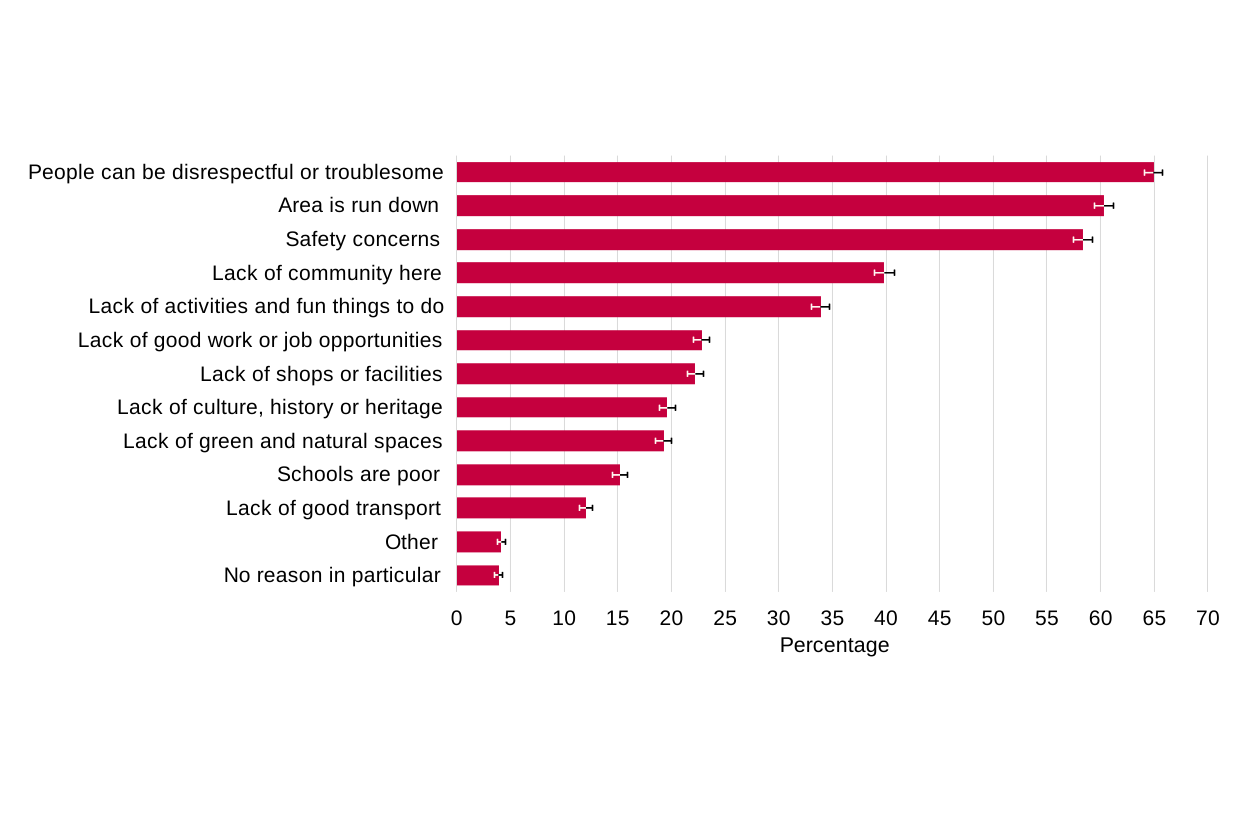
Adults who did not agree that they felt proud to live in their local area were asked their reasons for giving this response (see Figure 8.2). In line with 2023/24, the most common reasons given in 2024/25 for not feeling pride in the local area were disrespectful or troublesome people (65%), that the area is run down (60%), and safety concerns (58%). Other factors mentioned by at least one in three adults included lack of community (40%) and lack of activities or things to do (34%).
Figure 8.2: Reasons for not being proud to live in the local area, England: 2024/25 (Base: Adults not proud to live in local area)
9. Overall satisfaction with the local area
Respondents were asked how satisfied or dissatisfied they were with their local area.
9.1 Headline findings
In 2024/25:
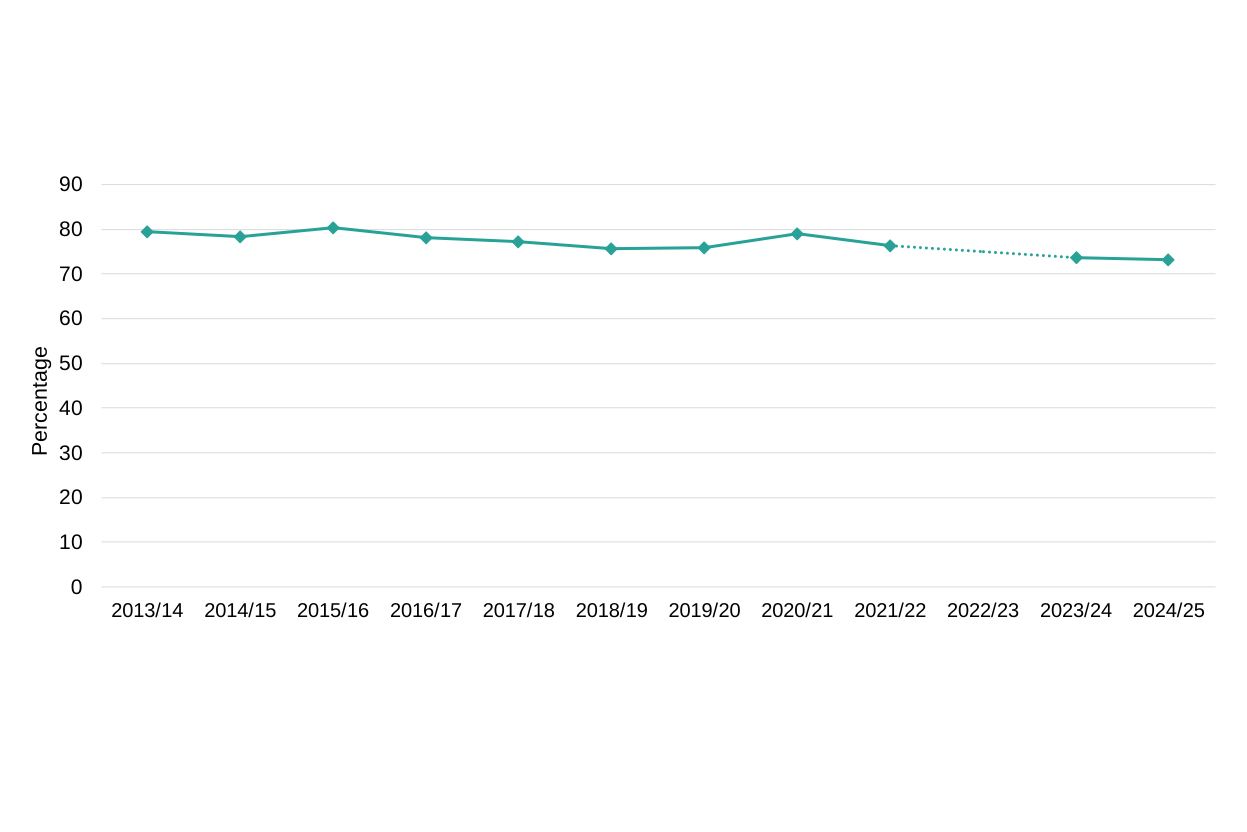
73% of adults were either very or fairly satisfied with their local area as a place to live, no significant change from 2023/24 (74%).
As shown in Figure 9.1 below, levels of satisfaction with the local area in 2023/24 and 2024/25 were lower than in all previous survey years from 2013/14 (when push-to-web data collection commenced on Community Life Survey) to 2021/22 (between 76% and 80%).
Figure 9.1: Percentage of adults (aged 16+) satisfied with their local area as a place to live, England: 2013/14 to 2024/25 (Base: All adults)
9.2 Demographics: Who was satisfied with their local area? [footnote 1]
Age
Compared with the average for adults in England (73%), adults aged 50 to 64 (75%), aged 65 to 74 (80%) and aged 75 and over (83%) were more likely to feel satisfied with their local area as a place to live. Adults aged 16 to 24 (65%) and aged 25 to 34 (69%) were less likely to feel satisfied with their local area as a place to live compared with the average for adults in England (73%).
Disability status
Non-disabled adults (77%) were more likely to feel satisfied with their local area as a place to live than disabled adults (69%).
Sex [footnote 2]
Female adults (74%) were more likely to feel satisfied with their local area as a place to live than male adults (73%).
Gender identity [footnote 3]
Adults whose gender identity was the same as their sex registered at birth (74%) were more likely to feel satisfied with their local area as a place to live than adults whose gender identity was different from their sex registered at birth (65%).
Sexual Orientation [footnote 4]
Heterosexual or straight adults (74%) were more likely to feel satisfied with their local area as a place to live than bisexual adults (69%), gay or lesbian adults (68%), and adults from the “other sexual orientation” classification (63%). Additionally, bisexual adults (69%) and gay or lesbian adults (68%) were more likely to feel satisfied with their local area as a place to live than adults from the “other sexual orientation” classification (63%).
Ethnicity
Compared with the average for adults in England (73%), adults from the Chinese (77%) Any other Asian background (76%) and White British [footnote 5] (75%) ethnic groups were more likely to feel satisfied with their local area as a place to live. Adults from the Any other White background (71%) Pakistani (68%), Black Caribbean (66%), Bangladeshi (65%), mixed White and Black African (62%), mixed White and Black Caribbean (62%), and White Gypsy or Irish Traveller (49%) ethnic groups were less likely to feel satisfied with their local area as a place to live compared with the average for adults in England (73%).
Religion
Compared with the average for adults in England (73%), Jewish (78%) and Christian (77%) adults were more likely to feel satisfied with their local area as a place to live. Adults from the No religion classification (72%), Muslim adults (68%) and adults from the Any other religion classification (66%) were less likely to feel satisfied with their local area as a place to live compared with the average for adults in England (73%).
Socio-economic classification [footnote 6]
The proportions of adults who reported feeling satisfied with their local area as a place to live were significantly different between adults from each socio-economic classification. Adults from the higher managerial, administrative and professional occupations classification (78%) were more likely to feel satisfied with their local area as a place to live. This was followed by adults from the intermediate occupations classification (75%), then by adults from the routine and manual occupations classification (68%), and finally by adults from the never worked and long-term unemployed classification (65%).
Index of multiple deprivation [footnote 7]
Adults living in the least deprived areas (10th decile, 88%) were more likely to feel satisfied with their local area as a place to live than adults living in the most deprived areas (1st decile, 53%)
Population density
Adults living in rural areas (84%) were more likely to feel satisfied with their local area as a place to live than adults living in urban areas (71%).
9.3 Geographical findings
Regional differences
Compared with the average for adults in England (73%), adults living in the South West (79%), South East (77%), and East of England (76%) ITL1 areas were more likely to feel satisfied with their local area as a place to live, while adults living in the North West (71%), North East (70%), London (70%) and West Midlands (69%) ITL1 areas were less likely to feel satisfied with local area as a place to live.
Local Authority differences [footnote 8]
By local authority, there was a 46 percentage point difference in the proportion of adults who felt satisfied with their local area, from 93% in Isles of Scilly to 47% in Slough.
The proportion of adults who felt satisfied with their local area as a place to live was in line with the England average in 101 (34%) local authorities, higher than the England average in 120 (41%) local authorities, and lower than the England average in 75 (25%) local authorities.
In general, patterns of satisfaction with the local area as a place to live at the ITL1 level are also observed at the local authority (LA) level. However, there are a number of exceptions. The following notes the exceptions where levels in ITL1 areas are above or below the England average, but where levels in local authority areas show the reverse:
-
Levels of satisfaction with the local area as a place to live were higher than the England average for adults living in the South East ITL1 area (77%), but lower than the England average for adults living in the South East local authorities of Swale (65%), Portsmouth (64%), Reading (63%), Crawley (63%), Medway (63%), Dartford (62%), Gravesham (62%), Southampton (62%), Rushmoor (58%) and Slough (47%).
-
Levels of satisfaction with the local area as a place to live were higher than the England average for adults living in the East of England ITL1 area (76%), but lower than the England average for adults living in the East of England local authorities of Fenland (64%), Southend-on-Sea (64%), Harlow (63%), Ipswich (62%), Basildon (56%), Thurrock (56%) and Luton (55%).
-
Levels of satisfaction with the local area as a place to live were lower than the England average for adults living in the North West ITL1 area (71%), but higher than the England average for adults living in the North West local authorities of Ribble Valley (91%), Fylde (86%), Westmorland and Furness (84%), Lancaster (82%), South Ribble (82%), Stockport (80%), Trafford (79%), Chorley (79%) and Cumberland (77%).
-
Levels of satisfaction with the local area as a place to live were lower than the England average for adults living in the London ITL1 area (70%), but higher than the England average for adults living in the London local authorities of Richmond upon Thames (92%), Wandsworth (84%), Bromley (83%), Kingston upon Thames (81%), Kensington and Chelsea (80%), Hackney (79%), Hammersmith and Fulham (79%), and Islington (79%).
-
Levels of satisfaction with the local area as a place to live were lower than the England average for adults living in the West Midlands ITL1 area (69%), but higher than the England average for adults living in the West Midlands local authorities of Malvern Hills (89%), Warwick (88%), Stratford-on-Avon (87%), Shropshire (85%), South Staffordshire (84%), Lichfield (83%), Bromsgrove (83%), Staffordshire Moorlands (81%), County of Herefordshire (81%), North Warwickshire (80%), Stafford (80%), Wychavon (80%) and Worcester (79%).
Figure 9.2: Percentage of adults (aged 16+) who were satisfied with their local area as a place to live, by ITL1 area and local authority, England: 2024/25 (Base: All adults)
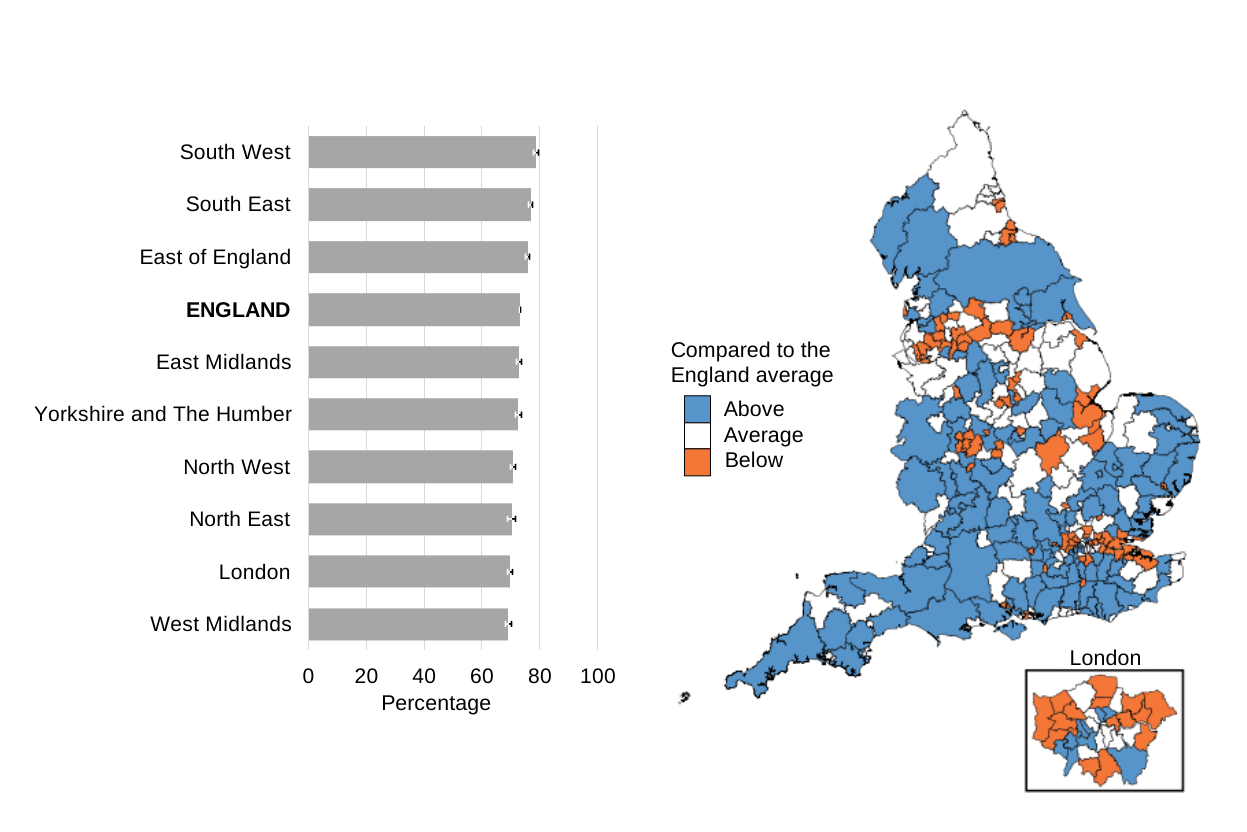
10. Change in the local area over last two years
Respondents were asked whether they felt that their local area had got better, worse, or stayed the same over the last two years. [footnote 12]
10.1 Headline findings
In 2024/25:
11% of adults reported that over the last two years their local area had gotten better to live in, no significant change from 2023/24 (11%). Conversely, 30% reported that it had gotten worse, a small, but significant, increase from 2023/24 (29%).
As shown in Figure 10.1, the proportion of respondents reporting that over the last two years their area has got better to live in was lower in 2023/24 and 2024/25 than in the previous survey years from 2014/15 to 2021/22 (between 13% and 16%).
The proportion of adults who feel their local area has gotten worse to live in (30%) is at its highest level since push to web data collection began in 2013/14.
Figure 10.1: Percentage of adults (aged 16+) who feel their area has got better to live in, worse to live in or has not changed much in the last two years, England: 2013/14 – 2024/25 (Base: All adults)
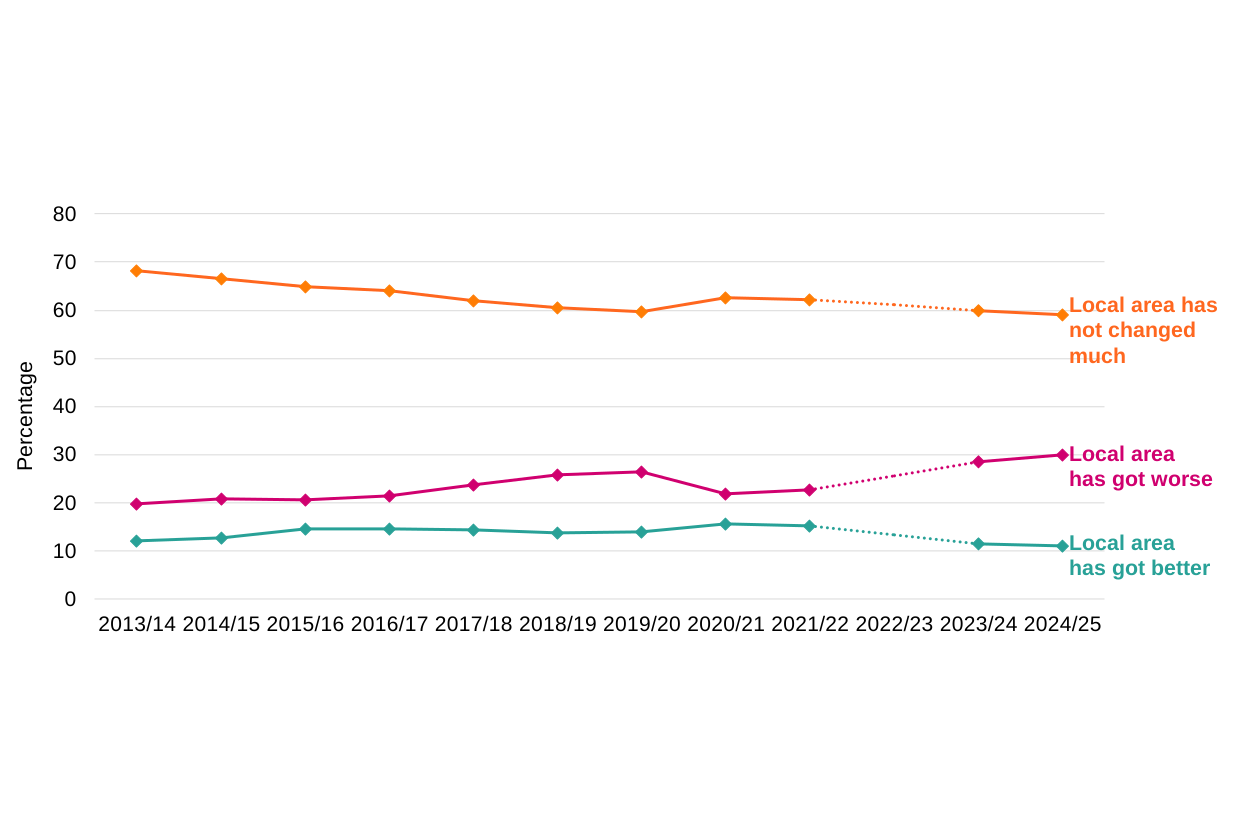
10.2 Demographics: Who felt their area had got better to live in over the last two years? [footnote 1]
Age
Compared with the average for adults in England (11%), adults aged 25 to 34 (16%), aged 16 to 24 (15%), and aged 35 to 49 (13%) were more likely to report that their area had got better to live in in the last two years. In contrast, adults aged 50 to 64 (8%), aged 65 to 74 (7%), and aged 75 and over (7%) were less likely to report that their area had got better to live in in the last two years compared with the average for adults in England (11%).
Disability status
Non-disabled adults (12%) were more likely to report that their area had got better to live in in the last two years than disabled adults (9%).
Sex [footnote 2]
Male adults (12%) were more likely than female adults (11%) to report that their area had gotten better to live in in the last two years.
Gender identity [footnote 3]
No significant differences were observed between adults whose gender identity was the same as their sex registered at birth and adults whose gender identity was different from their sex registered at birth in terms of the proportion reporting that their local area has got better to live in over the last two years.
Sexual Orientation [footnote 4]
Adults from the “other sexual orientation” classification (17%), bisexual adults (15%), and gay or lesbian adults (14%), were more likely to report that their local area had got better to live in over the last two years than heterosexual or straight adults (11%).
Ethnicity
Compared with the average for adults in England (11%), adults from Arab (26%), Black African (26%), Bangladeshi (23%), Chinese (21%), Any other Asian background (21%), Pakistani (20%), mixed White and Black African (20%), Indian (20%), Any other mixed or multiple background (18%), mixed White and Black Caribbean (16%), mixed White and Asian (15%), White Irish (15%), and Any other White background (15%) were more likely to report that their area had got better to live in over the last two years. Adults from the White British[footnote 5] (9%) ethnic group were less likely to report that their area had got better to live in over the last two years compared with the average for adults in England (11%).
Religion
Compared with the average for adults in England (11%), Muslim (23%), Hindu (21%), Buddhist (17%), Sikh (15%) and Jewish (15%) adults were more likely to report that their local area had got better to live in over the last two years. Christian adults (10%), adults from the No religion classification (10%), and adults from the Any other religion classification (9%) were less likely to report that their local area had got better to live in over the last two years compared with the average for adults in England (11%).
Socio-economic classification [footnote 6]
Adults from the never worked and long-term unemployed classification (14%) were more likely to report that their local area had got better to live in over the last two years than adults from the higher managerial, administrative and professional occupations (12%), intermediate occupations (9%) and routine and manual occupations (9%) classifications. Additionally, adults from the higher managerial, administrative and professional occupations classification (12%) were more likely to report that their local area had got better to live in over the last two years than adults from the intermediate occupations (9%) and routine and manual occupations (9%) classifications.
Index of multiple deprivation [footnote 7]
Adults from the most deprived areas (1st decile, 12%) were more likely to report that their local area had got better to live in over the last two years than adults from the least deprived areas (10th decile, 10%).
Population density
Adults living in urban areas (12%) were more likely to report that their local area had got better to live in over the last two years than adults living in rural areas (9%).
10.3 Geographical findings
Regional differences
Compared with the average for adults in England (11%), adults living in the ITL1 areas of London (18%) and the North West (12%) were more likely to report that their local area had got better to live in over the last two years, while adults living in the East Midlands (10%), South East (10%), East of England (9%), South West (9%), and West Midlands (8%) ITL1 areas were less likely to report their local area had got better to live in over the last two years.
Local Authority differences [footnote 8]
By local authority, there was a 26 percentage point difference in the proportion of adults who reported that their local area had got better to live in over the last two years, from 29% in Waltham Forest to 3% in Epping Forest.
The proportion of adults who reported that their local area had got better to live in over the last two years was in line with the England average in 182 (61%) local authorities, higher than the England average in 39 (13%) local authorities, and lower than the England average in 75 (25%) local authorities.
In general, the patterns of perceived change in the local area at the ITL1 level are also observed at the local authority (LA) level. However, there are a number of exceptions. The following notes the exceptions where levels in ITL1 areas are above or below the England average, but where levels in local authority areas show the reverse:
-
The proportion of adults reporting that their local area had got better to live in over the last two years was higher than the England average for adults living in the London ITL1 area (18%), but lower than the England average for adults living in the London local authority of Enfield (7%).
-
The proportion of adults reporting that their local area had got better to live in over the last two years was higher than the England average for adults living in the North West ITL1 area (12%) but lower than the England average for adults living in the North West local authorities of Cumberland (8%), Westmorland and Furness (8%), Wyre (7%) and Hyndburn (5%).
-
The proportion of adults reporting that their local area had got better to live in over the last two years was lower than the England average for adults living in the East Midlands ITL1 area (10%), but higher than the England average for adults living in the East Midlands local authorities of Rushcliffe (16%), Leicester (15%) and Bolsover (15%).
-
The proportion of adults reporting that their local area had got better to live in over the last two years was lower than the England average for adults living in the South East ITL1 area (10%), but higher than the England average for adults living in the South East local authorities of Brighton and Hove (16%), Runnymede (16%) and Waverley (15%).
-
The proportion of adults reporting that their local area had got better to live in over the last two years was lower than the England average in the East of England (9%) ITL1 area, but higher than the England average for adults living in the East of England local authority of Cambridge (18%).
-
The proportion of adults reporting that their local area had got better to live in over the last two years was lower than the England average for adults living in the South West ITL1 area (9%), but higher than the England average for adults living in the South West local authority of City of Bristol (15%).
Figure 10.2: Percentage of adults (aged 16+) who report that their area has got better to live in over the last two years, by ITL1 area and local authority, England: 2024/25 (Base: All adults)
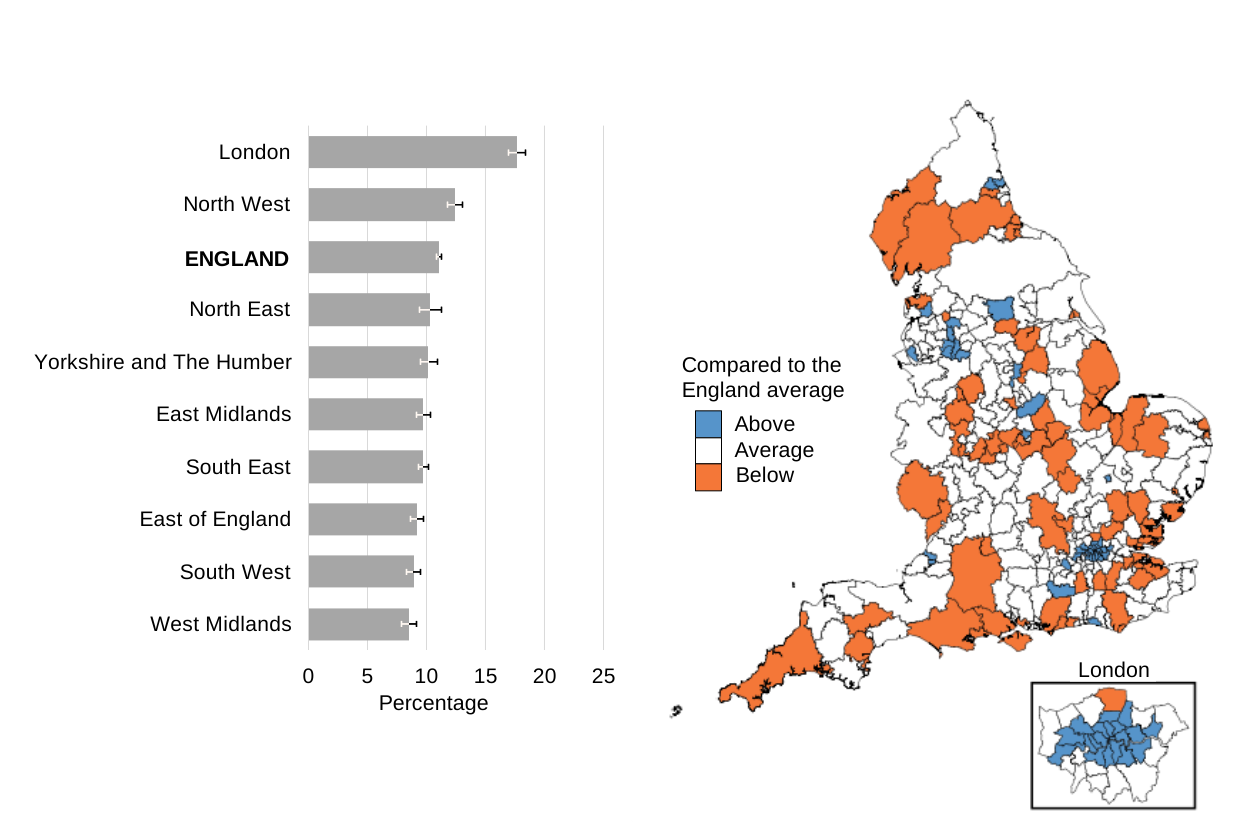
11. Satisfaction with green and natural spaces in the local area
Respondents were asked how satisfied they were with green and natural spaces in the local area. This question was added in 2023/24.
11.1 Headline findings
In 2024/25:
75% of adults reported that they were satisfied with the green and natural spaces in their local area, no significant change from 2023/24 (76%).
11.2 Demographics: Who was satisfied with the green and natural spaces in the local area? [footnote 1]
Age
Compared with the average for adults in England (75%), adults aged 75 and over (81%), aged 65 to 74 (81%), and aged 50 to 64 (78%) were more likely to feel satisfied with the green and natural spaces in their local area, while adults aged 16 to 24 (66%) and aged 25 to 34 (71%) were less likely to feel satisfied with the green and natural spaces in their local area compared with the average for adults in England (75%).
Disability status
Non-disabled adults (78%) were more likely to feel satisfied with the green and natural spaces in their local area than disabled adults (72%).
Sex [footnote 2]
There were no significant differences in levels of satisfaction with green and natural spaces in the local area between female adults and male adults.
Gender identity [footnote 3]
Adults whose gender identity was the same as their sex registered at birth (76%) were more likely to feel satisfied with the green and natural spaces in their local area than adults whose gender identity was different from their sex registered at birth (70%).
Sexual Orientation [footnote 4]
Heterosexual or straight adults (76%) were more likely to feel satisfied with the green and natural spaces in their local area than gay or lesbian adults (71%), bisexual adults (71%) or adults from the “other sexual orientation” classification (65%). Additionally, gay or lesbian adults (71%) and bisexual adults (71%) were more likely to feel satisfied with green and natural spaces in their local area than adults from the “other sexual orientation” classification (65%).
Ethnicity
Compared with the average for adults in England (75%), adults from the White British [footnote 5] (77%) and Any other White background (77%) ethnic groups were more likely to feel satisfied with the green and natural spaces in their local area. Adults from the Indian (72%), Arab (68%), Black Caribbean (67%), mixed White and Black Caribbean (64%), mixed White and Black African (64%), Bangladeshi (63%), Pakistani (63%), and White Gypsy or Irish Traveller (46%) ethnic groups were less likely to be satisfied with the green and natural spaces in the local area compared with the average for adults in England (75%).
Religion
Compared with the average for adults in England (75%), Christian adults (79%) were more likely to feel satisfied with the green and natural spaces in their local area. Adults from the No religion classification (74%), adults from the Any other religion classification (70%), Muslim adults (66%) and Sikh adults (66%) were less likely to feel satisfied with the green and natural spaces in their local area compared with the average for adults in England (75%).
Socio-economic classification [footnote 6]
The proportions of adults who reported feeling satisfied with the green and natural spaces in their local area were significantly different between adults from each socio-economic classification. Adults from the higher managerial, administrative and professional occupations classification (80%) were more likely to feel satisfied with the green and natural spaces in their local area. This was followed by adults from the intermediate occupations classification (77%), then by adults from the routine and manual occupations classification (71%), and finally by adults from the never worked and long-term unemployed classification (65%).
Index of multiple deprivation [footnote 7]
Adults living in the least deprived areas (10th decile, 88%) were more likely to feel satisfied with green and natural spaces in their local area than adults living in the most deprived areas (1st decile, 57%).
Population density
Adults living in rural areas (86%) were more likely to feel satisfied with the green and natural spaces in their local area than adults living in urban areas (73%).
11.3 Geographical findings
Regional differences
Compared with the average for adults in England (75%), adults living in the South West (81%), South East (80%), and East of England (78%) ITL1 areas were more likely to feel satisfied with the green and natural spaces in the local area. Adults living in the Yorkshire and The Humber (72%), West Midlands (72%), North West (71%) and North East (69%) ITL1 areas were less likely to feel satisfied with the green and natural spaces in the local area.
Local Authority differences [footnote 8]
By local authority, there was a 43 percentage point difference in the proportion of adults who were satisfied with the green and natural spaces in their local area from 96% in Richmond upon Thames to 54% in City of London.
Levels of satisfaction with green and natural spaces in the local area were in line with the England average for adults in 106 (36%) local authorities, higher than the England average for adults in 116 (39%) local authorities, and lower than the England average for adults in 74 (25%) local authorities
In general, patterns of satisfaction with green and natural spaces in the local area at the ITL1 level are also observed at the local authority (LA) level. However, there are a number of exceptions. The following notes the exceptions where levels in ITL1 areas are above or below the England average, but where levels in local authority areas show the reverse:
-
Levels of satisfaction with green and natural spaces in the local area were higher than the England average amongst adults living in the South West ITL1 area (81%), but lower than the England average amongst adults living in the South West local authority of Plymouth (69%).
-
Levels of satisfaction with green and natural spaces in the local area were higher than the England average amongst adults living in the South East ITL1 area (80%), but lower than the England average amongst adults living in the South East local authorities of Arun (70%), Thanet (70%), Dartford (69%), Portsmouth (69%), Havant (68%), Reading (68%), Medway (68%), Rushmoor (67%), Southampton (66%), Gravesham (64%), Swale (64%), and Slough (58%).
-
Levels of satisfaction with green and natural spaces in the local area were higher than the England average amongst adults living in the East of England ITL1 area (78%), but lower than the England average amongst adults living in the East of England local authorities of Ipswich (69%), Basildon (67%), Great Yarmouth (65%), Fenland (64%), Luton (59%), and Thurrock (58%).
-
Levels of satisfaction with green and natural spaces in the local area were lower than the England average amongst adults living in the Yorkshire and The Humber ITL1 area (72%), but higher than the England average amongst adults living in the Yorkshire and the Humber local authorities of North Yorkshire (86%) and East Riding of Yorkshire (81%).
-
Levels of satisfaction with green and natural spaces in the local area were lower than the England average amongst adults living in the West Midlands ITL1 area (72%), but higher than the England average amongst adults living in the West Midlands local authorities of Malvern Hills (91%), Staffordshire Moorlands (88%), Stratford-on-Avon (87%), Lichfield (86%), Shropshire (86%), Wychavon (86%), Bromsgrove (85%), County of Herefordshire (85%), Warwick (85%), Cannock Chase (83%), South Staffordshire (83%) and Solihull (81%).
-
Levels of satisfaction with green and natural spaces in the local area were lower than the England average amongst adults living in the North West ITL1 area (71%), but higher than the England average amongst adults living in the North West local authorities of Ribble Valley (89%), Chorley (85%), Westmorland and Furness (85%), Rossendale (84%), Cheshire East (82%), Fylde (82%) and Cumberland (79%).
-
Levels of satisfaction with green and natural spaces in the local area were lower than the England average amongst adults living in the North East ITL1 area (69%), but higher than the England average amongst adults living in the North East local authority of Northumberland (80%).
Figure 11.1: Percentage of adults (aged 16+) who were very or fairly satisfied with the green and natural spaces in their local area, by ITL1 area and local authority, England: 2024/25 (Base: All adults)
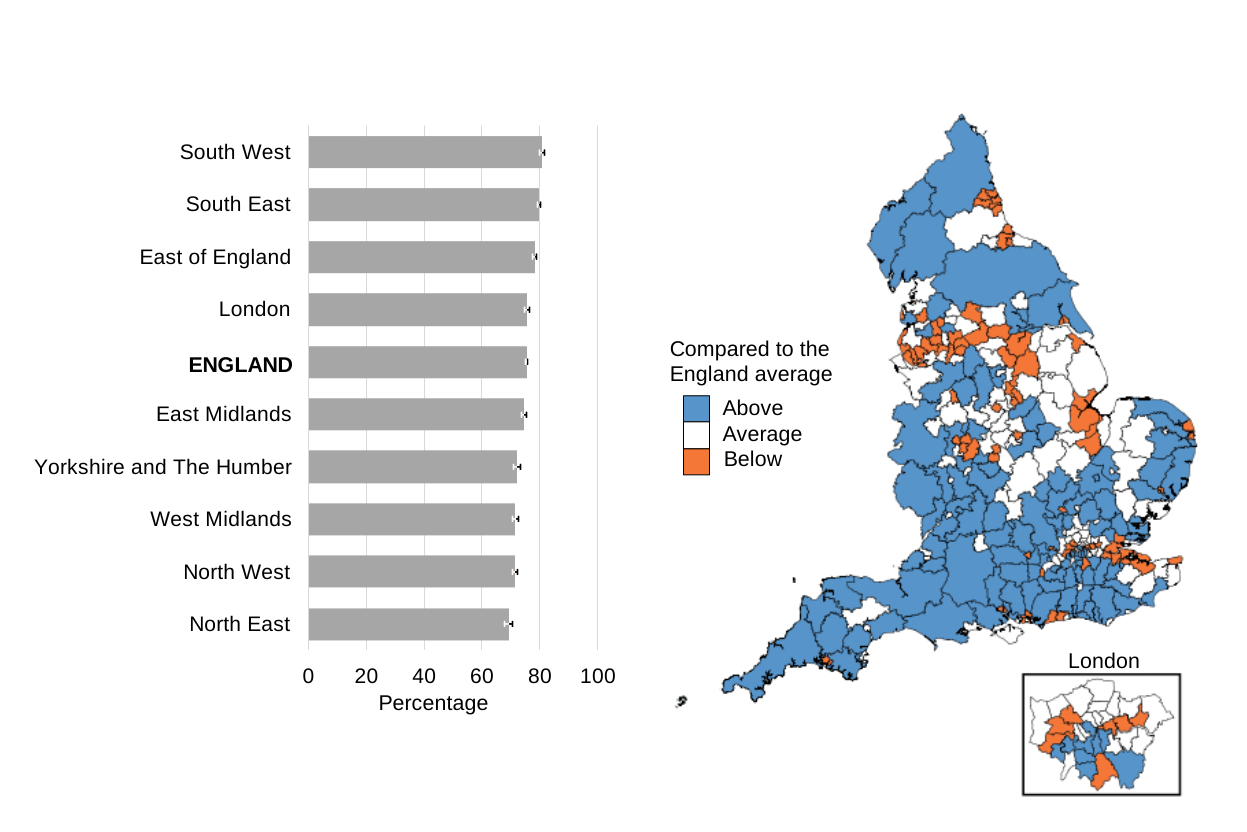
12. Reasons for satisfaction and dissatisfaction with green and natural spaces in local area
12.1 Reasons for satisfaction with green and natural spaces in local area[footnote 13]
Adults who were either very or fairly satisfied with the green and natural spaces in their local area were asked their reasons for this. In line with 2023/24, the most common reasons for satisfaction in 2024/25 were ease of walking to green spaces (90%) and spaces being good for mental health and wellbeing (67%). Other factors mentioned by at least one in three adults included encouraging physical health and exercise (42%), feeling safe (41%), and good places for children to play (37%).
Figure 12.1: Reasons for satisfaction with green and natural spaces in the local area, England: 2024/25 (Base: Adults who were satisfied with the green and natural spaces in their local area)
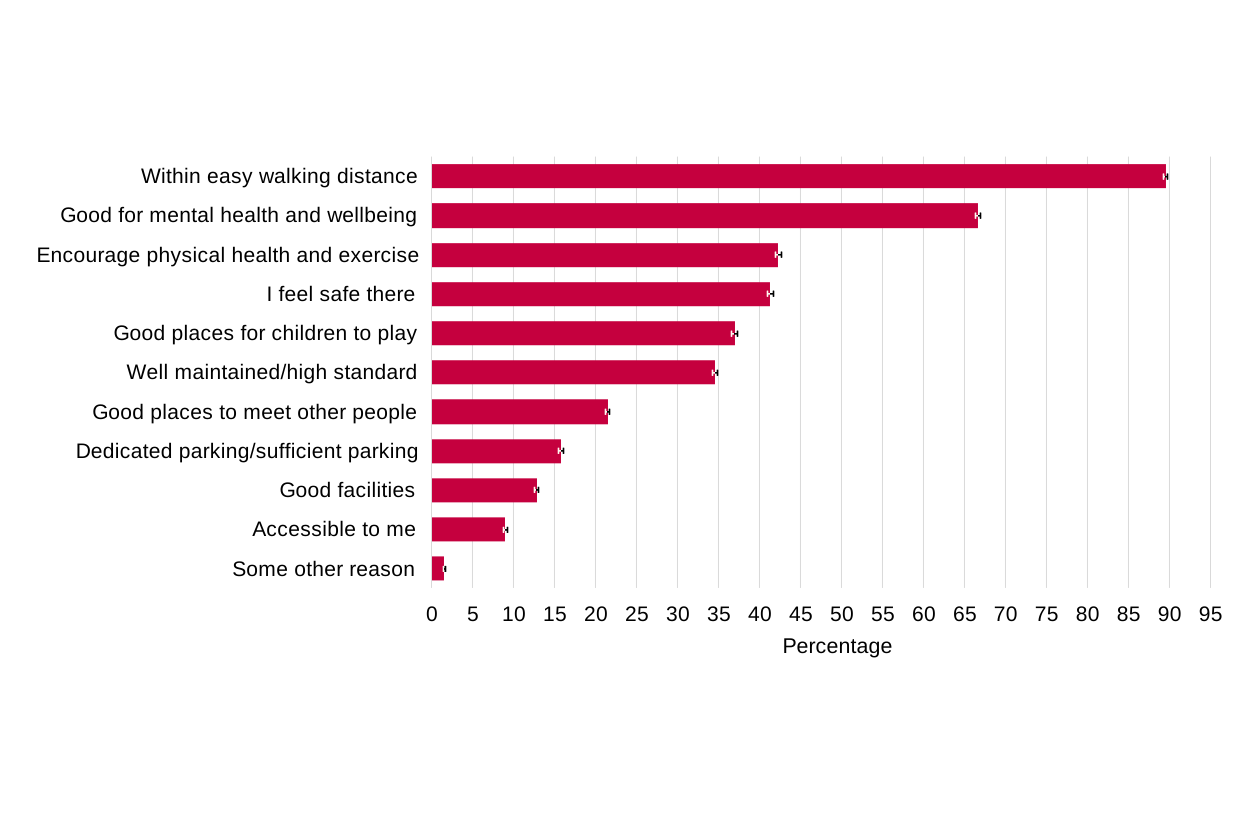
12.2 Reasons for dissatisfaction with green and natural spaces in local area
In line with 2023/24, the most common reasons in 2024/25 for dissatisfaction with the green and natural spaces in their local area were a perceived lack of these types of spaces in their local area (60%), rubbish and litter (54%), poor maintenance (51%) and dog fouling (45%). Other factors mentioned by at least three in ten adults included people drinking or taking drugs (40%), lack of facilities (34%), and safety concerns (34%).
Figure 12.2: Reasons for dissatisfaction with green and natural spaces in their local area, England: 2024/25 (Base: Adults who were dissatisfied with green and natural spaces in their local area)
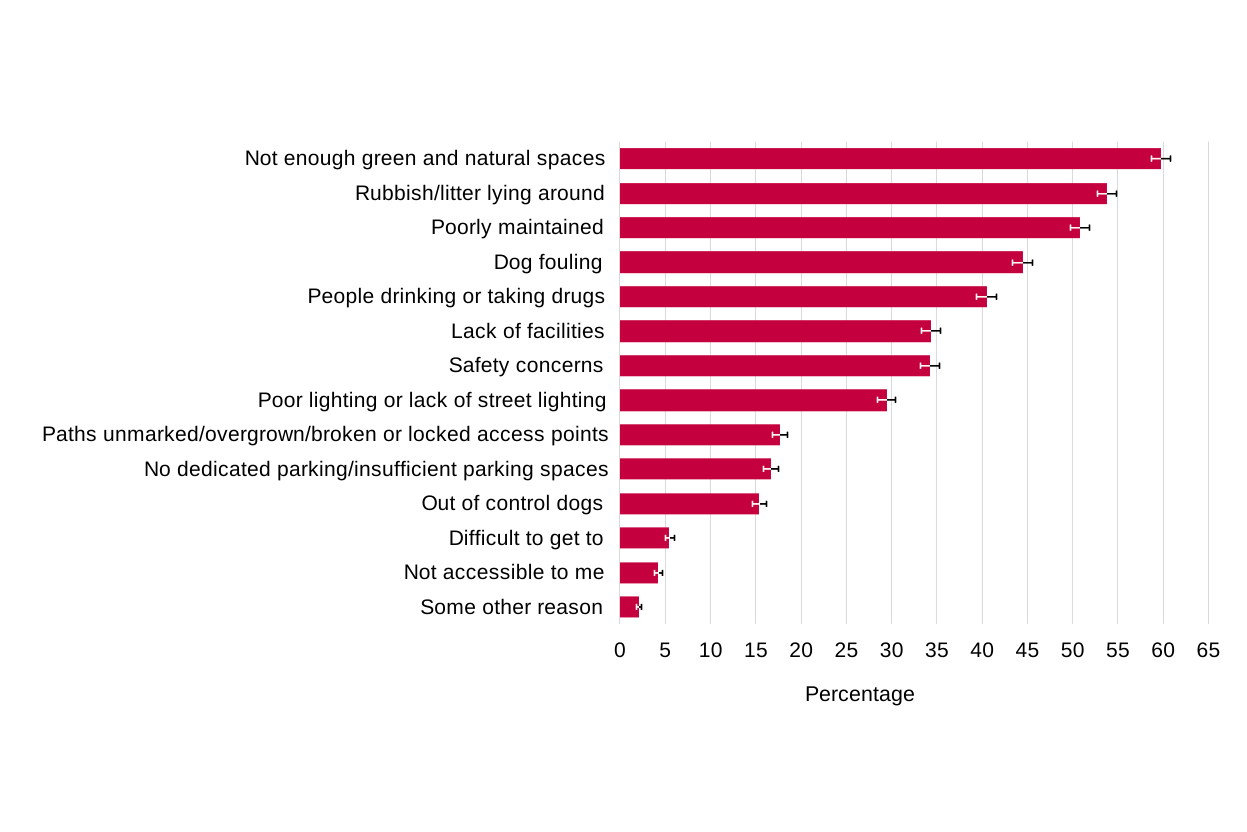
-
Demographic questions in the survey are voluntary and self-reported by the respondent. ↩ ↩2 ↩3 ↩4 ↩5 ↩6 ↩7 ↩8 ↩9 ↩10
-
This data is based on the respondent’s sex. The Community Life Survey respondents were asked the question “What is your sex?”. The response options were ‘Male’, ‘Female’ and ‘Prefer not to Say’. This closely follows the ONS Census 2021 question for sex designed to capture sex at birth, but has been slightly amended to include a ‘Prefer not to Say’ option as we do for all demographic questions in the Community Life Survey. ↩ ↩2 ↩3 ↩4 ↩5 ↩6 ↩7 ↩8 ↩9 ↩10
-
This data is based on the respondent’s gender identity. Respondents were asked ‘Is the gender you identify with the same as your sex registered at birth’, with the possible responses being ‘Yes’, ‘No, type in gender identity’ or ‘Prefer not to say’. Patterns were identified in Census 2021 data that suggest that some respondents may not have interpreted the gender identity question as intended, notably those with lower levels of English language proficiency. Analysis of Scotland’s census, where the gender identity question was different, has added weight to this observation. More information can be found in the ONS sexual orientation and gender identity quality information report, and in the National Statistical blog about the strengths and limitations of gender identity statistics ↩ ↩2 ↩3 ↩4 ↩5 ↩6 ↩7 ↩8 ↩9 ↩10
-
Sexual orientation is an umbrella term covering sexual identity, attraction, and behaviour. For an individual respondent, these may not be the same. For example, someone in an opposite-sex relationship may also experience same-sex attraction, and vice versa. This means the statistics should be interpreted purely as showing how people responded to the question, rather than being about whom they are attracted to or their actual relationships. ↩ ↩2 ↩3 ↩4 ↩5 ↩6 ↩7 ↩8 ↩9 ↩10
-
The White British ethnic group includes adults from an English, Welsh, Scottish, Northern Irish or British ethnic group ↩ ↩2 ↩3 ↩4 ↩5 ↩6 ↩7 ↩8 ↩9 ↩10 ↩11
-
This is a form of socio-economic classification based on the employment status and occupation of the respondent. ↩ ↩2 ↩3 ↩4 ↩5 ↩6 ↩7 ↩8 ↩9 ↩10
-
The Index of Multiple Deprivation is a geographical measure which classifies the relative deprivation of an area. It combines seven indices to produce one overall measure for the area (rather than the individual). It takes into account income, employment, education, skills and training, health and disability, crime, barriers to housing and services, and living environment. For this commentary, the most and least deprived deciles have been compared. There may be some other significant differences between deciles in between which have not been commented on here. The analysis of the index of Multiple Deprivation was conducted using the 2019 Index of Multiple Deprivation. ↩ ↩2 ↩3 ↩4 ↩5 ↩6 ↩7 ↩8 ↩9 ↩10
-
The 2024/25 Community Life Survey includes over 175,000 responses, so confidence intervals are generally very narrow. Whilst this reflects a strength of the data, when highlighting differences, some local authorities may be shown to be above/below the England average, but are only a percentage point more/ less than the average. There will be other local authorities which are much more above or below the England average, but will both be shown in the same shading within the map. ↩ ↩2 ↩3 ↩4 ↩5 ↩6 ↩7 ↩8 ↩9 ↩10
-
Respondents who answered “Don’t have any neighbours” are excluded from valid answers. ↩
-
Respondents who answered “Nothing needs improving” are excluded from valid answers. ↩
-
Respondents who answered “Just moved here” are excluded from valid answers. ↩
-
Respondents who answered “Have not lived here long enough to say” are excluded from valid answers ↩
-
This question was not included in the paper questionnaire and was asked of respondents online, so the results are only representative of the online population. ↩