Indicators of species abundance in England: Technical annex
Updated 27 May 2026
Applies to England

© Crown copyright 2026
This publication is licensed under the terms of the Open Government Licence v3.0 except where otherwise stated. To view this licence, visit nationalarchives.gov.uk/doc/open-government-licence/version/3 or write to the Information Policy Team, The National Archives, Kew, London TW9 4DU, or email: psi@nationalarchives.gov.uk.
Where we have identified any third party copyright information you will need to obtain permission from the copyright holders concerned.
This publication is available at https://www.gov.uk/government/statistics/indicators-of-species-abundance-in-england/indicators-of-species-abundance-in-england-technical-annex
Last updated: 2026
Latest data available: 2024
Quick links
- Main publication
- Published datafile
- Response to feedback
- Frequently asked questions
- Code for running the analysis
Changes since the last publication
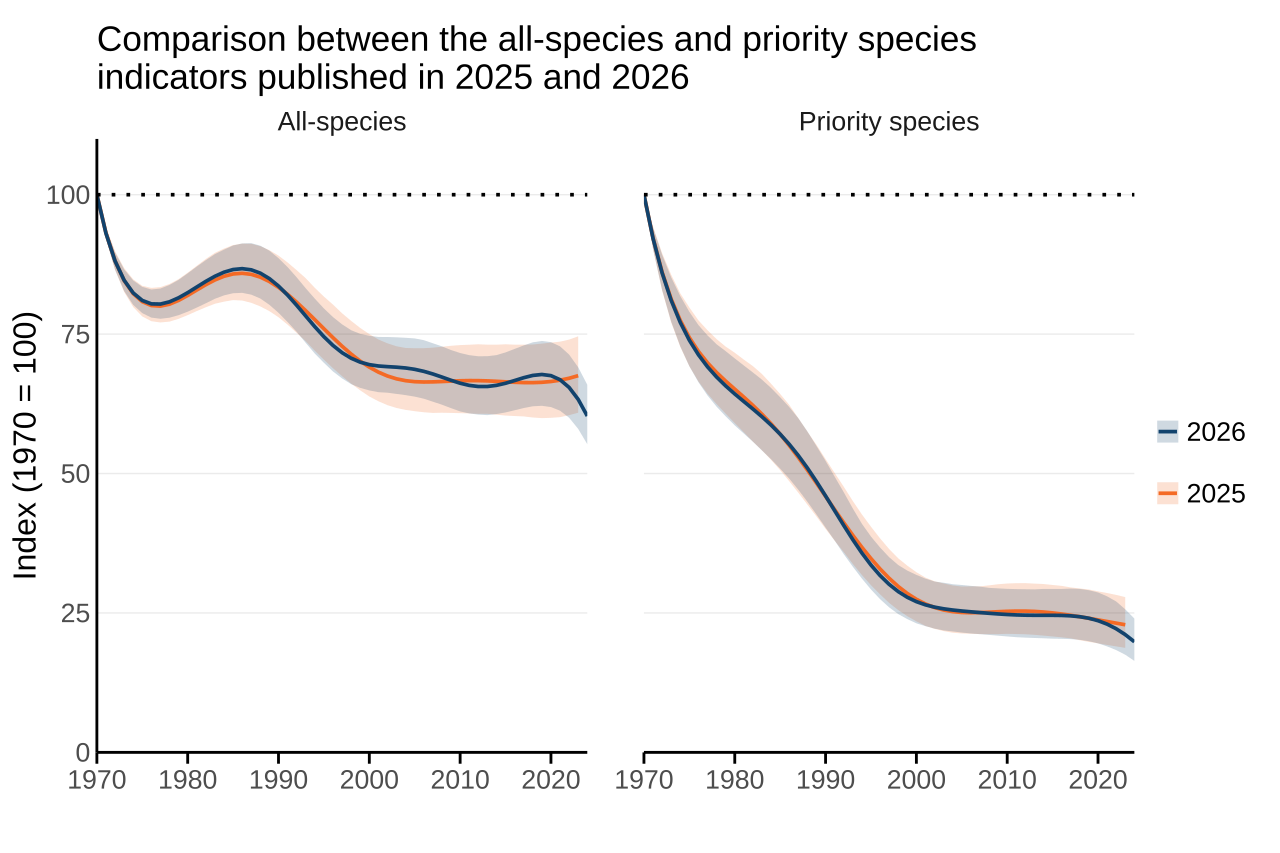
Overall, the indicators for the relative abundance of all-species and priority species are similar to last year (Figure 1). There are slight differences with the addition of an extra year’s worth of data: a decline at the end of the all-species index (roughly 4% lower in 2024 compared to 2023) and a slightly declined priority species index (roughly 2% lower in 2024 compared to 2023). In addition to the weather conditions in 2024, some differences in the all-species trend from 2000 onwards may be attributed to changes in the freshwater invertebrate dataset (see below). Slight differences may also be attributed to the addition of some vascular plant species that now have available England-level trends and the stochastic nature of the underlying models.
Figure 1: Differences between the 2025 and 2026 publications can be attributed to weather in 2024 and changes to historic freshwater species data
Notes about Figure 1:
- Figure 1 presents two trends for each indicator: the trend line for the most recent publication in 2026 in blue and the trend line for last year’s publication in orange. For simplicity, we only include option 2 (10 year smoothing).
- The solid line represents the smoothed trends with their 95% credible intervals (shaded area).
- The width of the credible interval is in part determined by the proportion of species in the indicator for which data are available.
- Index values represent change from the baseline value in 1970, the credible interval widens as the index gets further from the 1970 value and confidence in the estimate of change relative to the baseline falls.
- The credible intervals capture uncertainty in the trends of individual species that contribute to the index. They do not capture uncertainty associated with the spatial locations of sample points, nor about the degree to which the species represent wider biodiversity. The credible intervals partially capture uncertainty in the species abundance estimates.
Data collection by the Environment Agency has been variable in recent years, in part due to the COVID-19 pandemic. There is a threshold for the amount of data needed before an estimate of trend in abundance can be calculated for each species. Thus as more data are collected each year, and a longer time series of data for individual sites becomes available, more historical data on individual species can be included in the models. This led to a change in the timeseries for fish last year. This variability can make it difficult to be confident in the stability of the trend for fish. Similarly, changes to the underlying methodology for freshwater invertebrates have lead to changes in species level trends for this group. This included restricting the analysis to include only sites that had been sampled on at least 5 occasions over at least a 5-year time span across the 2013-2024 period.
Source data used
Table 1 summarises the datasets used to create the all- and priority species indicators.
Table 1: Summary of information on the datasets included in the indicators.
| Name of scheme | Taxonomic coverage | Number of species in all-species indicator | Number of species in priority species indicator | Timespan included in indicators |
|---|---|---|---|---|
| Breeding Bird Survey (BBS) / Common Bird Census (CBC) | Birds | 97 | 26 | 1970-2024 |
| Rare Breeding Birds Panel (RBBP) | Birds | 33 | 8 | 1970-2023 |
| Seabird Monitoring Programme (SMP) | Birds | 12 | 1 | 1986-2024 |
| Statutory Conservation Agency and RSPB Annual Breeding Bird Scheme (SCARRABS) | Birds | 7 | 5 | 1971-2024 |
| Wetland Bird Survey (WeBS) | Birds | 19 | 4 | 1975-2023 |
| BeeWalks | Bumblebees | 11 | 1 | 2010-2024 |
| UK Butterfly Monitoring Scheme (UKBMS) | Butterflies | 55 | 21 | 1976-2024 |
| National Fish Population Database (NFPD) and Transitional/Coastal waters Data (TRaC) | Fish | 37 | 8 | 2000-2024 |
| Freshwater Invertebrates (BIOSYS) | Freshwater invertebrates | 235 | 2 | 2013-2024 |
| Breeding Birds Survey (BBS) Mammals | Mammals | 5 | 1 | 1995-2024 |
| National Bat Monitoring Programme (NBMP) | Mammals | 10 | 5 | 1998-2024 |
| National Dormouse Monitoring Programme (NDMP) | Mammals (single species) | 1 | 1 | 1998-2024 |
| National Water Vole Monitoring Programme (NWVMP) | Mammals (single species) | 1 | 1 | 2015-2024 |
| Priority Moths | Moths | 9 | 10 | 1995-2024 |
| Rothamsted Insect Survey Light Trap | Moths | 435 | 66 | 1970-2024 |
| National Plant Monitoring Scheme (NPMS) | Vascular plants | 218 | 1 | 2015-2024 |
Notes about Table 1:
- The Breeding Bird Survey began in 1994 and incorporates the Waterways Breeding Bird Survey and the Heronries Census. Prior to this, data came from the Common Bird Census (CBC).
- Data is available in the freshwater invertebrates (BIOSYS) dataset from the mid-1990s to the present. Data prior to 2013 wasn’t considered to meet the criteria for taxonomic resolution to species level, so data from 2013 onwards is used in the indicator.
Robust English population time-series were sought for as many species as possible to produce the indicator for species abundance in England. The measure is a composite indicator of 1,185 species from many taxonomic groups. See the published datafile for a detailed breakdown of the species and groups included. Much of the data in this indicator has previously been published and many of the datasets are currently used elsewhere within the England Biodiversity Indicators.
Regardless of advances in statistical techniques, it is known that there are many species for which little monitoring data are available. Reasons for this include rarity, difficulty of detection, or those for which monitoring methods are unreliable or unavailable. For the indicator to be representative of all species in England, a robust method of assessing the changing status of these remaining data-poor species would need to be available.
Structured schemes where data are collected annually, following a strict pre-determined protocol, allow reliable conclusions to be derived from the data on the national status of species and how their populations are changing in the long term. The methods used vary by scheme to allow data collection to be appropriate for the target taxonomic group, but include repeat sampling in randomised stratified surveys, complete censuses and targeted surveys. The measure of abundance also varies by scheme depending on the focal taxa, for example, number of individuals and percentage cover of quadrats. Structured scheme sampling does involve bias, some of which can be accounted for and other sources that are more difficult to control (see Caveats and limitations for more discussion on biases).
There is ongoing research and development work into improving the evidence generated from volunteer based recording schemes and statutory monitoring schemes, including reducing bias in volunteer datasets, enhancing verification methods, and integrating different types of datasets to better understand species trends at finer spatial scales.
The vast majority of the 1,185 taxa in the all-species indicator are individual species. There are 20 species groups and 66 genera – the majority of these species groups and genera are from the freshwater macroinvertebrate dataset. This reflects the fact that many invertebrates are difficult to identify to species level, especially in their larval stage. The decision to include these higher taxa in Schedule 2 reflects the desire for the indicator to be broadly representative.
More details about particular aspects of some species data are set out below.
The National Dormouse Monitoring Programme (NDMP) is a UK scheme that currently produces abundance indices for the whole of the UK, not for the English subset. The majority of sites are in England (approximately 90% for NDMP). For dormouse, the UK model was considered sufficiently representative of the pattern of change in England, so data has been included in this indicator.
For the first time this year, England-level plant species trends have been generated from National Plant Monitoring Scheme data. A point of difference between NPMS and other schemes is that NPMS models trends of each species at the habitat scale, rather than nationally (Pescott et al., 2019a,b). For these species, we calculated species’ national index of abundance as a weighted mean of the habitat-specific indices, in which the weights reflected the number of study plots represented by each habitat type. Based on this procedure, we calculated trends for 218 plant species on Schedule 2 and these have been included in the indicator. This includes maidenhair spleenwort (Asplenium trichomanes), star sedge (Carex echinata), common sedge (Carex nigra), crested dog’s-tail (Cynosurus cristatus), cross-leaved heath (Erica tetralix), common cottongrass (Eriophorum angustifolium), hare’s-tail cottongrass (Eriophorum vaginatum), heath wood-rush (Luzula multiflora), purple moor-grass (Molinia caerulea), and Rubus chamaemorus. Due to a taxonomic error, there is 1 species in Schedule 2, Triglochin maritima, for which no trends were available for the all-species indicator this year and will be included at the next update.
Following addition of more recent data, as well as updates to the modelling methodology, the data for eight of the moth species in Schedule 2 no longer pass the quality assurance tests that are completed as part of producing the all-species indicator. Further data will be needed to provide sufficient confidence in the trends for these species before they can be included. The affected moth species are dotted carpet (Alcis jubata), straw belle (Aspiates gilvaria), Haworth’s minor (Celaena haworthii), grey mountain carpet (Entephria caesiata), crescent (Helotropha leucostigma), emperor moth (Saturnia pavonia), Scythris siccella and heath rustic (Xestia agathina).
After publication of Schedule 2, some questionable features of the data for crucian carp (Carassius carassius) were identified. Records of the crucian carp declined over time, whereas records of hybrids between crucian carp and either common carp (Cyprinus carpio) or brown goldfish (Carassius auratus) increased. The changeover appears to coincide with better understanding of hybridization and the publication of an improved guide to the identification of hybrids between these carp species (Hanfling & Harley, 2003). This raises the possibility that trends in the crucian carp were influenced by variation in identification rather than a change in abundance, and that the apparent decline is in fact a trend toward lower misidentification of hybrids. It was therefore decided to exclude the crucian carp from the indicator this year, pending further investigation.
Following publication in 2024, we have investigated data sources for water vole (Arvicola amphibius) available from the National Water Vole Monitoring Programme (NWVMP). We found that the recent monitoring dataset of water vole from 2015 to 2022 met the threshold for inclusion into the all-species and priority species models. As with some of the bat species, water voles are monitored by presence/absence on transects, which was found to have a strong correlation with abundance at the scale of 100m. As with the NDMP, these trends are also produced at the UK scale.
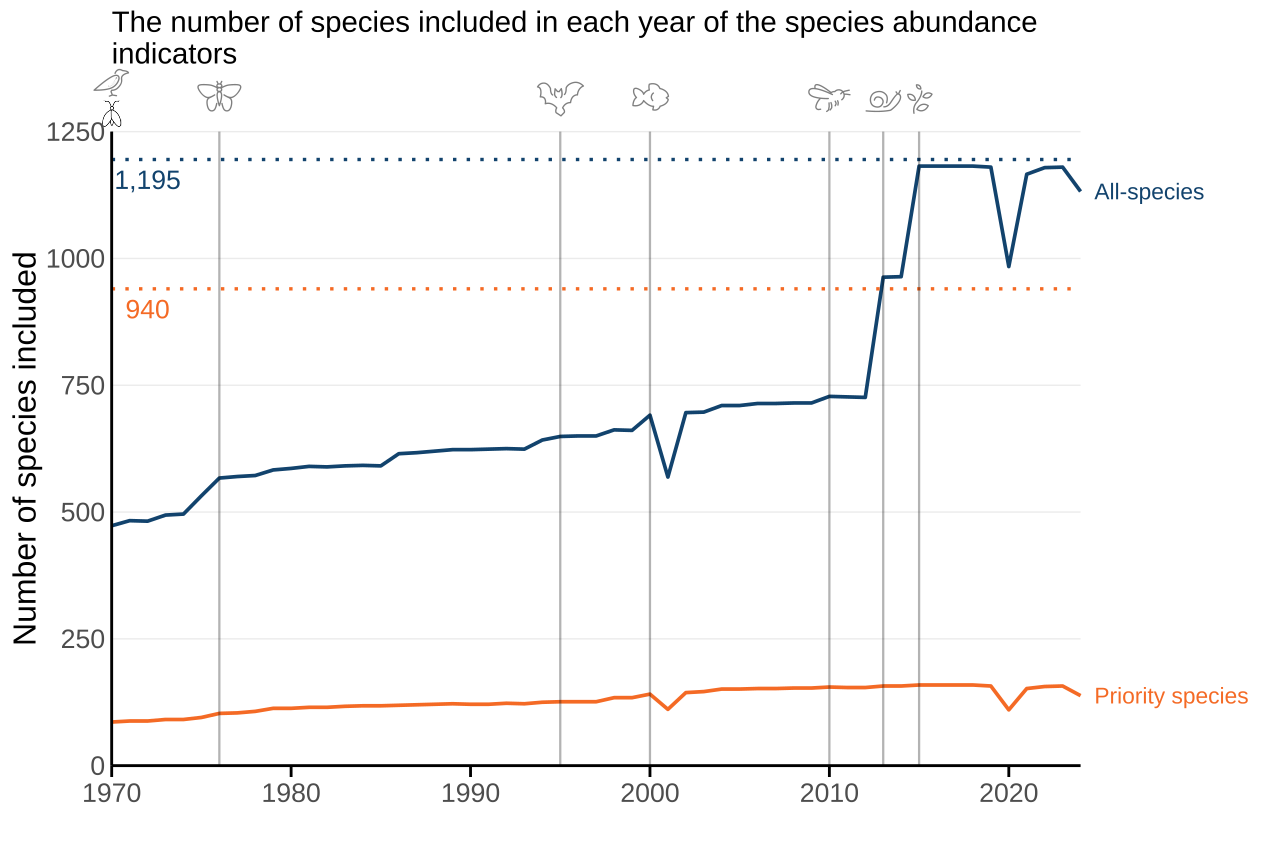
Figure 2: The early timeseries, pre-2000, is dominated by moths, birds and butterflies
Notes about Figure 2:
- The dashed line at 1,195 species indicates the target number of species for the index, based on the list published in Schedule 2
- Jumps in the number of species included represent the start of data collection for certain datasets (see Table 1). The addition of these groups is represented by the grey lines and symbols.
- The two dips in species included in the indicator are due to the outbreak of foot and mouth disease in 2001 which impacted the collection of bird data, and the COVID-19 pandemic in 2020 which impacted the collection of bird and fish data. The fall in species in 2024 is due to routine delays in data from various monitoring scheme becoming available.
Desirable vs undesirable species
As set out in Species Included, the all-species indicator includes all native species with suitable data, as well as species naturalised before 1500 and natural colonists from mainland Europe. This means that the all-species indicator does include some species that are associated with unfavourable habitat quality, that have negative interactions with rare and threatened species, or that are in some other way undesirable. We are aware that there is an argument for the exclusion of these species from the indicator, on the basis that increases in their abundance would not reflect improvements in the status of biodiversity. However, we have considered this question and have retained these species for the following reasons:
- Species typically thought of as undesirable are characterised by having high abundance in degraded or unnatural habitats (for example, polluted waterways). Under these conditions, species that we consider desirable typically have very low abundance. The value of the indicator represents both the relative abundance and the number of species in each group (desirable versus undesirable). In reality, the number of ‘undesirable’ species is small compared with the much larger number of species in the indicator that are considered to be desirable. Moreover, the indicator is calculated using the geometric mean abundance, the value of the index would generally decrease if habitats were to become degraded (where few species increase but most decrease) and increase if habitat quality were to improve (most species increase but few decrease).
- From a practical perspective, any decision about which species are desirable or undesirable to include in the indicator would need to be underpinned by a rigorous process that objectively defines the values by which ‘desirability’ would be assessed. Whilst “desirable” and “undesirable” species have been proposed for some groups in the indicator, a classification is not available for all groups in the indicator. Moreover, it is not clear whether the current methods used to identify “desirable” and “undesirable” species are comparable between taxonomic groups. In the absence of such a process, decisions to remove individual “undesirable” species would be subjective and risk undermining confidence in the indicator.
Criteria for including source data
Three criteria were used to assess whether data were appropriate for inclusion in the indicator:
- Scheme uses standardised approach delivering annual abundance indices based on survey protocols and analytical methods that are appropriate for the organisms being studied.
- Spatially replicated survey design with coverage across England (or, for very rare species, the data captured should cover the vast majority of populations that are known to exist).
- Taxonomic resolution ideally to species level. In some cases, it was considered to be desirable to include data at a higher level to improve taxonomic coverage (for example, aggregated groups of species, or genus-level).
The rationale for these criteria is described below.
Standardised protocol: In order to assess change, it is essential that the abundance data are collected in a consistent manner across time. Structured schemes where data are collected annually, following a strict pre-determined protocol, allow reliable conclusions to be derived from the data on the national status of species and how their populations are changing in the long term. Any changes in protocol should be supported by extensive analysis to show that the resulting trends are robust to the change in methods (as happened when the Common Bird Census was replaced by the Breeding Bird Survey in the 1990s). The methods used vary by scheme to allow data collection to be appropriate for the target taxonomic group, but include transect walks, complete censuses and other approaches, usually with repeat surveys during each year.
Spatial representation: For the indicator to be representative of change across England, it is desirable for contributing datasets to represent the English landscape. To do this, data should have a spatially replicated survey design with coverage across England. Time-series of individual populations are not likely to be representative, except for species for which the vast majority of English populations are counted in these time-series (for example, where there is a single population in England).
Ideally the sample sites would also be a random sample of the English landscape. The datasets in the indicator include schemes that select sites at random (for example, Breeding Bird Survey) and those that are volunteer-selected (for example, UK Butterfly Monitoring Scheme). Allowing volunteers to select monitoring sites creates a number of potential biases in the resulting data (Boyd, Powney, & Pescott, 2023; Fournier, White, & Heard, 2019). However, even randomly selecting sites may not be sufficient to guarantee that the sites with data are wholly representative, because some sites in remote parts of the country may not have an available volunteer to collect the data. Some schemes may also weight sampling to areas of interest (for example, the NPMS sample locations are weighted towards sampling semi-natural habitats), but planned biases of this nature can be accounted for in analysis to understand national species trends.
Taxonomic representation: It is desirable that the data going into the index should measure the abundance of species, rather than some higher taxonomic group (for example, family). However, in some cases it was agreed to be appropriate to include data at an intermediate level (for example, species aggregate or genus level) to improve the taxonomic coverage.
A total of 16 datasets were assessed to meet the criteria for inclusion in the indicator, as summarised in Table 2. The species that these datasets cover are listed in the associated data file.
Table 2: A summary of the methods used to create species trends from recording scheme data.
| Recording scheme data | Dataset Owner/Partners | Survey Protocol | Analytical techniques | Survey data available at | Species time-series available at | References |
|---|---|---|---|---|---|---|
| BeeWalks | Bumblebee Conservation Trust (BBCT), Bees, Wasps and Ants Recording Society, UKCEH, University of Kent | Transect counts at approximately 600 non-random sites with replication during the season | Statistical model accounting for seasonal variation (peer reviewed) | Beewalk Survey Scheme | Matechou, E., Freeman, S.N., and Comont, R.F. (2018) Caste-Specific Demography and Phenology in Bumblebees: Modelling BeeWalk Data. Journal of Agricultural, Biological and Environmental Statistics | |
| Breeding Bird Survey (BBS) | BTO, RSPB, JNCC | Counts on transects on approximately 3,000 randomly-selected sites, with two visits per year (data prior to 1994 used a different approach) | Statistical model accounting for seasonal and spatial variation (peer reviewed) | Breeding bird survey | Massimino, D., Baillie, S. R., Balmer, D. E., Bashford, R. I., Gregory, R. D., Harris, S. J., … & Gillings, S. (2025). The Breeding Bird Survey of the United Kingdom. Global Ecology and Biogeography, 34(1), e13943. | |
| Breeding Bird Survey (BBS) Mammals | BTO, RSPB, JNCC | Counts on transects on approximately 90% of the 3,000 randomly-selected sites, with two visits per year | Statistical model accounting for seasonal and spatial variation (peer reviewed) | Mammal monitoring | ||
| Freshwater Invertebrates (BIOSYS) | EA (data collection) QMUL (analysis) | Counts from kick samples at approximately 7,000 non-random sites (with repeat visits within the year) | Statistical model accounting for seasonal variation (partially peer reviewed) | Freshwater river macroinvertebrate survey (Biosys) | ||
| National Bat Monitoring Programme (NBMP) | Bat Conservation Trust, JNCC | Counts on randomly located transects and non-random hibernation and roosting sites (total number of sites over 1,000) | Statistical model accounting for differences between methods (peer reviewed) | NBMP Annual Report and data (GB only available online) | Barlow, K.E., et al. (2015) Citizen science reveals trends in bat populations: the National Bat Monitoring Programme in Great Britain. Biological Conservation 182, 14-26. | |
| National Dormouse Monitoring Programme (NDMP) | People’s Trust for Endangered Species (PTES) | Counts at nest-boxes (2 visits per year) at approximately 400 known sites | Statistical model (not peer reviewed) | National Dormouse Database | ||
| National Fish Population Database (NFPD) and Transitional/Coastal waters Data (TRaC) | EA (data collection) QMUL (analysis) | Counts from approximately 1,000 non-random sites. Some sites use electrofishing, others seine netting. | Statistical model accounting for seasonal variation (partially peer reviewed) | Fish freshwater surveys | ||
| National Plant Monitoring Scheme (NPMS) | UKCEH, Plantlife, BSBI, JNCC | Percentage cover in quadrats on approximately 800 randomly-selected sites, with replication. | Statistical model (peer reviewed) for each habitat, combined to a species-level trend. | NPMS Scheme survey data | Pescott, O. L., Walker, K. J., Jitlal, M., Smart, S. M., Maskell, L., Schmucki, R., … & Roy, D. B. (2019). The national plant monitoring scheme: A technical review. | |
| National Water Vole Monitoring Programme (NWVMP) | PTES | Presence / absence on 100m sections over a 500m transect (approximates average range size) at non-random sites | Statistical method (not peer reviewed) | National Water Vole Monitoring Programme | ||
| Priority Moths | Butterfly Conservation | Counts at known sites using species-specific methods | Statistical method (peer reviewed) | Pannekoek, J., and van Strien, A.J. ( 1996) TRIM - trends and indices for monitoring data. Research paper no. 9634. Statistics Netherlands. | ||
| Rare Breeding Birds Panel (RBBP) | BTO, RSPB, JNCC, RBBP secretariat | Near-complete counts of the number of breeding pairs. | No (species only included where data judged to be representative of complete counts) | |||
| Rothamsted Insect Survey Light Trap | Rothamsted Research (RRes) (collection) UKCEH (analysis) | Counts at light traps (mostly nightly) at approximately 80 non-random sites | Statistical model accounting for seasonal variation (peer reviewed) | Rothamsted Insect Survey Online Database | Rothamsted Insect Survey to 2021 | Dennis, E.B., Morgan, B.J.T., Freeman, S.N., Brereton, T.M. & Roy, D.B. (2016) A generalized abundance index for seasonal invertebrates. Biometrics, 72, 1305-1314; Harrower, C.A.; Botham, M.S.; Kruger, T.; Roy, D.B.; Powney, G.D. (in prep). Annual abundance indices and trends for moths in Britain and Ireland from the Rothamsted Insect Survey light-trap network, 1968-2023, including country-level results for England, Scotland and Wales. NERC EDS Environmental Information Data Centre. |
| Seabird Monitoring Programme (SMP) | BTO, JNCC in association with RSPB | Near-complete counts at known colonies | Not applicable (data are complete counts) | Seabird Monitoring Programme database | Thompson, K.R., Brindley, E. & Heubeck, M. (1997) Seabird numbers and breeding success in Britain and Ireland, 1996. JNCC, Peterborough, (UK Nature Conservation No. 21). | |
| Statutory Conservation Agency and RSPB Annual Breeding Bird Scheme (SCARRABS) | RSPB, JNCC, Natural England, NatureScot, Natural Resources Wales, NI Environment Agency | Bespoke approach for each species, full census or random stratified sample. | Species-specific approach (all peer-reviewed) | Conway, G, et al. (2007). Bird Study, 54: 98-111.; Dillon, IA, et al. (2009). Bird Study, 56: 147-157.; Ewing, SR, et al. (2011). Bird Study, 58: 379-389; Heward, CJ, et al. (2015). Bird study, 62: 535-551.; Hayhow, D, et al. (2018). Bird Study, 65: 458-470.; Sim, IM, et al. (2008). Bird Study, 55: 304-313.; Wilkinson, NI, et al. (2018). Bird study, 65: 174-188.; Kelly, LA, et al. (2025). Bird study, 1-18. | ||
| UK Butterfly Monitoring Scheme (UKBMS) | Butterfly Conservation, UKCEH, BTO, JNCC | Counts, mostly on transects, at over 1,000 non-random sites, most with weekly replication. | Statistical model accounting for seasonal variation (peer reviewed) | United Kingdom Butterfly Monitoring Scheme: collated indices 2023 | Dennis, E.B., Morgan, B.J.T., Freeman, S.N., Brereton, T.M. & Roy, D.B. (2016) A generalized abundance index for seasonal invertebrates. Biometrics, 72, 1305-1314. | |
| Wetland Bird Survey (WeBS) | BTO, RSPB, JNCC | Counts at approximately 3,000 non-random sites | Statistical model (peer reviewed) | Wetland Bird Survey Annual Report and data | British Trust for Ornithology (2017) https://www.bto.org/sites/default/files/webs_methods.pdf; Maclean, I.M.D. & Austin, G.E. (2006) Wetland Bird Survey Alerts 2004/05: Changes in numbers of wintering waterbirds in the Constituent Countries of the United Kingdom, Special Protection Areas (SPAs) and Sites of Special Scientific Interest (SSSIs). BTO Research Report 458, British Trust for Ornithology, Thetford. |
Version history
An early version of the priority species indicator was published in the State of Nature 2013 report and subsequently developed into an official statistic of priority species abundance in the UK, which was first published in 2014. The development of this indicator is described in Eaton et al., 2015. Between then and 2020 the methods were continually improved, and an indicator for priority species in England was developed. From this, work to develop an indicator for all-species in England began. A number of versions of the all-species indicator have been produced, each containing more species than the last (Table 3).
Version 1 (published in the Biodiversity Targets Consultation detailed evidence report, 2022)
UK Biodiversity Indicator C4a (Status of UK priority species – Relative abundance) was used as a starting point for developing the all-species abundance indicator. Version 1 of the indicator used data from seven datasets, which were the same as those that contributed to indicator C4a, covering butterflies, birds, mammals and moths. Of the species in these datasets, indicator C4a contained only the approximately 200 species that are on priority species lists in the UK. The all-species indicator, however, was expanded to include all the species that were included in the datasets (except for a small number of species that do not occur in England). This version of the indicator had 670 species.
Version 2 (published in the Biodiversity Targets Consultation detailed evidence report, 2022)
Based on Version 1, stakeholders and experts (including the Biodiversity Targets Advisory Group) recommended further exploration of representativeness of the indicator and potential to broaden species coverage. As a result, work was done to expand the indicator to include additional species and make the indicator as representative as possible (subject to the data available). A total of 164 vascular plant and 237 freshwater invertebrate species were added to the indicator to form Version 2.
Schedule 2 of The Environmental Targets (Biodiversity) (England) Regulations 2023
Following a consultation of the biodiversity targets in 2022, a review of the data included in the indicator, including new data sources, was carried out. As a result, additional species were considered to have suitable data to allow them to be added to the indicator: 11 bumblebees, 2 mammals, 38 freshwater and estuarine fish, 23 moths, and 83 vascular plants. A number of species were also removed from the indicator:
- Two subspecies of the brent goose, Branta bernicula, were merged into one
- Two moth species were excluded due to insufficient data to report a trend – basil thyme (Coleophora tricolor) and silky wave (Idaea dilutaria)
- 28 vascular plants were excluded as they were found to occur on very few NPMS grid cells in England
- Two freshwater macroinvertebrate species were removed due to their invasive status. The sideswimmer, Gammarus tigrinus, is invasive and should not have been included in Version 2. The species group orb mussels, Musculinium spp., includes data for both the native M. lacustre and the invasive M. transversum. Although it is believed that the majority of records are for the native species, there is a risk that the index value for this taxon could increase solely due to the expansion of the invasive species, and it was therefore decided to exclude this taxon entirely.
Following these updates, a list of the 1,195 taxa that should be monitored as part of the statutory species abundance targets was published in Schedule 2. The current publication includes data for all species in Schedule 2 for which data were ready for inclusion.
Table 3. Breakdown of species numbers by taxonomic group in each of four iterations of the all-species index. The number of datasets refers to datasets listed in Table 1.
| Taxonomic Group | Number of datasets | Version 1 | Version 2 | Schedule 2 | Current publication |
|---|---|---|---|---|---|
| Birds | 5 | 169 | 169 | 168 | 168 |
| Bumblebees | 1 | - | - | 11 | 11 |
| Butterflies | 1 | 55 | 55 | 55 | 55 |
| Fish | 1 | - | - | 38 | 37 |
| Freshwater invertebrates | 1 | - | 237 | 235 | 235 |
| Mammals | 5 | 15 | 15 | 17 | 17 |
| Moths | 2 | 431 | 431 | 452 | 444 |
| Vascular plants | 1 | - | 164 | 219 | 218 |
| TOTAL | 16 | 670 | 1071 | 1195 | 1185 |
Notes about Table 3:
- The total number of datasets is lower than the sum of this column (that is, 16 rather than 17) because one dataset (the Breeding Bird Survey) reports both birds and mammals.
Expert input to indicator development
Given the complex nature of measuring species abundance, expert input has been sought at various stages of the development of this indicator and previous related measures.
Expert groups were established to inform development of the Environment Act targets. The Biodiversity Targets Advisory Group (BTAG) was established in September 2020 to provide advice to Defra on developing the evidence base for legally-binding biodiversity targets. Details of the BTAG terms of reference, membership, and meeting minutes are published. The BTAG’s remit included providing expert advice on indicators used to measure progress towards the targets, and they provided useful input to the development of this species abundance indicator. Specific recommendations from the BTAG included completing work to broaden the species coverage and improve representativeness, following development of the initial measure with 670 species. This led to the addition of vascular plants and freshwater invertebrates to the indicator. The BTAG’s final meeting was in January 2022.
The BTAG was replaced by Defra’s new Biodiversity Expert Committee (BEC), which was established in September 2023. The BEC is a sub-committee of Defra’s Science Advisory Council, and its 12 expert members provide independent expert advice, challenge and scientific support to Defra specialists and policy makers in matters related to biodiversity. We have sought input from BEC on specific questions around the methodology and publication of the abundance indicator.
We also commissioned an independent expert review of the indicator methodology in Summer 2023. Three academic experts were asked to consider the suitability of the indicator methodology and make recommendations for its continued development. The panel made several recommendations for the methodology, particularly focused on options to refine the smoothing. We worked with the expert panel to implement these ahead of the first publication in 2024.
In publishing this release as an Official Statistic in Development, we welcome and invite further feedback from users and experts on the methods and presentation of the indicator that may help to improve future releases.
Model specifics
Data collection and cleaning
Raw species indicators collated from monitoring schemes are the outcome of statistical modelling specific for each scheme and taxon (see more details for each scheme in Table 2). This data underwent further stages of data cleaning before undergoing pre-smoothing and input into the Freeman model.
The multispecies indicator is conceived as a geometric mean across species. One problem with this is that the geometric mean is undefined if any of the observations are zero. Several of the datasets used for this indicator contain cases where no organisms were observed in a particular year, resulting in zero counts or, in the case of the Rothamsted moths dataset, modelled counts that are extremely close to zero (for example, 0.000001 individuals). It is standard practice in this situation to add a small number to zero counts in order that the geometric mean is calculable. For species with zero counts (including moths with modelled zeros) we added a small number to every observation in that species’ time series. The value we added was equal to 1% of the mean value in that time-series.
Taxon names in the all-species indicator are defined by Schedule 2 of the Environmental Targets (Biodiversity) (England) Regulations 2023. Names in Schedule 2 were harmonized to the UK Species Inventory, which is an authoritative list maintained by the Natural History Museum. Taxon names for the Priority species indicator follow Schedule 41 of the Natural Environment and Rural Communities Act 2006. This part of the data cleaning step involves converting names of organisms to one of these standard lists.
Pre-smoothing
We applied a smoothing term to each species time series, except those for which a smoothed trend was already available (bats and most of the birds) and for four bird species where the number of abundance estimates was too few to smooth. We applied a thin plate spline with 0.3 degrees of freedom for each data point (Fewster et al., 2000) and did this on the log scale. The resultant smoothed trends were then taken forward to the next stage of analysis.
For vascular plants, the NPMS data series is just nine years. Smoothing species trends using the rule of 0.3 degrees of freedom per year produces trends that are linear, i.e. straight lines. This creates a situation in which the multispecies average for vascular plants would be estimated with extremely high precision that does not reflect the substantial uncertainty in the individual plant species trends. We therefore decided that a multispecies index of plants based on smoothed data would be misleading. For consistency, we used unsmoothed trends for vascular plants in both the all-species and plant-specific indicators.
Composite indices
The Freeman method (Freeman et al., 2020) is a hierarchical Bayesian state-space model that was developed to create multispecies indicators from heterogeneous and intermittent data. Intermittent data refers to the fact that not every species has an observation for abundance in every year (see ‘Missing data’ below).
The multispecies abundance indicator in year t is simply the product of the multispecies growth rates from years 1 through t, scaled to have a value of 100 in the baseline year of 1970. Two additional features of the Freeman method are worth noting.
First, the model includes a smoothing term to remove short-term fluctuations in the indicator, such as might arise if many species are simultaneously responding to individual years with favourable (or unfavourable) weather conditions. The smoothing is applied to the growth rates, rather than the indicator itself, for computational reasons. The specific type of smoothing is known as a penalised spline. The degree of smoothing is controlled by a user-defined number of “knots”, which can vary from 2 (a straight line) to n, where n is the total number of years in the dataset. Because the degree of smoothing is defined by the user, rather than estimated from the data, we have chosen to present the indicators with two levels of smoothing. For the option with a greater degree of smoothing (option 1), we set the number of knots equal to one tenth of the number of years in the dataset: given that the full dataset incorporates 53 years of data from 1970 to 2022, this is 5 knots. In the variant with a lesser degree of smoothing (option 2), we used one knot for every three years of data, which is 18 knots. For the taxon-specific implementations of the model, we use the same values for the number of years per knot, which resulted in fewer knots for datasets with short time series. For bumblebees, freshwater invertebrates and vascular plants, which have 13, 10 and 8 years of data respectively, the model with a greater degree of smoothing (option 1) is based on two knots.
A second notable feature of the Freeman method is that, when estimating species-specific growth rates, the model does not treat the input data as perfect, but recognises they arise from a sampling process that is subject to measurement error. The method includes a facility to provide species-specific estimates for this measurement error, if available. However, for the current implementation, we have assumed that measurement error on species abundance estimates is constant. The magnitude of this error is a parameter estimated from the data. Future iterations of this indicator will report on the impact of including species-specific estimates of measurement error compared to the current approach. Furthermore, an assessment of the magnitude of this estimated error parameter will be conducted, comparing different subsets of species based on the species-specific measurement error estimates. In other words, this will explore whether the magnitude of the estimated error parameter is larger for species with greater uncertainty surrounding their individual time-series.
The method is implemented in the BUGS language by the JAGS software (Plummer, 2003) using Monte Carlo Markov Chains (MCMC) and R version 4.3.1 (R Core Team). These are standard approaches for fitting statistical models in a hierarchical Bayesian framework. For further details of the Freeman method, including equations and information about choices for prior distributions, please refer to Freeman et al. (2020).
Missing data
The Freeman method was specifically developed to handle missing data, for example, species:year combinations where there is no estimate of species abundance available. These missing values occur for three reasons:
- The schemes contributing data to the indicator start at different points in time (Table 1), so the number of species contributing data has grown steadily over time (Figure 2).
- There is a lag between data collection and the species abundance data becoming available, so the time series for some datasets terminate before 2024 (Table 1).
- There are internal gaps in the time series for some species, which happens when the number of sites contributing data falls below the levels required to reliably estimate abundance. This arises from a variety of reasons, including bad weather, natural turnover in volunteers, or if access to the countryside becomes temporarily restricted, as happened in 2001 (Foot-and-mouth) and 2020 (COVID-19) (both dips can be seen in Figure 2).
Missing values are handled by modelling species abundance as a multiplicative process of population growth. Growth rates for internal missing values are imputed by linear interpolation; growth rates for values outside the range of observed values (cases 1 and 2, above) are imputed based on the distribution of growth rates for species that do have data in that year. In other words, species with missing data at the start and end of the series are assumed to behave in line with the average of all the other species.
Exploring options for a weighted index
Each species in the indicator was weighted equally. When creating a species indicator weighting may be used to try to address biases in a dataset, for example, if one taxonomic group is represented by far more species than another, the latter could be given a higher weight so that both taxonomic groups contribute equally to the overall indicator. Complicated weighting can, however, make the meaning and communication of the indicator less transparent. The main bias on the data is that some taxonomic groups are not represented at all, which cannot be addressed by weighting. For this reason, and to ensure clarity of communication, equal weighting was used, although other options were explored.
From the statistical perspective, giving different weights to the component parts of a composite index is straightforward. However, from a practical perspective, it is not, as there is no objective way of assigning weights. The pragmatic solution usually adopted is to give each component part the same weight. When there is precisely one component index per species, this corresponds to giving equal weight to each species, regardless of their abundance or range. Where species groups or genera have been included, usually because of the difficulties in resolving to species level, each group has been given a weight equal to the number of species in the group or genus.
By weighting species equally, the composite index is dominated by taxa with many species. Consequently, if there are small datasets with few species that perhaps do not meet the criteria for inclusion, but they are included regardless, the implications are minor, as they will have little effect on the composite index.
Another option is to set equal weights at a higher taxonomic level, such as family level instead of species, though this approach also has limitations. An approach similar to this has been done for the Living Planet Index (McRae et al., 2017) and we investigated this earlier on in the development of this indicator (Bane et al., 2022). Other types of weighting could include evolutionary relatedness or ecological similarity, which would give more weight to distinct species. Similar to taxonomic weighting, deciding on a method for calculating similarity and the impact on the resulting trends is not straightforward.
Further exploration of weighting options is discussed in the Biodiversity terrestrial and freshwater targets: Detailed evidence report (Defra, 2022). Lacking any firm basis for setting weights objectively, the default option of weighting species equally has been taken, in line with other indicators in the England Biodiversity Indicators.
Representativeness of the species abundance indicators
It is estimated that the UK is home to around 55,000 native species of fauna, flora, and fungi. While it is unrealistic that any indicator could track all of these species, it is useful to consider which species are included in these indicators (which focus specifically on English Wildlife) and how representative they are of English biodiversity as a whole.
The all-species indicator tracks the abundance of 1,185 species on Schedule 2, for which species were chosen to include as much diversity as possible where sufficient data allowed and the taxonomic coverage is limited by data availability. The number of species in the indicator by taxonomic group, and how representative they are of the number in the UK, is shown in the datafiles published alongside this release.
Taxonomic representation
A comprehensive list of species was only available for the whole of the UK, rather than for England specifically, so comparing the list of species in the indicator to the list of UK species does not give perfect insights about how well the indicator represents English wildlife. However, assuming that the proportions of species in different groups is largely similar in England as it is across the UK, useful insights about the taxonomic representativeness of the indicator can be made.
While vertebrate animals are always of great conservation interest, they make up only 0.66% of the UK’s species. It is unavoidable that vertebrates will be overrepresented in species indicators, as it would not be possible to monitor a truly representative sample of invertebrates given that there are so many. In the UK, there are 362 recorded vertebrate species (amphibians, birds, fish, mammals, and reptiles). Of these, 218 are bird species, making this the largest vertebrate group in the UK. The indicator tracks the abundance of 168 species of birds, equivalent to approximately 77% of the UK’s bird fauna. There are 49 species of mammals recorded in the UK, and the indicator tracks the abundance of 35% of these (17 species). However, 10 of these are bat species, so taxonomic diversity of mammals in the indicator is limited. The indicator also includes 37 species of freshwater and estuarine fish. Amphibians and reptiles are not monitored in the indicator – there are seven amphibian and six reptile species in the UK, each representing 0.01% of the total number of species in the UK, but the available abundance data for these species was not deemed to meet the criteria for inclusion in the indicator.
Over half of the UK’s species (53.30%) are invertebrates; this is primarily insects (23,947 recorded species) accompanied by other invertebrates such as arachnids, crustaceans and molluscs (an additional 5,369 species). The best represented invertebrate groups in the indicator are butterflies and moths; the indicator tracks 55 of the 59 butterfly species recorded in the UK (93%) and 444 out of the 2,345 moth species (19%). Although moths are the highest contributor of species to the indicator, they are less well represented in comparison to other groups, such as birds, butterflies and mammals. While inclusion of freshwater invertebrates helps to balance the invertebrate contribution to the indicator away from being driven by lepidopterans, compared with early versions of the measure, terrestrial invertebrates (other than moths, butterflies, and bumblebees) are a notable gap. The majority of invertebrate species in the UK come from three groups: Hymenoptera (bees, ants, and wasps), Diptera (true flies), and Coleoptera (beetles). These groups are underrepresented in this indicator.
Plants make up 8.90% of UK species. There are 218 species of plant in the indicator (4% of UK species), all of which are vascular plants (vascular plants make up 31% of the plant species in the UK). Non-vascular plants such as mosses are not represented in the indicator.
There are no fungi in the indicator, although they make up 31.73% of species in the UK. This is because there are currently no surveillance schemes that would provide the abundance data required to include non-vascular plants and fungi.
Representation of habitats
The indicator includes a large number of terrestrial taxa, sampled from across England, which should allow the indicator to be an acceptable indicator of terrestrial animal and plant abundance (noting the specific gaps highlighted under taxonomic and ecosystem service representation).
Since the first version of the species abundance measure, the addition of data for 235 taxa of freshwater benthic invertebrates, as well as 37 freshwater and estuarine fish, brings the proportion of freshwater species in the indicator to 25% (including 21 bird species from the Wetland Bird Survey). While the inclusion of these species has improved the representation of freshwater habitats in the indicator, the freshwater species are largely represented by benthic macroinvertebrates which means we can be less certain that the indicator will pick up trends across freshwater species as a whole. Specific gaps in the indicator include freshwater plants and non-benthic invertebrates.
With the exception of seabirds and a small number of fish living in coastal waters, the indicator does not represent marine habitats.
Representation of ecosystem services
The representativeness of the indicator for terrestrial ecosystem services was assessed in 2022 in the Evidence to Support Development of Biodiversity Targets: Technical Report, using the framework from Oliver et al. (2015). This assessment has been updated to account for more recent additions to the indicator, as follows:
Pest control: the high number of birds in the indicator captures some aspects of pest control, but the lack of terrestrial invertebrates (including beetles, spiders, centipedes, wasps, dragonflies, damselflies, hoverflies and ants) means this service is only partially captured by the indicator.
Pollination: the inclusion of a high number of butterflies and moths means that pollination services are captured. This representation was improved following the addition of bumblebees to the indicator. However, only 11 bee species are included, and other pollinators such as hoverflies, wasps, and beetles are not represented, meaning this service is only partially captured by the indicator.
Decomposition: decomposition services are not captured by the indicator, due to lack of species that play a primary role in decomposition (for example, fungi, ants, isopods, myriapods, and annelids).
Carbon sequestration: The indicator includes 218 species of vascular plant, meaning that the carbon sequestration is captured in the indicator. However, in Oliver et al. (2015) all plants were assumed to have the function of carbon sequestration, so while the plants in the indicator certainly play a role in sequestering carbon, whether they are the most efficient at capturing carbon is not known.
Species in the indicator also provide freshwater ecosystem services. For example, the indicator includes 65 caddisfly taxa which are known to have the ecosystem functions of organic matter breakdown and substrate stabilization (Greenop et al., 2021). Further work is needed to explore the representation of freshwater ecosystem services in the indicator.
References
Bane, M. S., Cooke, R., Boyd, R. J., Brown, A., Burns, F., Henly, L., Vanderpump, J., & Isaac, N. J. B. (2023). An evidence-base for developing ambitious yet realistic national biodiversity targets. Conservation Science and Practice, 5(2), e12862. https://doi.org/10.1111/csp2.12862
Bat Conservation Trust & JNCC (2017). The state of the UK’s bats 2017: National Bat Monitoring Programme Population Trends.
Boyd, R. J., Powney, G. D., & Pescott, O. L. (2022). We need to talk about nonprobability samples. Trends in Ecology & Evolution. doi:10.1016/j.tree.2023.01.001
Burns, F., Eaton, M.A., Hayhow, D.B., Outhwaite, C.L., Al Fulaij, N., August, T.A., Boughey, K.L., Brereton, T., Brown, A., Bullock, D.J., Gent, T., Haysom, K.A., Isaac, N.J.B., Johns, D.G., Macadam, C.R., Mathews, F., Noble, D.G., Powney, G.D., Sims, D.W., Smart, S.M., Stroh, P., Walker, K.J., Webb, J.R., Webb, T.J., and Gregory, R.D. (2018). An assessment of the state of nature in the United Kingdom: A review of findings, methods and impact. Ecological Indicators, 94(1), 226 to 236. doi.org/10.1016/j.ecolind.2018.06.033
Comont, R. F., & Dickinson, H. (2022). BeeWalk 10-Year Report. Bumblebee Conservation Trust, Stirling, UK
Comont, R. F., & Dickinson, H. L. M. (2024). BeeWalk Annual Report 2024. Bumblebee Conservation Trust, Stirling, UK
Dar, A.A. & Jamal, K. (2021). Moths as ecological indicators: A review. Munis Entomology & Zoology, 16 (2), 833-839
Dean, M., Strachan, R., Gow, D. & Andrews, R. (2016) The Water Vole Mitigation Handbook (The Mammal Society Guidance Series). Eds Fiona Mathews and Paul Chanin. The Mammal Society, London.
Department for Environment, Food & Rural Affairs (DEFRA) (2022). Biodiversity terrestrial and freshwater targets: Detailed evidence report. UK Government. Available at: Biodiversity terrestrial and freshwater targets Detailed evidence report.pdf
Eaton, M. A., Burns, F., Isaac, N. J. B., Gregory, R. D., August, T. A., Barlow, K. E., … Williams, J. (2015). The priority species indicator: measuring the trends in threatened species in the UK. Biodiversity, 16(2–3), 108–119. https://doi.org/10.1080/14888386.2015.1068222
Ellis, E.E., Edmondson, J.L., Maher, K.H., Hipperson, H. & Campbell, S.A. (2023) Negative effects of urbanisation on diurnal and nocturnal pollen-transport networks. Ecology Letters, 26, 1382–1393. https://doi.org/10.1111/ele.14261
Fewster, R M., S T. Buckland, G M. Siriwardena, S R. Baillie, and J D. Wilson (2000). Analysis of Population Trends for Farmland Birds Using Generalized Additive Models. Ecology 81, 1970–84
Fournier, A. M. V., White, E. R., & Heard, S. B. (2019). Site-selection bias and apparent population declines in long-term studies. Conservation Biology, 33(6), 1370–1379. doi:10.1111/cobi.1337
Fox, R., Dennis, E.B., Harrower, C.A., Blumgart, D., Bell, J.R., Cook, P., Davis, A.M., Evans-Hill, L.J., Haynes, F., Hill, D., Isaac, N.J.B., Parsons, M.S., Pocock, M.J.O., Prescott, T., Randle, Z., Shortall, C.R., Tordoff, G.M., Tuson, D. & Bourn, N.A.D. (2021) The State of Britain’s Larger Moths 2021. Butterfly Conservation, Rothamsted Research and UK Centre for Ecology & Hydrology, Wareham, Dorset, UK
Freeman, S. N., Isaac, N. J. B., Besbeas, P., Dennis, E., B. and Morgan, B, J., T. (2020) A Generic Method for Estimating and Smoothing Multispecies Biodiversity Indicators Using Intermittent Data. Journal of Agricultural, Biological and Environmental Statistics, 26, 71 to 89. doi.org/10.1007/s13253-020-00410-6
Gelman, A., Rubin, D., (1992) Inference from Iterative Simulation Using Multiple Sequences. Statistical Science 7 (4) 457 - 472, https://doi.org/10.1214/ss/1177011136
Greenop, A., et al. (2021). Patterns of invertebrate functional diversity highlight the vulnerability of ecosystem services over a 45-year period. Current Biology
Hanfling, B. & Harley, M. (2003) A Molecular Approach to Detect Hybridisation between Crucian Carp (Carassius carassius) and Non Indigenous Carp Species (Carassius auratus and Cyprinus carpio) in UK Waters, including a Consideration of the Taxonomic Status of Gibel Carp (Carassius spp.). Environment Agency R&D Technical Report W2-077/TR
Heywood, J.J.N., Massimino, D., Balmer, D.E., Kelly, L., Noble, D.G., Pearce-Higgins, J.W., Woodcock, P., Wotton, S., Gillings, S. & Harris, S.J. (2023). The Breeding Bird Survey 2022. BTO Research Report 756. British Trust for Ornithology, Thetford
Isaac, N. J. B., van Strien, A. J., August, T. A., de Zeeuw, M. P. and Roy, D. B. (2014). Statistics for citizen science: extracting signals of change from noisy ecological data. Methods in Ecology and Evolution. https://doi.org/10.1111/2041-210X.12254
Johnson, A.C., Outhwaite, C.L., Isaac, N.J.B., Powell, K., Bishop, I., Roy, D.B., Jones, J.I., Murphy, J.F., Qu, Y., Vaughan, I.P., Ormerod, S.J. & Wilkes, M.A. (2026) What has happened to river macroinvertebrate biodiversity in England and Wales over the past 30 years? Journal of Environmental Management 401 (128954), https://doi.org/10.1016/j.jenvman.2026.128954.
Martay, B., Brewer, M.J., Elston, D.A., Bell, J.R.,Harrington, R., Brereton, T.M., Barlow, K.E., Botham, M.S., Pearce-Higgins, J.W. (2017) Impacts of climate change on national biodiversity population trends. Ecography, 40(10), 1139- 1151
Mathews, F., Kubasiewicz, L.M., Gurnell, J., Harrower, C.A., McDonald, R.A., Shore, R.F. (2018) A Review of the Population and Conservation Status of British Mammals: Technical Summary. A report by the Mammal Society under contract to Natural England, Natural Resources Wales and Scottish Natural Heritage. Natural England, Peterborough
McRae, L., Deinet, S., Freeman, R. (2017) The Diversity-Weighted Living Planet Index: Controlling for Taxonomic Bias in a Global Biodiversity Indicator. PLoS ONE 12(1): e0169156. https://doi.org/10.1371/journal.pone.0169156
Nunn, A. D., Ainsworth, R. F., Walton, S., Bean, C. W., Hatton-Ellis, T. W., Brown, A., …Noble, R. A. (2023). Extinction risks and threats facing the freshwater fishes of Britain. Aquatic conservation : marine and freshwater ecosystems, https://doi.org/10.1002/aqc.4014
Oliver, T. H., Isaac, N. J., August, T. A., Woodcock, B. A., Roy, D. B., & Bullock, J. M. (2015). Declining resilience of ecosystem functions under biodiversity loss. Nature communications, 6(1), 1-8
Pescott, O.L., Powney, G.D. & Walker, K.J. (2019b). Developing a Bayesian species occupancy/abundance indicator for the UK National Plant Monitoring Scheme. 10.13140/RG.2.2.23795.48161
Pescott, O.L., Walker, K.J., Jitlal, M., Smart, S.M., Maskell, L., Schmucki, R., Day, J., Amos, C., Peck, K., Robinson, A. & Roy, D.B. (2019a). The National Plant Monitoring Scheme: A Technical Review. JNCC Report No. 622, JNCC, Peterborough, ISSN 0963- 8091
Plummer, Martyn. (2003). JAGS: A Program for Analysis of Bayesian Graphical Models using Gibbs Sampling. 3rd International Workshop on Distributed Statistical Computing (DSC 2003); Vienna, Austria. 124
Qu, Y., Keller, V., Bachiller-Jareno, N., Eastman, M., Edwards, F., Jürgens, M. D., Sumpter, J. P., & Johnson, A. C. (2023). Significant improvement in freshwater invertebrate biodiversity in all types of English rivers over the past 30 years. Science of The Total Environment 905, 167144. https://doi.org/10.1016/j.scitotenv.2023.167144
Pharaoh, E., Diamond, M., Ormerod, S. J., Rutt, G. & Vaughan, I. P. (2023) Evidence of biological recovery from gross pollution in English and Welsh rivers over three decades. Science of the Total Environment, 878, 163107.
R Core Team (2022). R: A language and environment for statistical computing. R Foundation for Statistical Computing, Vienna, Austria. URL https://www.R-project.org/
Sadykova, D., Johnson, A.C, Qu, Y., Henrys, P.A., Jürgens, M.D., Keller, V.D.J, Bachiller-Jareno, N., Scarlett, P.M., Hutchins, M.G., Gecchele, L., Sadykov, A., Sumpter, J.P., Jardine, E. & Gardner, E. (2026) The relative importance of multiple environmental factors on river macroinvertebrate abundance across different groups based on a nationwide dataset from England. Water Research, 292, 125270. https://doi.org/10.1016/j.watres.2025.125270.
Snijders, T.A. (1988). On cross-validation for predictor evaluation in time series. In: On Model Uncertainty and its Statistical Implications, pp. 56–69. Springer
Van Strien, A. J., van Swaay, C. A. M. and Termaat, T. (2013). Opportunistic citizen science data of animal species produce reliable estimates of distribution trends if analysed with occupancy models. Journal of Applied Ecology, 50(6), 1450 to 1458. https://doi.org/10.1111/1365-2664.12158
Walker, K.J., Stroh, P.A., Humphrey, T.A., Roy, D.B., Burkmar, R.J. & Pescott, O.L. (2023). Britain’s Changing Flora. A Summary of the Results of Plant Atlas 2020. Botanical Society of Britain and Ireland, Durham
Walton, R.E., Sayer, C.D., Bennion, H. and Axmacher, J.C. (2020) Nocturnal pollinators strongly contribute to pollen transport of wild flowers in an agricultural landscape. Biology Letters, 16, 20190877. https://doi.org/10.1098/rsbl.2019.0877
Wembridge, D., White, I., Al-Fulaij, N., Marnham, E. & Langton, S. (2019) The State of Britain’s Dormice 2019. People’s Trust for Endangered Species, London
Whelan, M.J., Linstead, C., Worrall, F., Ormerod, S.J., Durance, I., Johnson, A.C., Johnson, D., Owen, M., Wiik, E., Howden, N.J.K., Burt, T.P., Boxall, A., Brown, C.D., Oliver, D.M. & Tickner, D. (2022) Is water quality in British rivers “better than at any time since the end of the Industrial Revolution”? Science of the Total Environment, 843, 157014.
Whitehorn, P. R., Seo, B., Comont, R. F., Rounsevell, M. & Brown, C. (2022). The effects of climate and land use on British bumblebees: Findings from a decade of citizen-science observations. Journal of Applied Ecology, 59, 1837–1851. https://doi.org/10.1111/1365-2664.14191