IP for self-employed creatives: materials for stakeholders
Ready-to-use materials for partners and stakeholders to help promote government guidance on intellectual property for self-employed creatives.
These materials can help industry bodies, membership organisations and other partners introduce self-employed creatives to government guidance on intellectual property (IP).
The guidance on protecting your creative work has been co-created with creative industry partners for self-employed creators. Highlighting the importance of understanding copyright and other intellectual property rights to protect their creative work, retain control over how it is used, and make informed decisions about their rights.
This page includes suggested social media posts, case study posts, newsletter and email copy, checklist templates, presentation slides and digital assets to help you promote the guidance through your channels.
How to use this content
-
Use the suggested copy and assets in your social media, newsletters, emails, websites and events
-
Adapt examples, terminology and imagery to suit your sector and audience, while retaining the core messages
-
Use the checklist templates to introduce practical questions relevant to your audience, rather than as a substitute for the guidance
-
Signpost a quick guide to protecting your creative work so your audience can read the guidance and find further support.
-
Use the presentation pack in webinars, workshops and other industry events.
The materials are intended to raise awareness and signpost the guidance. They do not provide legal advice.
Social media posts
Launch social media announcement – generic post
New government guidance is available to help self-employed creatives understand how to manage their intellectual property when creating, collaborating, sharing or selling their work. Read the guidance on self-employed creatives and check what you should consider before starting your next project.
Scenario social media post template
Step 1: Start with a real-world situation
Use an IP situation the sector might encounter.
Step 2: Highlight the practical question or risk
Show what the audience needs to consider and the risk of getting it wrong.
Step 3: Signpost to guidance
Position the government guidance as a trusted source that helps people know what to check and avoid costly mistakes.
Template and sector examples
Use the template and sector examples table to create social media posts for your audience.
| Step | Core formula | Photography | Museums, galleries and libraries | Writers and publishing |
|---|---|---|---|---|
| 1. Start with a real-world situation | Use an IP situation the sector might encounter. | Taking on a new commission? | Sharing collections online, creating an exhibition or developing digital content? | Submitting work to a publisher, journal or online platform? |
| 2. Highlight the practical question or risk | Show what the audience needs to consider and the risk of getting it wrong. | Make sure you and your client understand who owns the images and how they can be used, helping to avoid disputes later. | Check who owns the content and what permissions are needed to avoid delays, disputes or unexpected costs. | Understand how your work can be used, licensed or shared so you do not lose control of your work or agree to terms you did not expect. |
| 3. Signpost to guidance | Position the government guidance as a trusted source that helps people know what to check and avoid costly mistakes. | New guidance for self-employed creatives can help you know the questions to ask. | Explore the new government guidance for self-employed creatives. | Explore the new government guidance for self-employed creatives. |
Collaboration social media posts
Working with others on a project, production and commission? Before you start, discuss who owns each contribution, how the finished work can be used and whether anyone can reuse it later. Record what you agree in writing. Explore the government guidance on self-employed creatives.
Licensing social media post
Someone wants to use your image, writing, music and designs? Before agreeing, be clear about what they can use, where they can use it and for how long. Check that the written terms reflect your understanding. Explore the government on self-employed creatives.
Case study social media posts
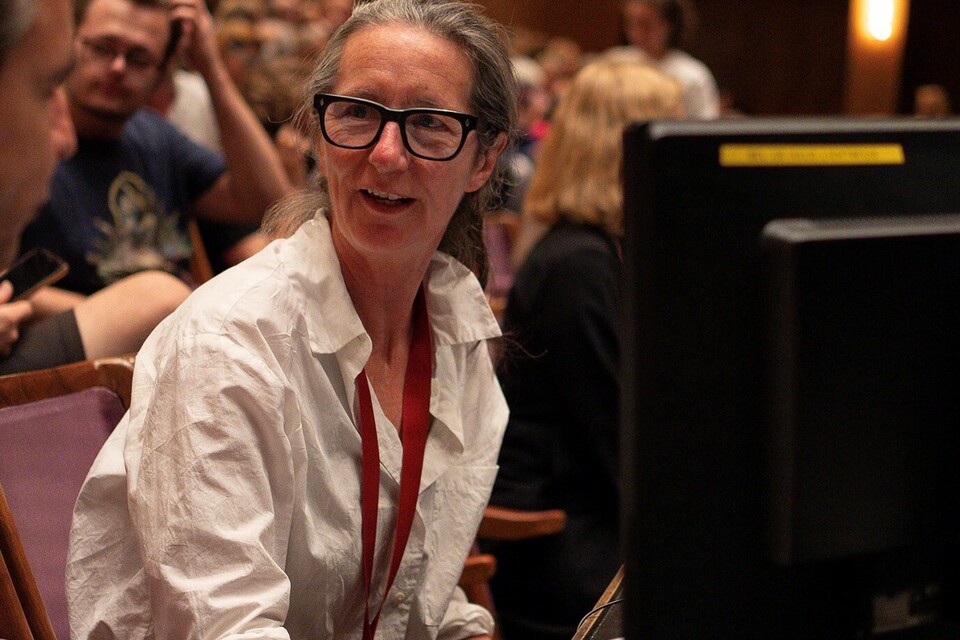
Paule Constable – lighting designer
Notes - not for publication
Role of the case study - help creatives recognise that questions about their contribution can extend beyond finished production to the files, records and future use of work.
Audience-facing copy: short-form post
A production ends - but what happens when the work is revived?
Lighting designer Paule Constable describes disputes over access to files recording designs and the reuse of creative work.
Working with others? Explore questions about ownership, access and future use.
Audience-facing copy: longer-form post
Title: The performance has finished. The questions about your work may not have.
Lighting designer Paule Constable works across theatre, opera, dance and musical theatre. Her account describes uncertainty over access to files documenting lighting designs, as well as disputes about designs being reused in other productions.
In one example, a third party attempted to charge a producer to release data relating to her designs. She also describes the difficulty of challenging productions that copied elements of original designs.
For self-employed creatives, these experiences raise practical questions: who owns each contribution, who can access the files needed to use it, and what has been agreed about future productions or reuse?
If you collaborate on performances or other creative projects, explore the government guidance to understand the ownership and contracting questions you may need to consider.
Images and alt text
These images can be used across social media, newsletters and other communications to support the campaign.
Newsletter and email copy
Audience-facing copy - generic
Your ideas, designs, writing, music, artwork, performances and other creative work can have value beyond the project you’re working on today. Intellectual property (IP) is the legal framework that helps determine who owns creative work, how it can be used, who can make money from it and what happens when others want to copy, share or build on it.
Whether you are taking on a commission, collaborating with others, licensing your work. Sharing content online or signing a contract, understanding some basic IP principles can help you make informed decisions and avoid problems later.
The new guidance for self-employed creatives explains some of the important questions you may wish to consider throughout the creative process and signposts to further support and information.
Audience facing copy - gaming example
Creating a video game brings together the work of many different people - code, artwork, music, writing and design. Intellectual Property helps determine who owns those contributions, how they can be used and how any future income can be shared.
Whether you are working with collaborators, hiring freelancers, publishing a game or licensing your work. Understanding some basic IP principles can help you make informed decisions and avoid costly misunderstandings later.
The new guidance for self-employed creatives explains some of the key questions you may wish to consider throughout the creative process.
Practical checklist for creative – postcard
Postcard in images for downloading file
Here is a PDF checklist designed to help bring the guidance to life in practical, real-world situations. It highlights questions to consider when, for example, taking on a commission, collaborating with others, licensing work or using someone else’s material.
The checklist is intended as an accessible starting point. It does not provide legal advice or replace the full guidance, which should be used for further information. It can be downloaded, saved or printed and used as a practical prompt when needed.
Presentation pack
The can be added to existing industry outreach presentations for webinars, workshops and events. Partners can use the full pack or select relevant slides to introduce questions about ownership, collaboration and using creative work, then signpost audiences to the government guidance.
Examples and imagery can be tailored to your industry while retaining the core messages and links to the guidance.
Email signature and digital banner
Using the digital banner
The digital banner can be used on websites and in email signatures to help promote the guidance. You can find the banner in the zip file containing the images and alt text. When using it, please make sure the image is linked to the IP guidance for self-employed creatives, so that clicking the banner takes people directly to the guidance.